China Cuts Livestock Emissions 33% Through Better Farming
China has slashed greenhouse gas emissions from its livestock industry by nearly 20% since 2000, and researchers project another 33% drop by 2030 through smarter farming practices. The transformation shows how the world's largest agricultural producer is decoupling food production from environmental damage.
China's livestock industry just proved that feeding billions of people doesn't have to cost the planet.
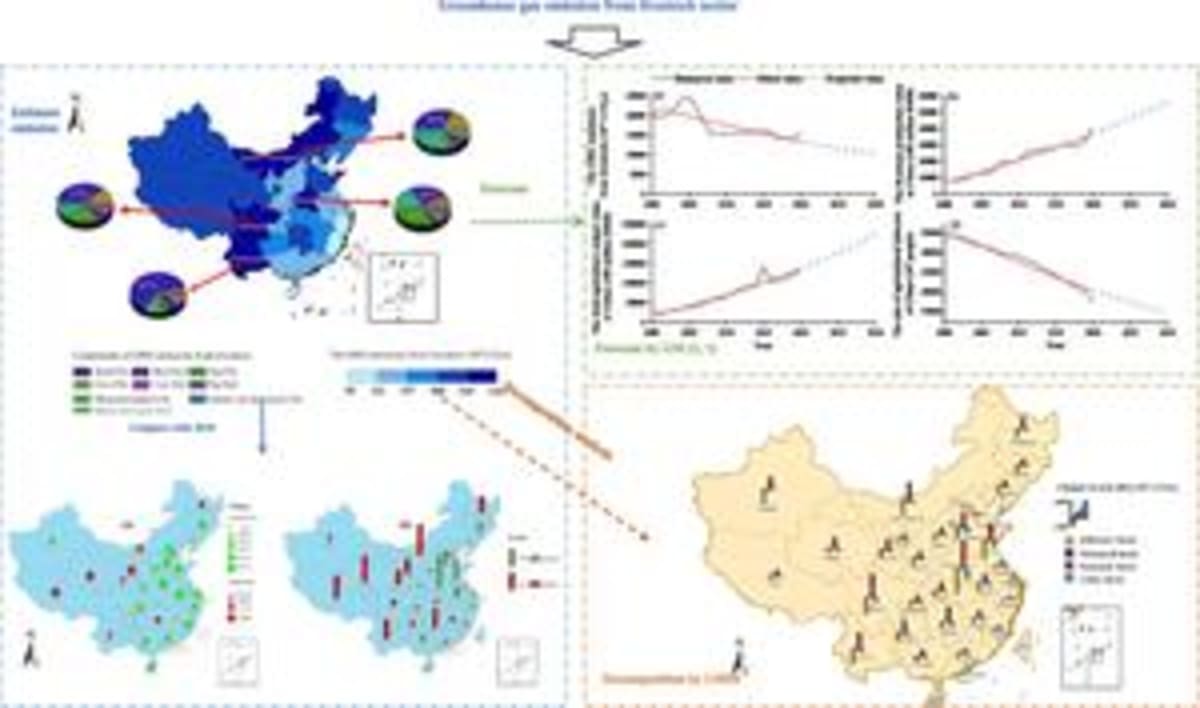
New research reveals that greenhouse gas emissions from Chinese livestock fell from 195 million tons to 157 million tons between 2000 and 2020. That's a nearly 20% reduction while the country continued feeding its growing population.
Researchers Yulong Chen and Le Qi from Inner Mongolia University tracked emissions across every province for two decades. They discovered that two major forces drove the decline: farmers adopted more efficient production methods, and millions of workers moved from rural farms to cities during China's urbanization boom.
The most exciting part? The trend is accelerating. Scientists predict emissions will drop another 34% by 2030 if current improvements continue.
The secret lies in what researchers call "production efficiency." Chinese farmers are raising more livestock with fewer resources and less waste. Modern management techniques, better feed practices, and updated farming systems mean each animal produces less methane and other greenhouse gases.
Different regions are taking different paths to success. Henan, Shandong, and Hebei provinces led the national reduction, with Henan alone contributing a massive share of the progress. Meanwhile, provinces like Inner Mongolia, where animal husbandry dominates the economy, are just beginning their transformation.
The eastern coastal region is expected to become the powerhouse of emission reductions by 2030. Technology and management improvements will account for over 76% of the positive changes in these areas.
Not everything worked in favor of emissions reduction. China's traditional agricultural economic model, which relied on high inputs and high outputs, actually pushed emissions upward in some regions. The country is now working to shift away from these practices.
The Ripple Effect
China manages nearly a quarter of global livestock production, so these improvements matter far beyond its borders. When the world's largest agricultural producer figures out how to reduce emissions while maintaining food security, it creates a roadmap other nations can follow.
The research team suggests tailored strategies for different regions. Major livestock provinces should accelerate their shift from traditional to intensive, efficient farming. Areas with limited land can diversify into lower carbon sectors like forestry and fisheries.
Lead researcher Le Qi emphasizes that success depends on continued innovation and strategic policy shifts. Each province needs solutions designed for its unique agricultural landscape and economic situation.
The findings prove that feeding people and protecting the planet aren't opposing goals after all.
Based on reporting by Google News - Emissions Reduction
This story was written by BrightWire based on verified news reports.
Spread the positivity!
Share this good news with someone who needs it