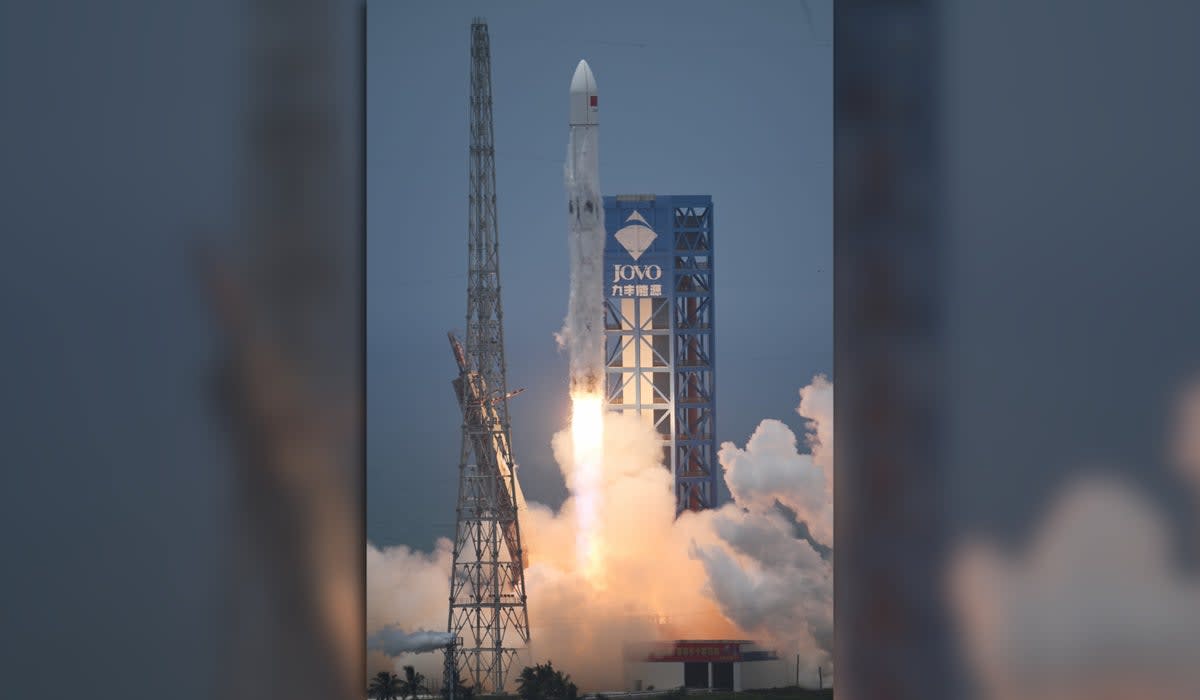
China Lands Reusable Rocket on First Try, Makes History
China just pulled off something no country has ever done: perfectly landing a reusable rocket on its very first flight. The Long March 10B joins an elite club and shows how the global space race is heating up in the best possible way.
China made spaceflight history Friday by launching and recovering its Long March 10B rocket on the vehicle's maiden voyage, becoming only the third entity ever to operate reusable rockets.
The achievement puts China alongside SpaceX and Blue Origin in mastering this game-changing technology. But here's what makes this truly remarkable: no organization has ever nailed a first-stage booster recovery on a brand-new rocket's debut flight.
The 207-foot-tall rocket lifted off at 12:15 a.m. EDT from the Wenchang Commercial Space Launch Site in Hainan province. Eleven minutes later, after delivering a satellite into orbit, the first stage fired its engines and descended into a specially designed catching net on a sea-based platform.
The rocket uses lightweight "landing hooks" instead of traditional landing legs, snagging onto the net like a high-tech trapeze act. China's space agency announced plans to refly this same booster later this year, proving the whole point of reusable rocketry: launching again and again without building new rockets each time.
The Long March 10B can haul 35,000 pounds into low-Earth orbit. It's a commercial version of China's crew-rated Long March 10A and serves as a stepping stone toward the massive Long March 10, designed to send Chinese astronauts to the moon by 2030.
The Ripple Effect
This breakthrough means more than national pride. Reusable rockets slash the cost of reaching space, making satellite launches affordable for universities, small countries, and research teams who couldn't dream of it before.
China plans to use the Long March 10B to build massive satellite networks similar to SpaceX's Starlink, which could bring internet access to remote corners of Earth. When space access gets cheaper, everyone benefits from better weather forecasting, climate monitoring, and global communications.
Two other Chinese rockets, the Long March 12A and the commercial Zhuque-3, have completed test flights in the past year and are racing toward their own recovery attempts. Multiple companies and agencies across China are developing similar technologies, creating healthy competition that drives innovation faster.
The global space industry is experiencing a golden age of collaboration and competition. When one player achieves a breakthrough, others learn and improve, pushing the entire field forward.
This isn't just about who gets to space first—it's about humanity collectively getting better at reaching the stars.
More Images



Based on reporting by Scientific American
This story was written by BrightWire based on verified news reports.
Spread the positivity!
Share this good news with someone who needs it