China Launches AI-Powered Satellites to Solve Big Problems
China's new satellite network is running artificial intelligence models in space to tackle real-world challenges from mapping infrastructure to tracking cosmic events. After nine months of testing, the system is proving that space-based AI can deliver faster, smarter solutions back to Earth.
Imagine artificial intelligence powerful enough to map an entire city through a snowstorm, operating not from a data center on Earth but from satellites orbiting hundreds of miles above us.
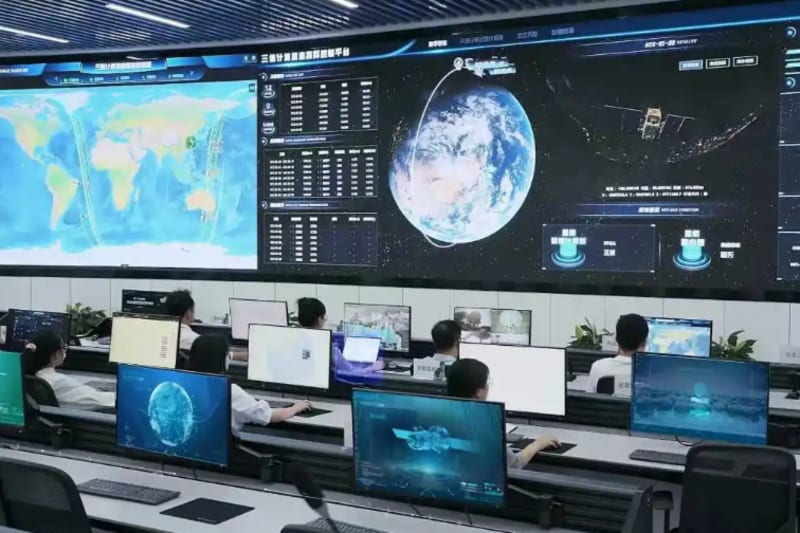
China just made that happen. In May 2025, the country launched 12 satellites called the "Three-Body Computing Constellation" into orbit. After nine months of testing, these satellites are now running 10 AI models in space and talking to each other through inter-satellite links.
The results show what's possible when computing power moves beyond our atmosphere. One satellite spotted and identified every stadium and bridge across 189 square kilometers of snowy northwest China, even though heavy snow covered the ground. Traditional methods would have struggled with that weather.
For space research, two satellites equipped with special detectors deployed an AI model that identifies gamma-ray bursts with 99 percent accuracy. These cosmic explosions happen in milliseconds, and the AI classifies them in orbit instead of waiting to beam raw data back to Earth for processing.
The system includes an 8-billion-parameter remote sensing model and an 8-billion-parameter astronomical model. These rank among the largest AI models operating in space anywhere in the world. Six satellites have already achieved working links with each other, creating a network in orbit.
Zhejiang Lab developed the constellation with international partners. Their vision extends far beyond the current dozen satellites. Once the planned 1,000-plus satellites reach orbit, the network will process 100 quintillion operations per second.
The Ripple Effect
This breakthrough changes how we can use space technology. Instead of satellites simply capturing images and measurements, they now analyze information before sending it home. That means faster responses to natural disasters, quicker updates on infrastructure needs, and immediate alerts about cosmic events worth studying.
The technology supports deep space exploration, smart city development, and natural resource surveys. Cities could get real-time updates about traffic patterns, construction needs, or environmental changes. Scientists studying distant galaxies get instant classifications of important events instead of waiting hours or days for data to travel and process.
"With a computing constellation, part of the data can be processed in space and delivered straight to users," explained Li Chao from Zhejiang Lab. That direct pipeline from space to solution cuts out delays and gets useful information where it needs to go.
The nine months of testing proved the system works for networking, computing, model deployment, and scientific measurements. Each success builds confidence that AI belongs not just in our pockets and computers but among the stars.
Space just became a lot smarter, and the benefits are already flowing back to Earth.
Based on reporting by Google News - AI Breakthrough
This story was written by BrightWire based on verified news reports.
Spread the positivity!
Share this good news with someone who needs it