China Launches AI Solar Cell Line for Space Missions
A Chinese company just completed the first production line making ultra-thin, flexible solar panels specifically designed for spacecraft and high-altitude platforms. These bendable cells could revolutionize how we power satellites and space missions by dramatically reducing weight.
Imagine solar panels so thin and flexible they can roll up like a yoga mat, yet powerful enough to survive the harsh conditions of space.
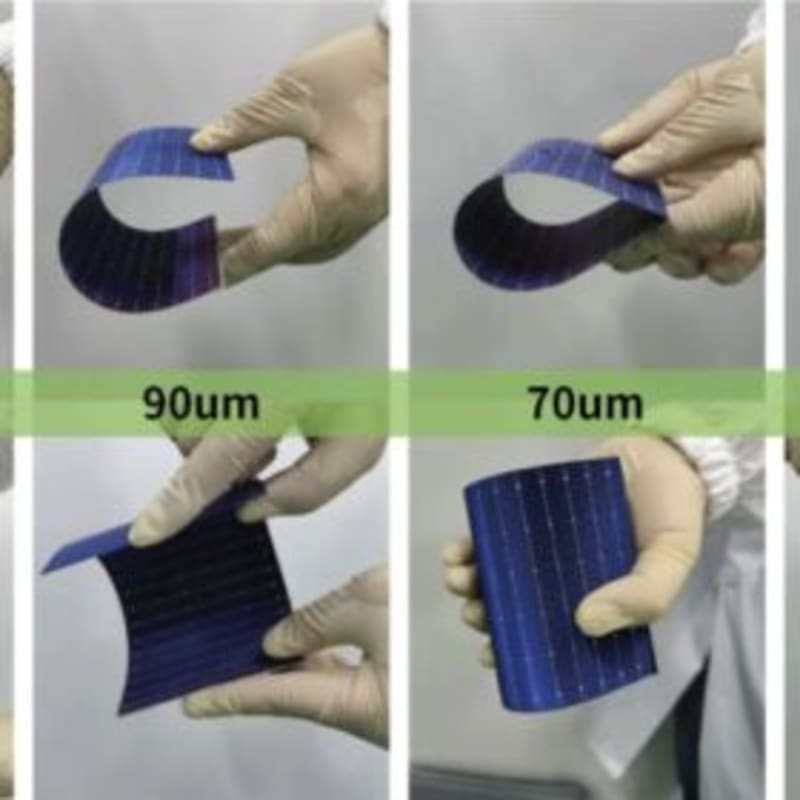
Ideal Energy, a Shanghai-based solar technology company, announced in January that it successfully produced its first batch of ultra-thin flexible solar cells designed specifically for spacecraft and near-space applications. The pilot production line represents a major leap from traditional rigid solar panels to lightweight, bendable power systems that can wrap around curved surfaces.
The company built the entire system in-house, combining its existing industrial manufacturing tools with artificial intelligence to handle the delicate process. Working with ultra-thin silicon is notoriously difficult because the material can crack or break during production, but AI-controlled systems monitor and adjust each step in real time to prevent damage.
What makes these cells special is their foundation in heterojunction (HJT) technology, which already delivers high efficiency and long lifespan in ground-based solar installations. Now that same reliable technology has been adapted into a form that bends without breaking.
The Ripple Effect
Weight matters enormously in space. Every gram launched into orbit costs money and limits what else a spacecraft can carry. Traditional solar panels built on rigid glass are heavy and bulky, forcing engineers to make tough compromises between power generation and payload capacity.
Flexible solar cells change that equation completely. They can conform to satellite bodies, deploy from compact storage, and significantly reduce launch costs. High-altitude platforms like weather balloons and stratospheric drones face similar constraints, and these lightweight cells open new possibilities for extended missions at the edge of space.
The technology must also withstand extreme temperature swings and radiation exposure that would destroy conventional electronics. While Ideal Energy hasn't released detailed test results yet, the cells are specifically engineered for these punishing conditions.
Shanghai Alliance Investment and Shanghai Electric backed the project, providing both capital and industrial expertise. The combination allowed Ideal Energy to move beyond lab experiments directly to an industrial-scale demonstration line, though the company describes this first facility as a validation platform rather than full commercial production.
State media outlets in China have called it the country's first AI-enabled demonstration platform for space-grade flexible solar cells. The company plans to use the line initially for testing processes and producing samples for potential aerospace partners, though it hasn't announced specific customers or timelines for scaling up production.
Beyond space applications, Ideal Energy sees a future where this manufacturing approach serves any market where weight, flexibility, and reliability matter more than rock-bottom cost. The long-term vision is creating a standardized production pathway that can eventually serve broader industries beyond aerospace.
This breakthrough shows how innovations designed for extreme environments often find their way back to Earth with surprising benefits for everyday life.
More Images

Based on reporting by PV Magazine
This story was written by BrightWire based on verified news reports.
Spread the positivity!
Share this good news with someone who needs it