%2Fhttps%3A%2F%2Ftf-cmsv2-smithsonianmag-media.s3.amazonaws.com%2Ffiler_public%2F72%2F7b%2F727bef6f-59bd-44dc-a2e6-b1dcd8b15d16%2Fgettyimages-2261701300.jpeg)
China Opens World's Longest Outdoor Escalator System
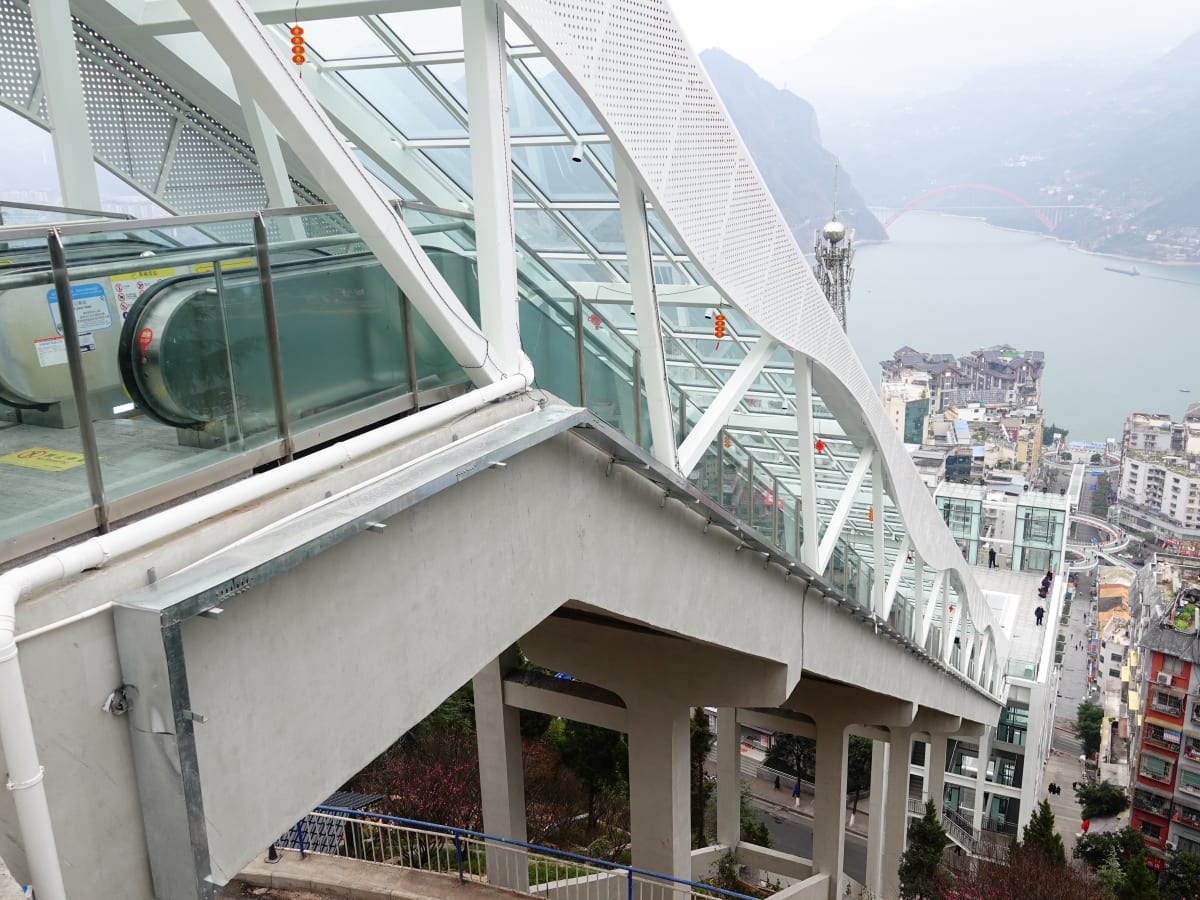
A 3,000-foot escalator system now whisks pedestrians up the equivalent of an 80-story building in just 21 minutes in mountainous Wushan County. The "Goddess" escalator is transforming daily life in a region where extreme elevation once made simple commutes exhausting.
Imagine climbing stairs equivalent to an 80-story skyscraper just to get home from work. For residents of Wushan County, China, that exhausting reality just became a smooth 21-minute ride.
The world's longest outdoor escalator system opened on February 17, carrying passengers nearly 3,000 feet up steep mountain slopes. The "Goddess" escalator combines 21 escalators, 8 elevators, 4 moving walkways, and several pedestrian bridges to conquer 800 feet of elevation gain.
Wushan County sits in Chongqing, a municipality famous for its extreme verticality. Trains literally run through apartment buildings, and subway stations burrow deeper than military bunkers.
For decades, officials wrestled with how to improve transit in this challenging terrain. They considered trains and cable cars before settling on the escalator system in 2022.
"We have experience with similar escalators," says project lead Huang Wei, an engineer at China Railway Eryuan Engineering Group. Chongqing's Crown escalator, built in the 1990s, already stretches more than 350 feet, making escalators a familiar part of city life.
The four-year construction project cost $23 million. Swiss company Schindler, which has built 1,400 escalators for Chongqing's metro, engineered the system to handle slopes averaging 35 percent, with some sections reaching nearly 60 percent.
Engineers used glass in the modular design to make the massive structure feel less imposing. Three viewing platforms now offer stunning vistas of the Yangtze River below.
The escalator hangs above streets that take an hour to drive during rush hour. Before this system opened, pedestrians had only a long stairway to make the journey.
The Ripple Effect
About 9,000 people now use the escalator every day, transforming commutes that once required physical stamina into accessible trips for everyone. Elderly residents who struggled with stairs can now visit family across the elevation divide. Parents pushing strollers no longer face grueling climbs. Workers arrive at their jobs without being drenched in sweat.
The system currently costs 3 yuan (around 40 cents) per ride during its trial phase. Officials will study usage patterns before announcing the final price.
This isn't just about convenience. In a region where geography has always dictated who can live where and work where, the Goddess escalator is literally leveling the playing field.
Nine thousand daily riders are rediscovering their city, one smooth ascent at a time.
More Images
%2Fhttps%3A%2F%2Ftf-cmsv2-smithsonianmag-media.s3.amazonaws.com%2Ffiler_public%2F72%2F7b%2F727bef6f-59bd-44dc-a2e6-b1dcd8b15d16%2Fgettyimages-2261701300.jpeg)
%3Afocal(2432x1644%3A2433x1645)%2Fhttps%3A%2F%2Ftf-cmsv2-smithsonianmag-media.s3.amazonaws.com%2Ffiler_public%2F72%2F7b%2F727bef6f-59bd-44dc-a2e6-b1dcd8b15d16%2Fgettyimages-2261701300.jpeg)
%2Fhttps%3A%2F%2Ftf-cmsv2-smithsonianmag-media.s3.amazonaws.com%2Faccounts%2Fheadshot%2FSonja_headshot.png)
Based on reporting by Smithsonian
This story was written by BrightWire based on verified news reports.
Spread the positivity!
Share this good news with someone who needs it