China Plants Shrubs in Desert, Pulls Carbon From Sky
A 40-year experiment in China's largest desert proves even the driest places on Earth can become carbon sinks. Satellite data shows hardy shrubs are measurably reducing atmospheric CO₂ in one of the planet's most barren landscapes.
Imagine turning one of Earth's driest deserts into a carbon-eating machine. That's exactly what China has done over the past four decades, and scientists can now prove it works.
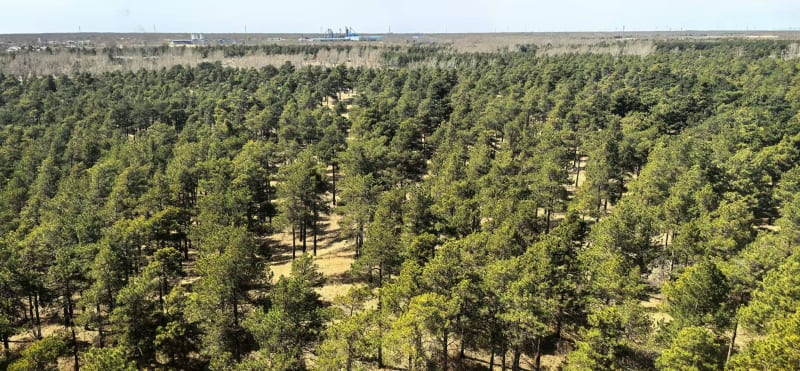
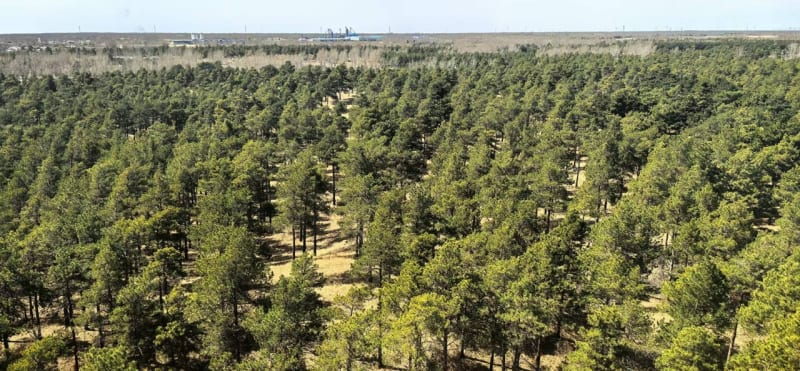
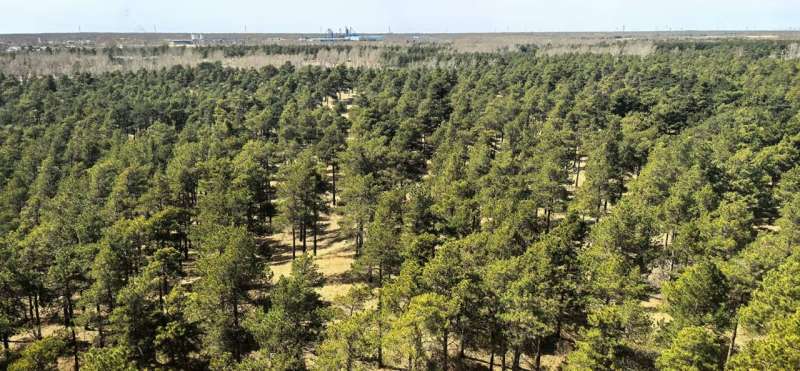
Since 1978, China has been planting hardy shrubs along the edges of the Taklamakan Desert, roughly the size of Germany. The goal was simple: stop the desert from swallowing up farmland and pull carbon dioxide from the atmosphere in the process.
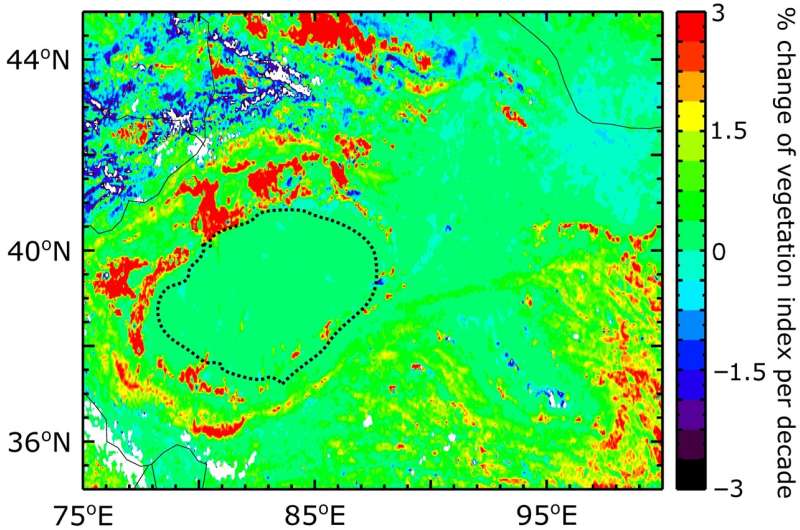
Now, researchers at UC Riverside have the satellite data to show it's actually working. Using NASA's Orbiting Carbon Observatory and other satellites, they tracked two major signs of success: carbon dioxide levels dropped by 1 to 2 parts per million in the greened areas, and plants are thriving enough to show up clearly from space.
"This is not a rainforest," says atmospheric physicist King-Fai Li, who co-authored the study published in the Proceedings of the National Academy of Sciences. "It's a shrubland like Southern California's chaparral. But the fact that it's drawing down CO₂ at all, and doing it consistently, is something positive we can measure and verify from space."
The project survived where others, like a similar UN effort in the Sahara, failed. Political stability allowed China to maintain the work uninterrupted for decades, giving the plants time to establish and grow.
The Bright Side
The numbers aren't huge on a global scale. If the entire Taklamakan were planted, it would offset only about 10% of Canada's annual emissions, or roughly 60 million tons of carbon dioxide. Global emissions hit about 40 billion tons per year, so this isn't a silver bullet.
But it's proof that even the most challenging environments can contribute. The study provides a rare, long-term look at what's possible when patience and planning meet environmental action.
Water remains the biggest challenge. The shrubs survive only because of mountain runoff from surrounding highlands. Expanding deeper into the desert would require water sources that are increasingly scarce worldwide.
Still, the research team found another surprising bonus: desert sand itself may trap CO₂ through natural expansion and contraction cycles caused by temperature swings between day and night. While minor compared to photosynthesis, this could add another million tons of carbon capture annually.
The researchers caution that afforestation isn't simple. Trees and shrubs also release carbon dioxide through respiration, and success depends on complex factors like soil type, vegetation density, and local geography.
But in a world searching for scalable, low-tech carbon solutions, this four-decade experiment offers both inspiration and hard evidence that change is possible. "Even deserts are not hopeless," Li says, and the satellite images prove him right.
More Images
Based on reporting by Phys.org - Earth
This story was written by BrightWire based on verified news reports.
Spread the positivity!
Share this good news with someone who needs it