China Study: Brain Stimulation Eases Autism Symptoms in Kids
A breakthrough treatment using quick magnetic pulses helped young children with autism improve their social skills in just five days. The child-friendly therapy takes only minutes instead of hours, making it accessible to kids who struggle to sit still.
Chinese scientists have discovered a gentler way to help children with autism develop better social skills, and it works in less time than a coffee break.
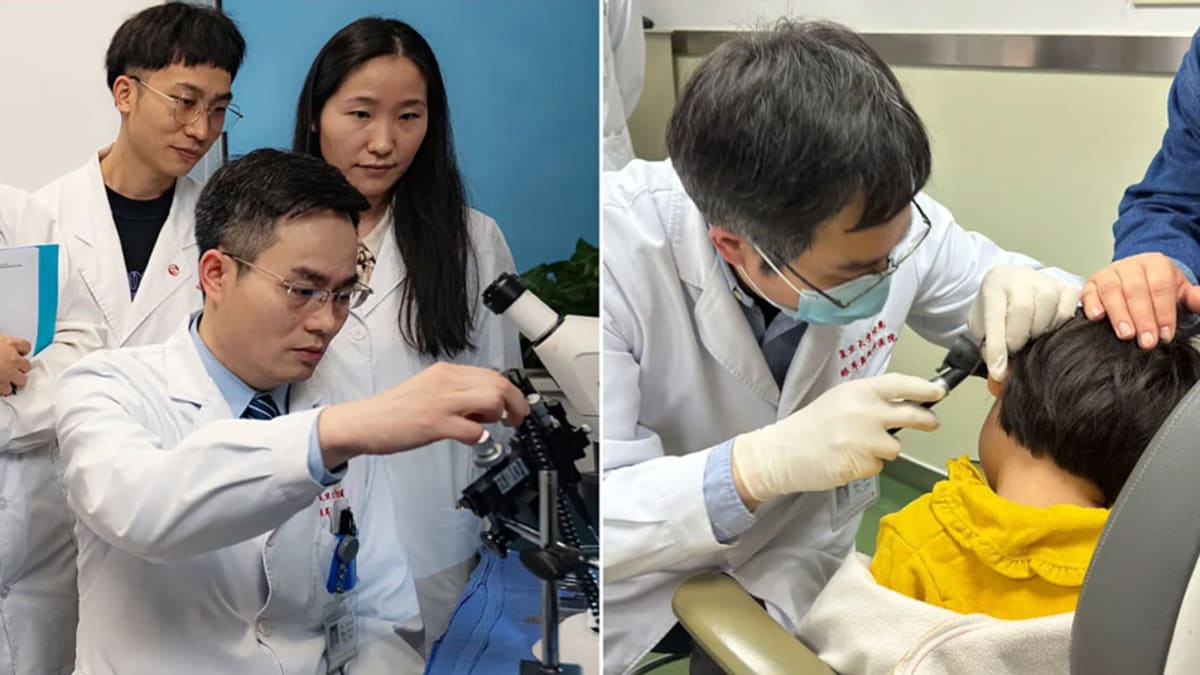
Researchers in Shanghai tested a new brain stimulation treatment on 200 children with autism spectrum disorder, ages 4 to 10. The therapy uses magnetic pulses to gently activate the brain's motor cortex, which plays a surprising role in both language and social connection.
Here's what makes this breakthrough special: each treatment session lasted just 2 to 3 minutes. Kids received 10 quick sessions throughout each day, spaced an hour apart, for five consecutive days. That's it.
A month later, most children showed noticeable improvements in core social communication skills. Some also gained new language abilities.
The treatment builds on existing brain stimulation therapies that have helped adults with depression and obsessive-compulsive disorder for years. But those older treatments required patients to sit perfectly still for 20 minutes at a time, making them nearly impossible for young children with autism, especially those with intellectual disabilities who find staying still challenging.
Dr. Li Fei, chief physician at Shanghai's Xinhua Hospital who led the study, explained that this accelerated version compresses the same benefits into a format young children can actually tolerate. The research team published their findings in The BMJ, one of the world's leading medical journals.
Why This Inspires
This study represents one of the largest randomized trials in autism neuromodulation research worldwide. The age range of 4 to 10 years targets a critical window when children's brains are especially adaptable and early gains can reshape their developmental path.
Traditional autism interventions often require years of specialized education and therapy, placing heavy financial and emotional burdens on families. While this new approach isn't meant to replace existing support, it offers a practical supplement that works with a child's natural development rather than against their limitations.
Professor Benjamin Becker of the University of Hong Kong noted that treating children during this window of heightened neuroplasticity could critically shape their later life trajectories. Early social and language improvements can cascade into better outcomes as children grow.
In China alone, roughly 7 out of every 1,000 children have autism spectrum disorder, totaling over 14 million people. Globally, millions more families search for interventions that actually work.
The treatment is already being used safely in major hospitals, though adoption takes time. Ying Qing, director of special education at Zhejiang Rehabilitation Hospital, noted that only about one-third of parents immediately embrace new treatments, while others remain cautious. She's planning to introduce the technology at her hospital despite expecting it may take three years for broader community acceptance.
For families who've watched their children struggle to connect, those three years of careful consideration might just be worth the wait.
More Images


Based on reporting by Sixth Tone
This story was written by BrightWire based on verified news reports.
Spread the positivity!
Share this good news with someone who needs it