China Tests Giant Floating Wind Turbines at 6,600 Feet
Chinese researchers just floated a massive wind turbine 6,600 feet in the air, tethered to the ground by cable. The breakthrough technology uses 90% less material than traditional turbines and could bring clean energy to places conventional wind farms can't reach.
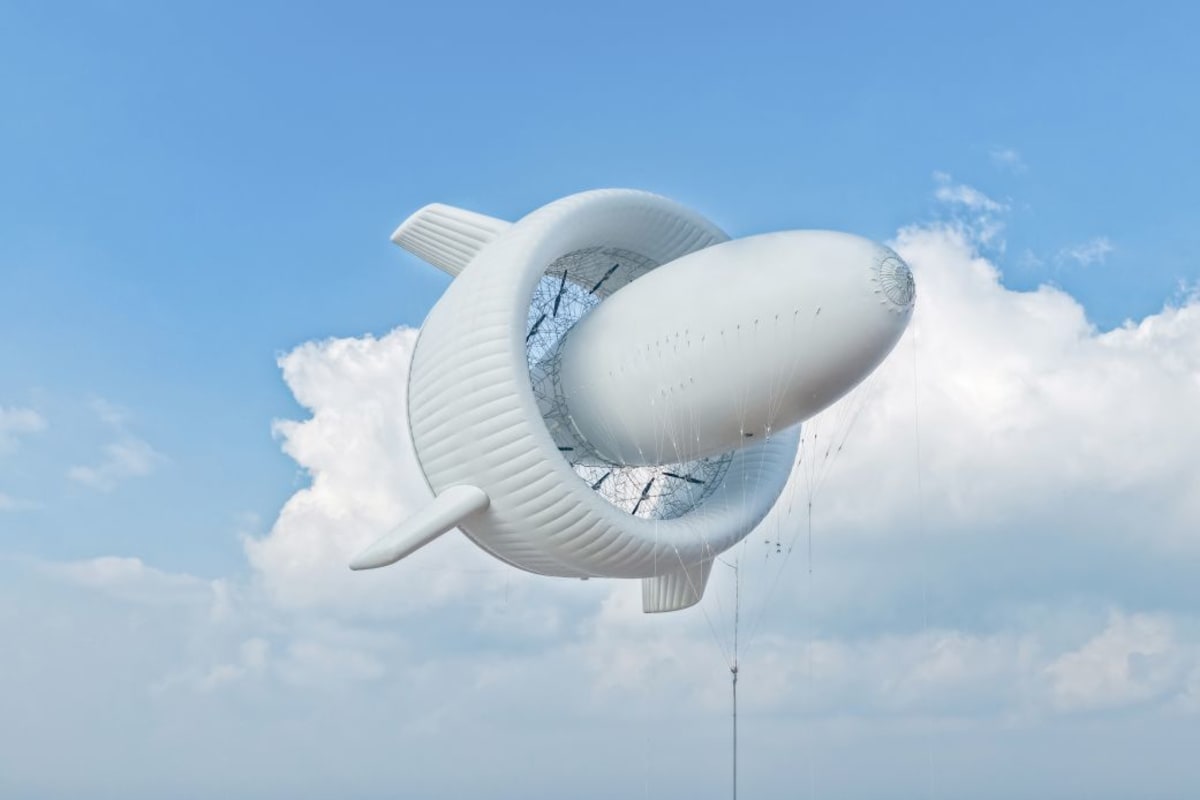
Imagine a wind turbine the size of a jumbo jet floating high above the clouds, silently generating clean energy while barely disturbing the world below. That's exactly what China just tested, and it worked.
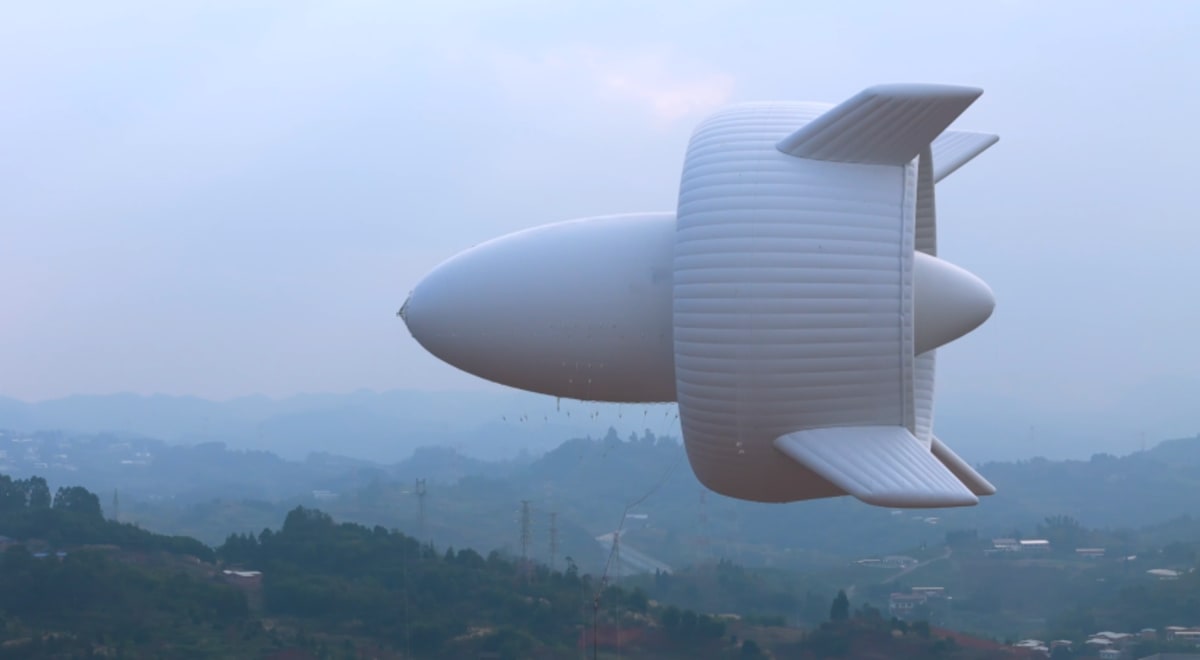
In January 2025, researchers from Tsinghua University and Beijing SAWES Energy Technology floated their S2000 prototype at 6,600 feet above Sichuan Province. The helium-filled airborne turbine successfully generated 385 kilowatt hours of electricity and connected to the power grid for the first time.
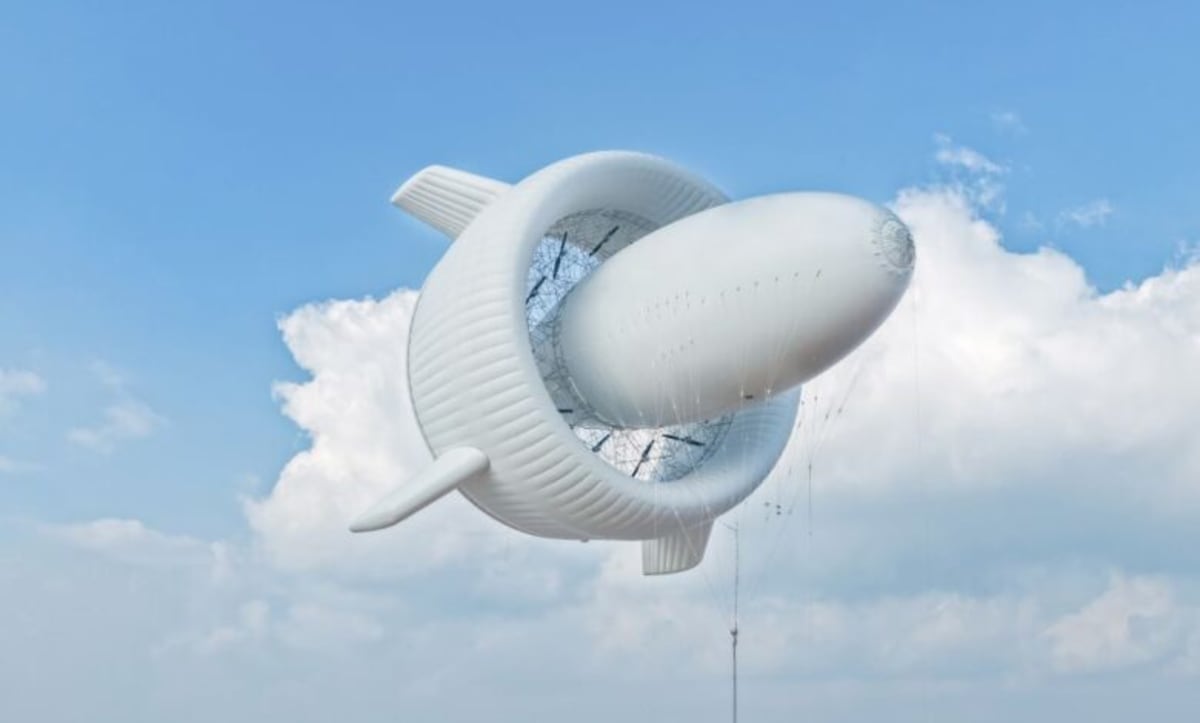
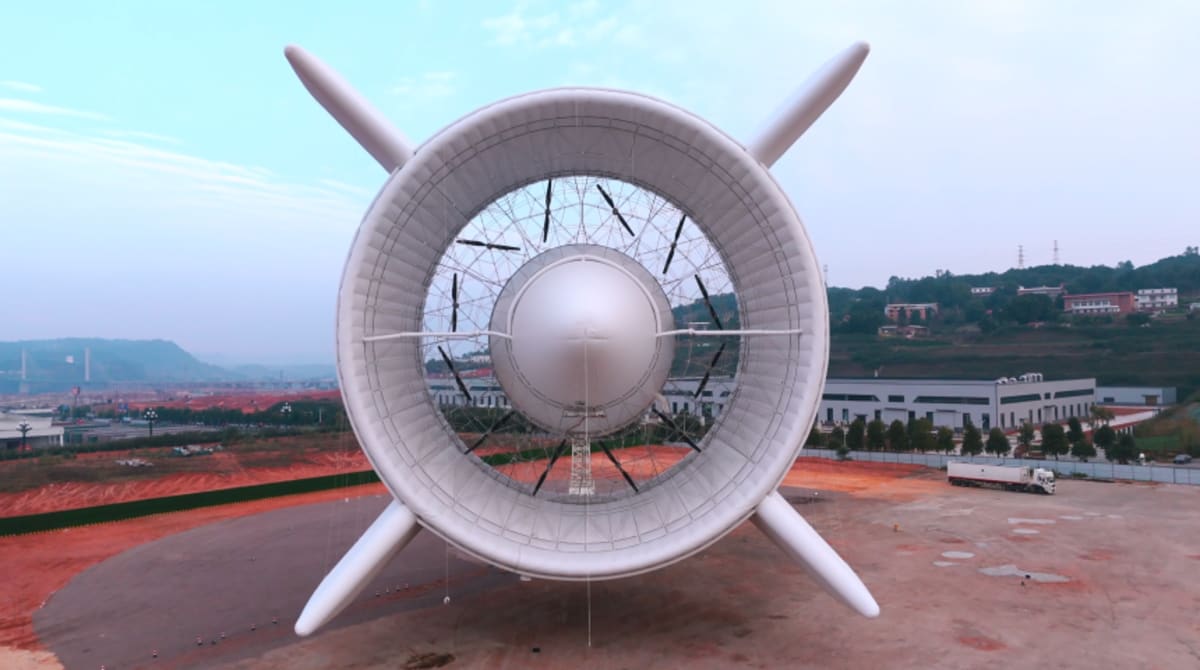
The floating giant measures 197 feet long and 131 feet wide, packed with 12 turbines that can generate up to 3 megawatts of power. A thick tether cable sends electricity down to the ground while keeping the aerostat anchored.
But size isn't what makes this exciting. These aerial turbines solve several problems that plague traditional wind farms.
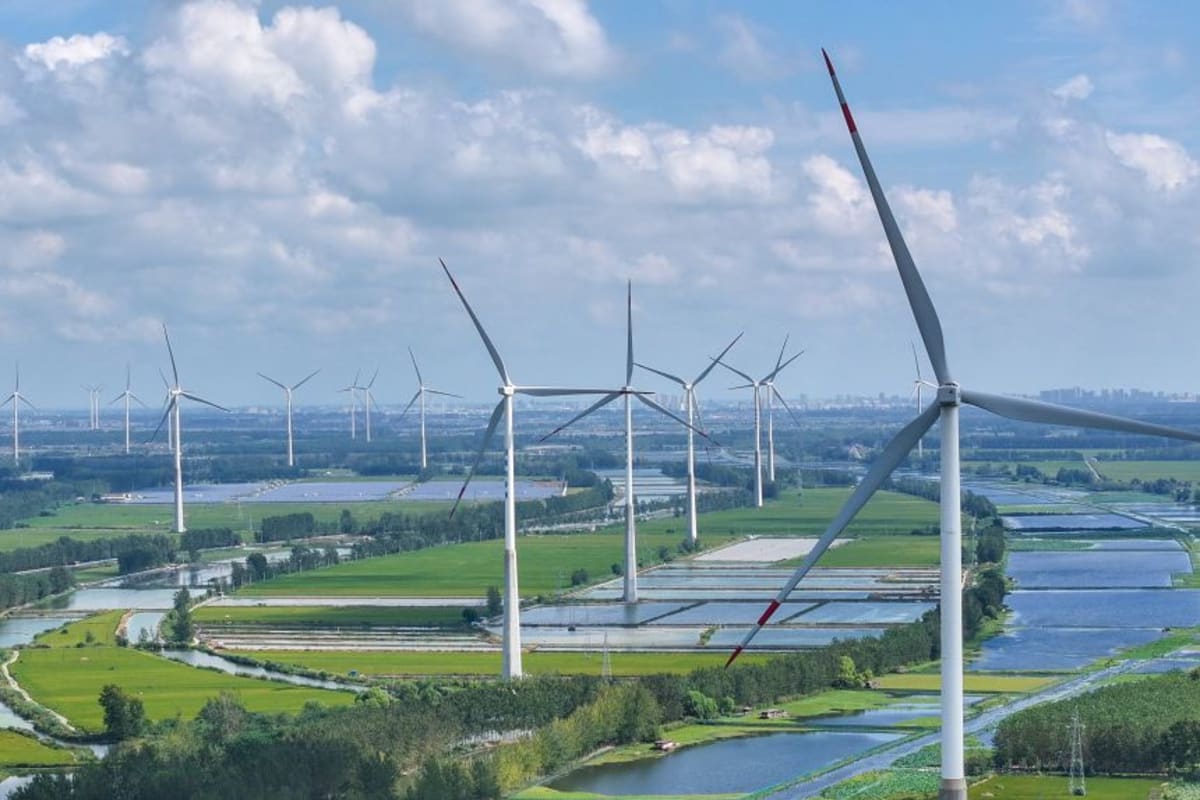
Professor Jianxiao Wang from Peking University explains the system uses 90% less material than conventional turbines. There's no need for massive concrete foundations or steel towers that can disrupt soil ecosystems.
The turbines are nearly silent at ground level and create minimal visual impact on the horizon. Birds can spot and avoid them more easily than spinning ground-based turbines, which kill up to 679,000 birds yearly in the US alone.
The technology automatically adjusts its altitude using AI and atmospheric modeling, rising and falling to find the strongest, most consistent winds. At high altitudes, wind speeds are more reliable than on the ground, potentially generating power in locations where traditional turbines can't operate efficiently.
One island in Guangdong Province is already testing the system. Ground space there is too limited and environmentally protected for conventional turbines, making the floating alternative perfect.
The SAWES Company envisions the technology first serving remote areas, disaster zones, and off-grid communities. The system deflates and transports easily, making it ideal for emergency power supply. Eventually, they hope to feed clean energy directly into national power grids.
The Ripple Effect
China already leads global wind energy, adding two-thirds of new wind capacity worldwide in 2023. Now they're pioneering ways to harvest wind where it was previously impossible.
The International Energy Agency says global wind energy needs to more than quadruple by 2030 to achieve net-zero emissions. Innovations like floating turbines could help reach those ambitious goals by unlocking wind resources in protected areas, islands, mountainous regions, and remote communities that traditional turbines can't serve.
By the end of 2025, the team had filed 51 patents, including breakthroughs in advanced composite fabrics that keep the aerostat lightweight while preventing helium leaks. Independent researchers note more peer-reviewed data is needed, but the potential is undeniable.
Clean energy is literally taking flight, and the sky's no longer the limit.
More Images
Based on reporting by Egypt Independent
This story was written by BrightWire based on verified news reports.
Spread the positivity!
Share this good news with someone who needs it