China's 250-Mile Solar Wall Now Visible From Space
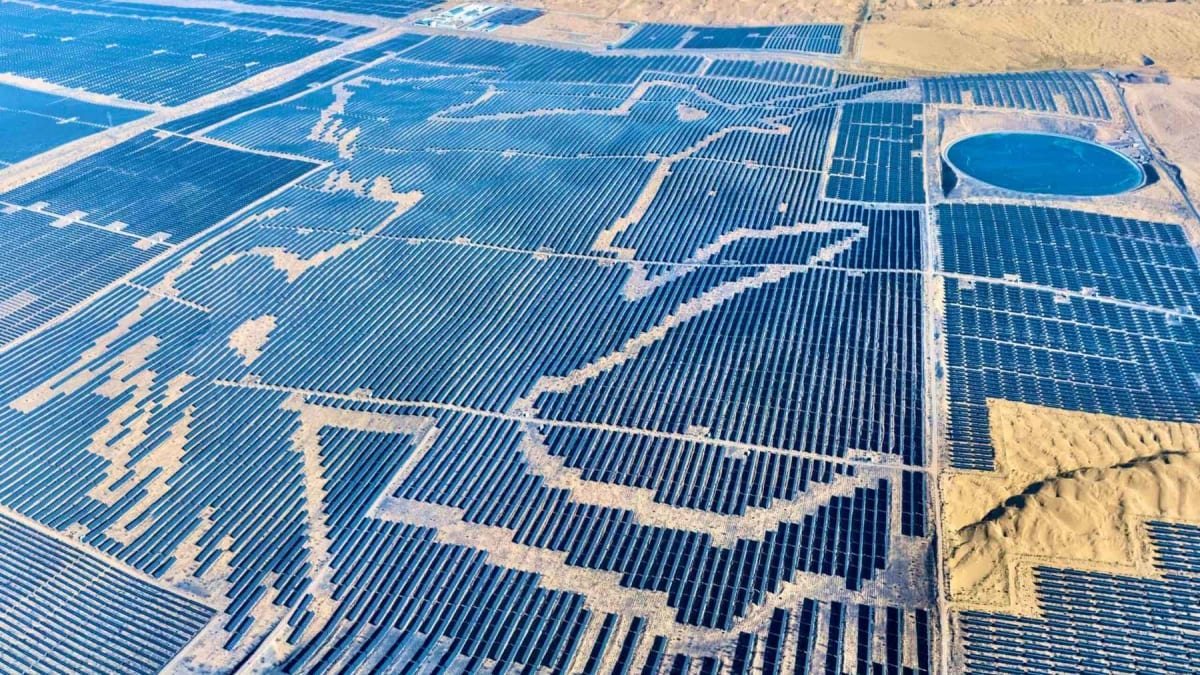
A solar installation stretching 250 miles across China's Kubuqi Desert has grown so large that satellites can track its expansion from orbit. One section is shaped like a galloping horse the size of a small city and holds a world record.
Satellite images from NASA show something remarkable happening in China's Inner Mongolia region. Where bare desert dunes stood in 2017, a continuous band of solar panels now stretches across the landscape, wide enough to spot from space.
The project, dubbed the "solar great wall," runs along the northern edge of the Kubuqi Desert and aims to reach 250 miles long by 2030. As of late 2024, about 5.4 gigawatts of capacity has been installed, with plans to eventually hit 100 gigawatts, enough electricity to power Beijing.
One installation stands out in the satellite photos. The Junma Solar Power Station was built in the shape of a galloping horse and earned a Guinness World Record as the largest image ever made from solar panels. The 300-megawatt facility generates roughly 2 billion kilowatt-hours annually, powering 300,000 to 400,000 people.
The largest piece of the wall is the Three Gorges Kubuqi base near Ordos, a $11.6 billion project that broke ground in late 2022. Two gigawatts are currently online, with projections to reach 7,000 megawatts during 2026 as additional phases connect to the grid.
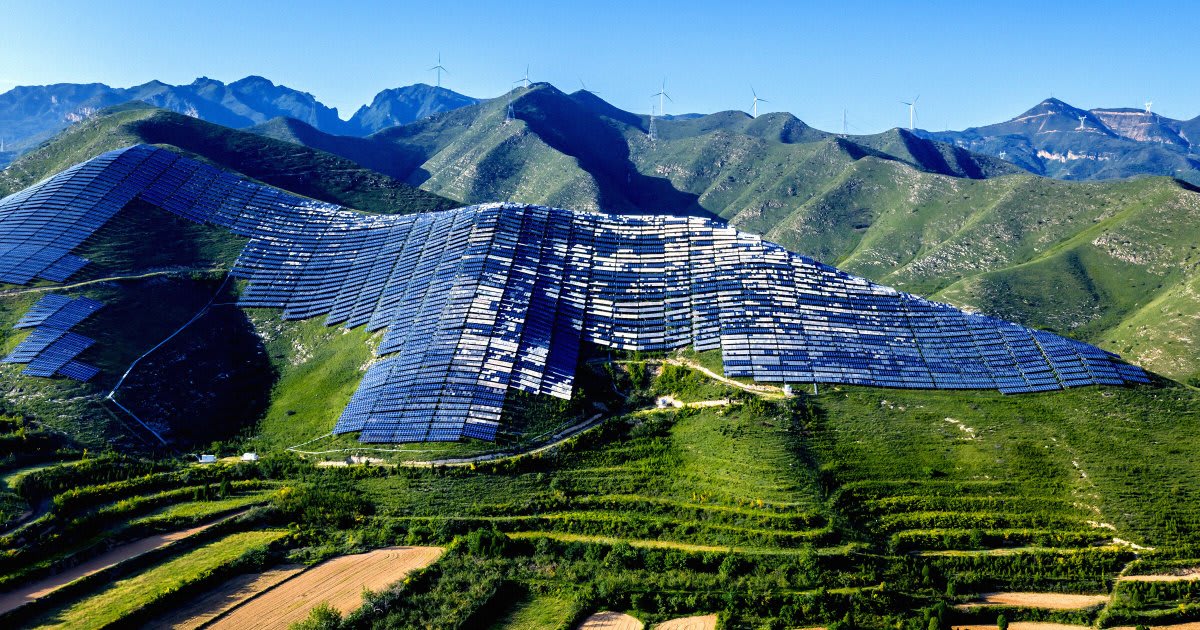
The panels serve a dual purpose beyond generating electricity. Mounted a few feet above the sand, they act as windbreaks that slow dune movement and reduce evaporation by providing shade. This gives grass and crops a chance to grow in areas that were previously barren desert.
Published research analyzing Landsat satellite data shows solar projects have contributed to greening dry land across China. Local farmer Han Rongkuan told reporters the panels "shield us from wind and sand," allowing his village to cultivate about 1,500 acres of farmland in a single year.
The Ripple Effect
The same approach worked on the Tibetan Plateau, where a solar complex transformed near-total sand into working grassland. The restored land became so productive that thousands of sheep were needed to manage the vegetation. Now that proven model is being scaled across the Kubuqi Desert, generating clean power above while restoring ecosystems below.
China currently leads the world in operating solar capacity with about 386,875 megawatts installed as of mid-2024. The visible-from-space solar wall represents just one piece of that buildout, but it shows how large-scale renewable projects can address multiple challenges at once.
The desert that once pushed sand into nearby communities is gradually becoming a power generator and carbon sink combined.
More Images



Based on reporting by Google News - Solar Power Record
This story was written by BrightWire based on verified news reports.
Spread the positivity!
Share this good news with someone who needs it