China's CAS Space Launches Reusable Space Capsule Successfully
A Chinese commercial space company just completed its first successful test of a reusable space capsule, bringing space tourism and orbital manufacturing closer to reality. The Lihong-1 mission marks a major step toward affordable space access for both research and future passenger flights.
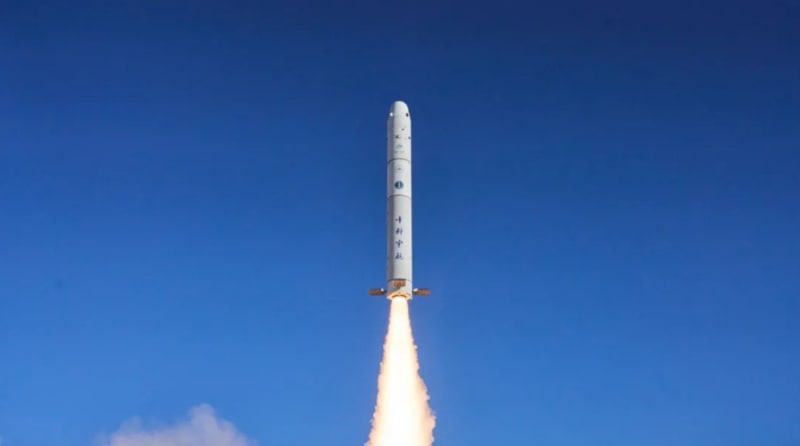
Chinese commercial space company CAS Space launched its first reusable capsule into space and brought it safely back to Earth on January 12. The successful test brings the country closer to offering space tourism flights and revolutionizing how we manufacture products in orbit.
The Lihong-1 rocket lifted off from Jiuquan Satellite Launch Center in northwest China, reaching 120 kilometers above Earth before the capsule descended smoothly by parachute. The mission tested critical technologies for bringing both cargo and eventually people safely back from space.
The test wasn't just about proving the capsule works. Onboard was a special 3D metal printer designed to work in microgravity, testing whether we can manufacture and repair equipment directly in space. Chinese rose seeds also flew on the mission, exposed to cosmic radiation to potentially create helpful genetic mutations.
The company has ambitious plans ahead. Lihong-2, the next version, will carry seven passengers above the edge of space for four minutes of weightlessness, similar to Blue Origin's tourist flights. Beyond tourism, CAS Space envisions a future where the capsule becomes a reusable orbital spacecraft capable of staying in space for at least a year and flying at least 10 times.
The Ripple Effect spreads beyond one company's achievement. Multiple Chinese firms are racing to develop reusable spacecraft and space tourism capabilities. AZSpace launched a small cargo spacecraft in December, while newcomer Interstellor works on its own suborbital tourism vehicle. This competition drives innovation and could dramatically lower the cost of accessing space for research, manufacturing, and exploration.
Chief designer Shi Xiaoning told Chinese state television that future versions will include larger capsules with advanced control systems for crewed flights and precise orbital returns. The vision includes manufacturing semiconductors and pharmaceuticals in space, taking advantage of the unique microgravity environment to create products impossible to make on Earth.
The successful landing proves that commercial spaceflight isn't just for established space powers anymore. As more companies master reusable technology, the dream of accessible space for science, business, and adventure moves from science fiction to science fact.
More Images



Based on reporting by SpaceNews
This story was written by BrightWire based on verified news reports.
Spread the positivity! 🌟
Share this good news with someone who needs it