China's Deep-Sea Robot Completes 7,737-Meter Mission
Scientists just tested the world's first full-ocean-depth electromagnetic survey robot at nearly 8,000 meters deep in the Pacific Ocean. The breakthrough opens new possibilities for understanding Earth's deepest secrets and could revolutionize ocean floor research.
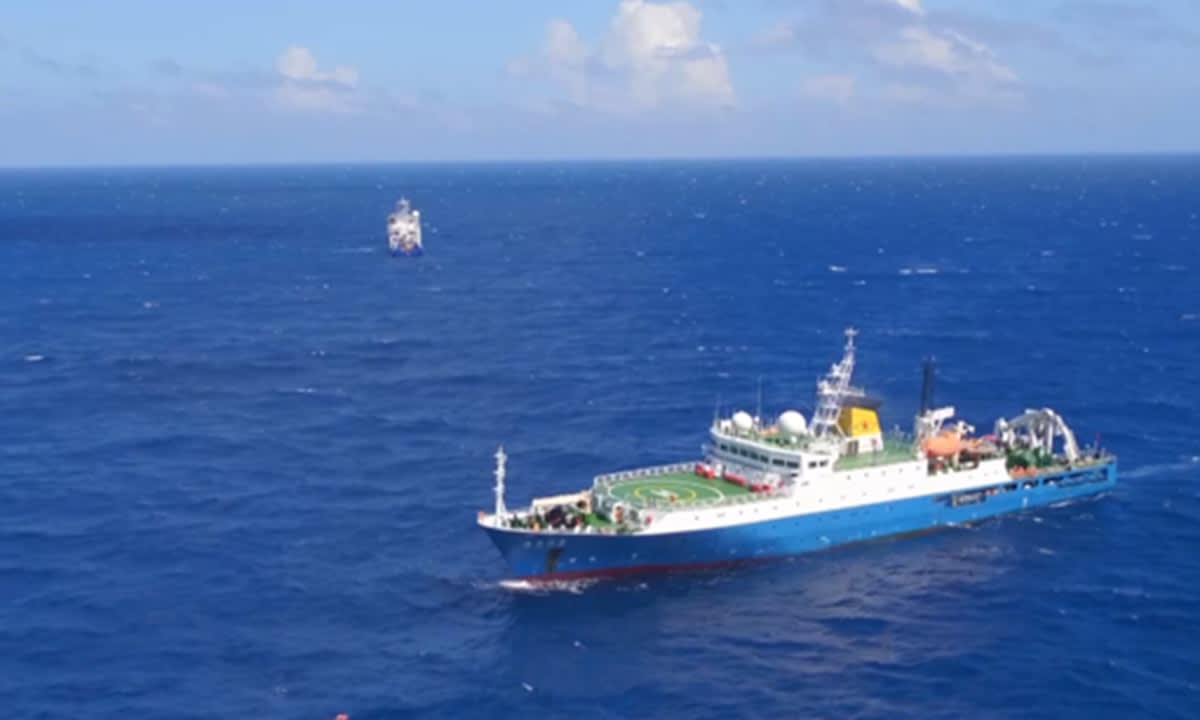
China's research vessel Haiyang Dizhi-6 just wrapped up a groundbreaking deep-sea mission that brought back rocks, data, and hope for understanding our planet's hidden depths.
The ship completed its 16th geological survey expedition in the western Pacific, where scientists deployed cutting-edge technology to explore one of Earth's most mysterious frontiers. Working at crushing depths where sunlight never reaches, the team collected 90 kilograms of rare basalt rock samples and discovered high-abundance polymetallic nodules scattered across the ocean floor.
But the real game-changer happened at 7,737 meters below the surface. There, researchers successfully tested China's independently developed full-ocean-depth electromagnetic data acquisition station, the first system of its kind capable of reaching the deepest ocean trenches.
Engineer Wu Zebin from the Guangzhou Marine Geological Survey confirmed that all performance indicators exceeded requirements. The robot collected high-quality data from an abyssal rift zone, proving it can handle the extreme pressure and darkness of the hadal zone, Earth's deepest ocean layer.
Deputy Director Qin Pengbo explained that the basalt samples will help scientists understand the mantle source region and investigate how Earth's interior has evolved over billions of years. These aren't just rocks; they're time capsules holding clues about our planet's formation and ongoing geological processes.
The mission combined multiple geological survey methods to gather first-hand data and samples, including near-bottom seawater that could reveal insights about deep-sea chemistry and marine life adaptation. Each sample represents years of future research potential.
Why This Inspires
This achievement matters beyond scientific bragging rights. Understanding deep-sea geology helps predict earthquakes, locate valuable mineral resources responsibly, and protect fragile deep-ocean ecosystems we're only beginning to discover.
The electromagnetic survey technology will support international ocean drilling programs and hadal-zone research, meaning scientists worldwide can benefit from this breakthrough. When one country advances ocean science, the whole world gains knowledge about the 95% of our oceans that remain unexplored.
The successful sea trial proves that even at depths where the pressure could crush a car, human ingenuity finds a way to explore, learn, and push boundaries. Our planet still holds countless mysteries waiting to be discovered.
Based on reporting by Google News - Tech Breakthrough
This story was written by BrightWire based on verified news reports.
Spread the positivity!
Share this good news with someone who needs it