China's Forests Lock Away 65% of Nitrogen Pollution
Scientists discovered China's forests are quietly turning air pollution into a climate solution, absorbing nearly two-thirds of nitrogen fallout and storing an extra 110 million tons of carbon each year. This natural cleanup crew is doing the work of millions of trees we never had to plant.
China's forests are performing an invisible environmental miracle, transforming harmful nitrogen pollution from the air into stored carbon that fights climate change.
A groundbreaking national study from the Chinese Academy of Sciences reveals that forests across China retain about 65% of nitrogen that falls from the atmosphere, with most of it locked safely in soil. This natural recycling process helps forests capture an additional 110 million tons of carbon annually, accounting for up to 30% of China's entire forest carbon sink.
The research team spent decades analyzing data from 18 forest sites spanning from tropical jungles to northern boreal forests. They used special nitrogen tracers to track exactly where deposited nitrogen goes once it enters the ecosystem.
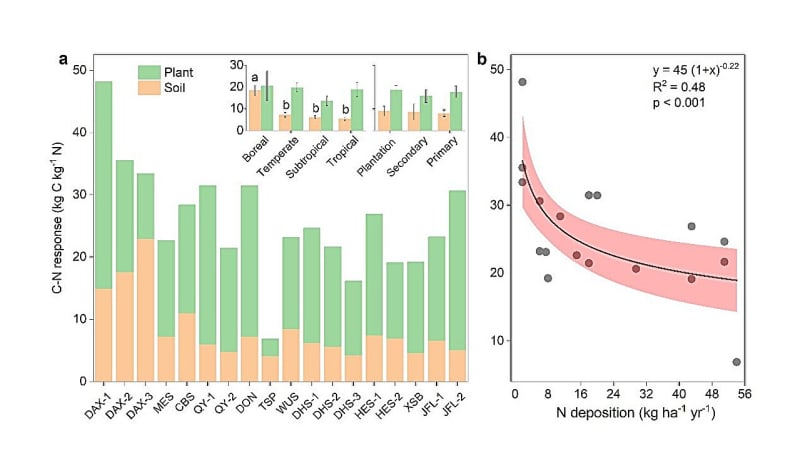
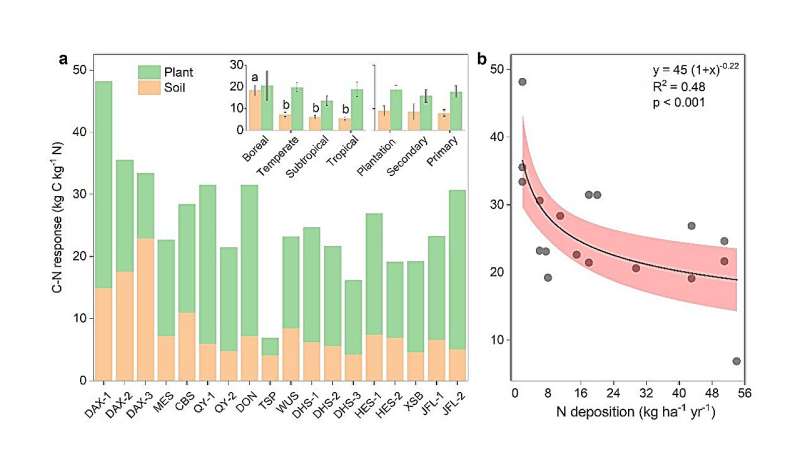
The findings show forests work differently depending on where they grow. Northern boreal forests are champion absorbers, holding onto 90% of incoming nitrogen. Tropical and subtropical forests retain between 50% and 70%, partly because they've been exposed to high nitrogen levels for so long.
Soil does most of the heavy lifting in this process. Nearly two-thirds of retained nitrogen gets stored underground, where it supports long-term carbon storage and helps forests grow stronger.
The Ripple Effect
This discovery changes how scientists understand forest ecosystems under pollution pressure. China experiences some of the world's highest nitrogen deposition rates from industrial activity and agriculture, but instead of overwhelming forests, much of that nitrogen fuels additional growth.
Different forest types handle nitrogen in unique ways. Old-growth forests store most nitrogen deep in mineral soil layers, while planted forests keep more in the organic layers near the surface. Plants prefer absorbing nitrate forms of nitrogen, while ammonium tends to stay in organic soil pools.
Young plantations and northern forests showed the strongest response, capturing between 7 and 40 kilograms of carbon for every kilogram of nitrogen deposited. That's like getting a climate benefit from pollution that would otherwise harm ecosystems.
The research provides forest managers with science-based insights for maximizing both carbon storage and ecosystem health. Understanding how nitrogen moves through forests helps predict how these ecosystems will respond as global nitrogen deposition patterns shift with changing industrial practices.
This first-ever national assessment using nitrogen tracers gives scientists a clearer picture of how forests help balance carbon and nitrogen cycles under environmental pressure, turning a pollution problem into a partial climate solution.
More Images



Based on reporting by Phys.org
This story was written by BrightWire based on verified news reports.
Spread the positivity!
Share this good news with someone who needs it