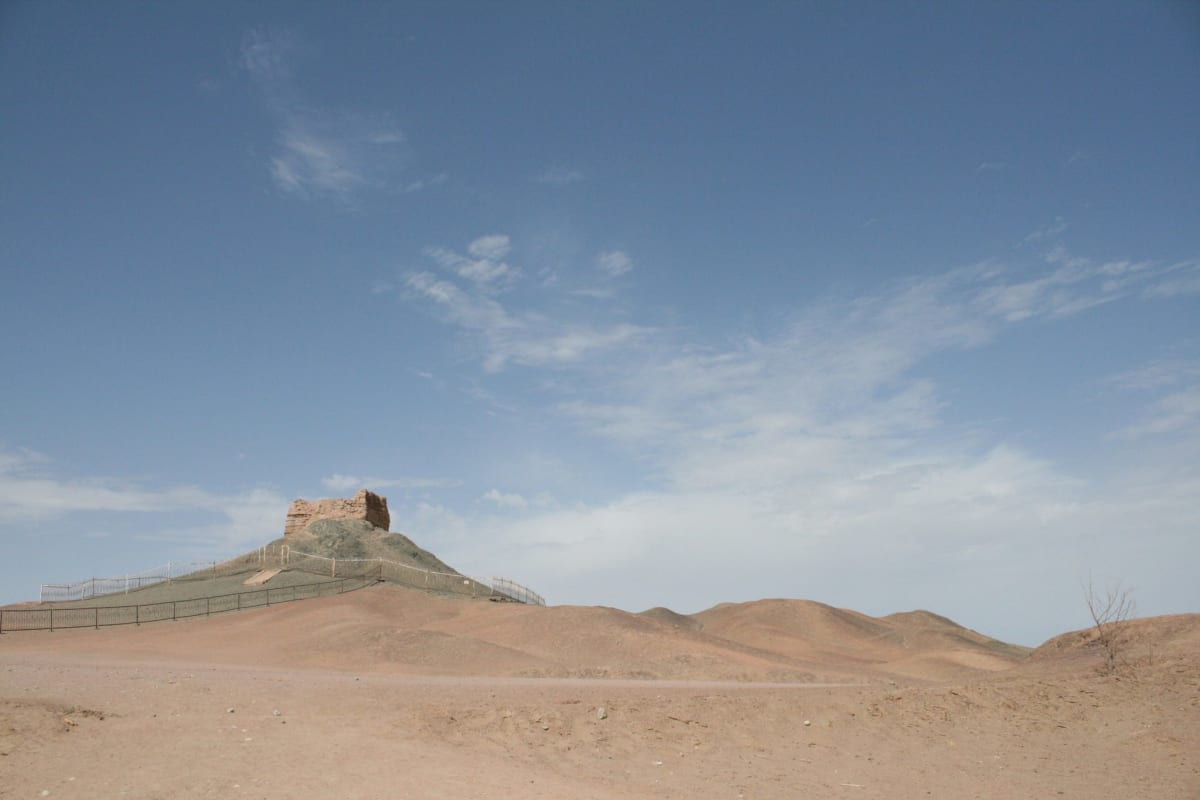
China's Great Green Wall Turns Desert Into Carbon Sink
After planting 66 billion trees around the massive Taklamakan Desert, China has transformed its edges from expanding sand into vegetation that actively removes carbon from the atmosphere. New research shows this ambitious project is working.
Scientists just confirmed something remarkable: one of Earth's driest deserts is now helping fight climate change, thanks to the world's largest tree-planting project.
The Taklamakan Desert in China, slightly larger than Montana, was once called a "biological void" where almost nothing could survive. For decades, the desert kept expanding, swallowing farmland and fueling massive sandstorms that choked nearby cities.
In 1978, China launched the Three-North Shelterbelt Program, nicknamed the Great Green Wall. The goal was audacious: plant billions of trees around the Taklamakan and Gobi deserts by 2050 to stop the desert's spread. Since then, workers have planted more than 66 billion trees across northern China, increasing the country's forest cover from 10 percent in 1949 to over 25 percent today.
Last year, they completed a ring of vegetation completely surrounding the Taklamakan. Now researchers wanted to know: did it actually work?
A study published in January in the Proceedings of the National Academy of Sciences analyzed 25 years of satellite data and ground observations. The results were clear: vegetation around the desert's rim is absorbing more carbon dioxide than the desert emits.
During the wet season from July to September, when the desert receives about 0.6 inches of rain monthly, the trees and plants come alive. Carbon dioxide levels drop from 416 parts per million to 413 parts per million as vegetation actively pulls carbon from the air.
"We found, for the first time, that human-led intervention can effectively enhance carbon sequestration in even the most extreme arid landscapes," said Yuk Yung, a professor at Caltech and NASA researcher. The desert's interior remains mostly unchanged, but its edges are now a working carbon sink.
The Ripple Effect
This matters beyond China's borders. Previous research suggested desert sands themselves might absorb carbon, but rising temperatures can cause that carbon to escape back into the atmosphere. Trees, however, provide stable, long-term storage.
The transformation shows that even Earth's harshest environments can respond to sustained restoration efforts. Other desert regions facing expansion could adapt similar strategies, creating vegetation buffers that stabilize soil while fighting climate change.
The project still faces questions about long-term water use and ecosystem resilience. But the carbon findings offer powerful evidence that large-scale environmental restoration can work, even in places once considered biological dead zones.
Billions of trees are now standing where sand once spread unchecked, quietly pulling carbon from the sky and proving that determined human action can heal even the planet's most extreme landscapes.
Based on reporting by Optimist Daily
This story was written by BrightWire based on verified news reports.
Spread the positivity!
Share this good news with someone who needs it