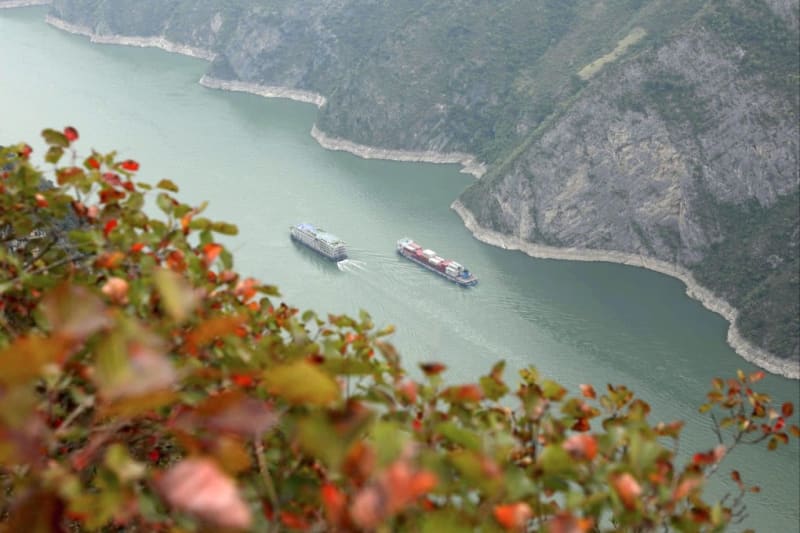
China's Yangtze Fishing Ban Restores River Ecosystem
Just five years into a bold 10-year fishing ban, China's Yangtze River is showing remarkable signs of ecological recovery. The massive conservation effort relocated over 231,000 fishers and is now serving as a blueprint for saving other threatened rivers worldwide.
China's Yangtze River is coming back to life, and the transformation is happening faster than anyone expected.
Halfway through an ambitious 10-year fishing ban launched in 2021, scientists are reporting meaningful ecological recovery in one of the world's most biodiverse rivers. The Yangtze, once responsible for over 60 percent of China's freshwater fish production, had suffered seven decades of decline from overfishing, pollution, and dam construction.
The numbers told a grim story. Freshwater catches had plummeted to just a quarter of historical highs. A staggering 135 fish species documented in earlier surveys had disappeared from recent records.
Beijing's response was sweeping. The government enacted a total fishing moratorium along the river's main stem, major tributaries, large connected lakes, and key estuarine areas. More than 111,000 fishing vessels were recalled from the water.
The human cost was significant but handled with care. Authorities resettled 231,000 fishers, investing over $2.7 billion to help them transition to new livelihoods. The Yangtze River Protection Law, also enacted in 2021, backed up the ban with stricter regulations on water quality, sand mining, and shoreline restoration.
The early results are encouraging scientists worldwide. Fish biomass is surging throughout the river system. The endangered Yangtze finless porpoise, one of the river's most iconic residents, is benefiting from the healthier ecosystem.
The Ripple Effect
This isn't just good news for China. Researchers are holding up the Yangtze restoration as a potential model for other threatened river systems facing similar pressures. The Mekong River in Southeast Asia and the Amazon in South America could both benefit from lessons learned along the Yangtze.
The project demonstrates that large-scale ecosystem recovery is possible, even in heavily populated and industrialized regions. It shows that governments can balance economic needs with environmental restoration when they commit sufficient resources and political will.
The Yangtze still faces challenges. Pollution sources remain, and the long-term success of the ban won't be clear until the full decade concludes. But the early recovery signals offer something rare in environmental news: proof that bold action can reverse even severe ecological decline.
With five years still remaining in the fishing moratorium, the Yangtze River's greatest comeback story may still be unfolding.
More Images

Based on reporting by South China Morning Post
This story was written by BrightWire based on verified news reports.
Spread the positivity!
Share this good news with someone who needs it