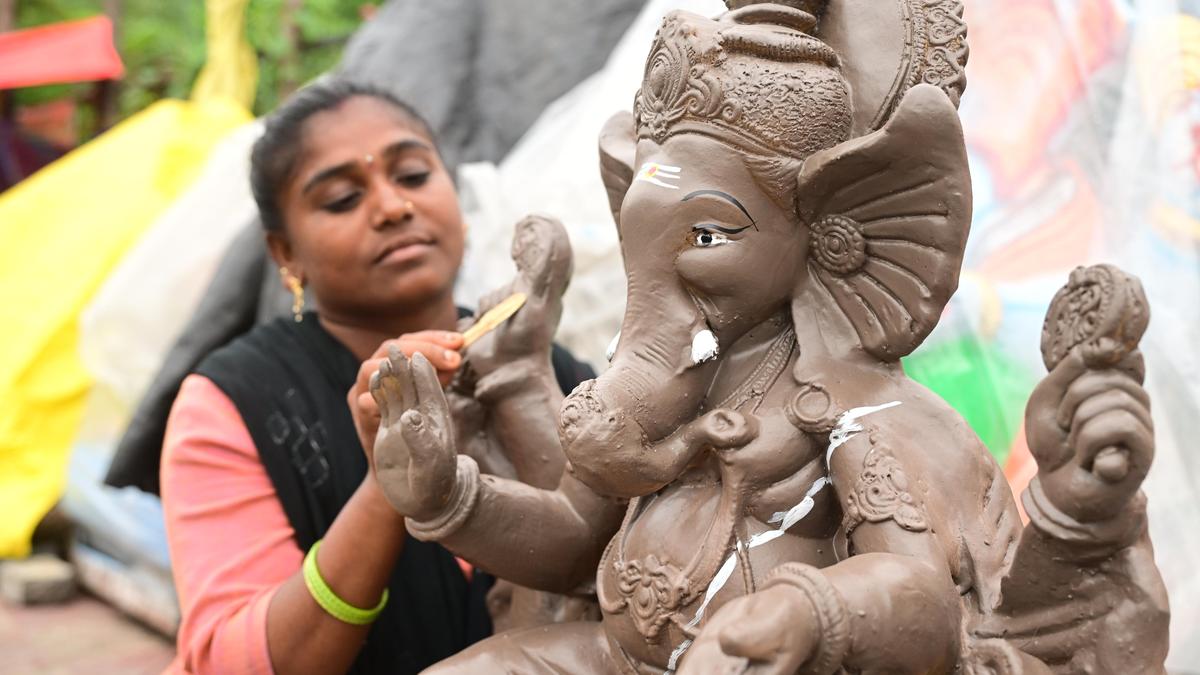
Clay Ganesh Idols Surge as India Chooses Cleaner Rivers
Indian devotees are swapping polluting plaster idols for eco-friendly clay versions ahead of the Vinayaka Chaturthi festival. The grassroots movement is protecting rivers while keeping ancient traditions alive.
When 10th grader P. Srivatsa prepares clay Ganesh idols for his school competition, he's doing more than crafting art. He's part of a growing environmental movement transforming how India celebrates one of its most beloved festivals.
Ahead of Vinayaka Chaturthi, demand for clay Ganesh idols has surged across Vijayawada and beyond. Schools, NGOs, and environmentalists have spent weeks spreading awareness about how traditional plaster of Paris idols pollute rivers and canals when immersed after the festival.
Artist Bhagavat, setting up his clay idol stall in Vijayawada, noticed the shift immediately. Even large pandal organizers, who typically order the biggest and most elaborate idols, are choosing clay this year.
The festival tradition involves immersing Ganesh idols in water after several days of celebration. But conventional idols made with plaster of Paris, chemical paints, and iron rods don't dissolve. They leave toxic residue that damages aquatic ecosystems and contaminates drinking water sources.
Clay artisans in Ayodhya Nagar, Bhavanipuram, and Ibrahimpatnam have been working overtime to meet the unexpected demand. Markets filled with colorful clay idols have drawn curious devotees eager to see the eco-friendly alternatives.
Some NGOs and traders are taking the movement further by offering free clay Ganesh idols at distribution centers. The goal is making sustainable celebration accessible to everyone, regardless of budget.
The Ripple Effect
The environmental awakening extends beyond vendor stalls and into living rooms. P. Suryanarayana of Krishnalanka found himself searching for clay despite recent heavy rains creating shortages. His daughter Ravali insisted their family worship with only a clay idol this year.
Her generation is growing up understanding that protecting nature and honoring tradition aren't opposing forces. Student competitions, classroom lessons, and peer influence are creating young environmental champions who bring new values home to their families.
The movement shows how cultural celebrations can evolve without losing their spiritual meaning. Devotees still gather, pray, celebrate, and immerse their idols with the same reverence. The only difference is what they leave behind: natural clay that dissolves harmlessly instead of toxic waste.
When festivals that draw millions of participants make even small sustainable shifts, rivers notice. So do fish, water supplies, and future generations.
Based on reporting by The Hindu
This story was written by BrightWire based on verified news reports.
Spread the positivity!
Share this good news with someone who needs it