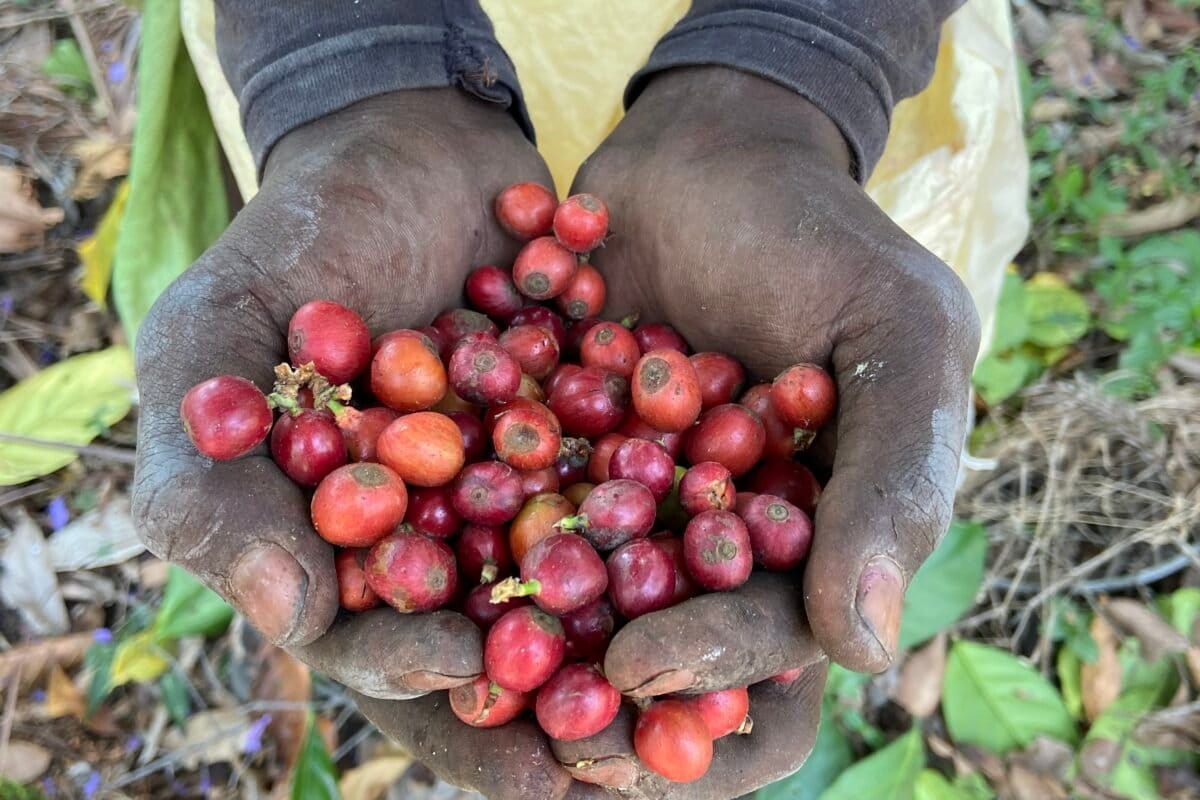
Climate-Resilient Coffee Species Offer Hope for Farmers
As climate change threatens the two coffee species that make up nearly all global production, researchers are reviving forgotten varieties that can handle the heat. Excelsa, Liberica, and other overlooked coffee plants could be brewing in your cup within a decade.
Your morning coffee faces a climate crisis, but scientists have found hope growing in the margins of old plantations.
Rising temperatures and unpredictable rainfall are hammering Arabica and Robusta, the two species that account for nearly all commercial coffee production worldwide. But researchers in India, Uganda, and the UK are rediscovering forgotten coffee varieties that their ancestors planted over a century ago.
Akshay Dashrath grows 60-year-old Excelsa coffee trees on his family farm in Karnataka, India. British planters brought the species to India in the late 1800s as an Arabica backup, but farmers abandoned it because it grew too tall and dense to harvest easily. Now, Dashrath's South India Coffee Company is working with the Royal Botanic Gardens in London to bring it back.
The timing couldn't be better. Farmers in Uganda who've grown Excelsa since the 2000s report it's more productive, resilient, and profitable than Robusta. The species handles heat and drought that would wilt traditional varieties.
Aaron Davis, a senior researcher at Kew Gardens, predicts Ugandan Excelsa could appear on supermarket shelves within ten years. He expects the dominance of Arabica and Robusta to face major disruptions as growers switch to climate-adapted species.
Other contenders include Stenophylla, which tastes like Arabica but tolerates extreme heat, and Liberica, which thrives in conditions from humid lowlands to dry regions. Scientists have even created a new hybrid called Libex that combines the best traits of Liberica and Excelsa.
Pranoy Thipaiah manages a coffee estate in Karnataka where Excelsa and Liberica have grown since 1953. He notes these varieties ripen later in the season, avoiding the unseasonal rains that often destroy Arabica crops.
The Bright Side
This isn't just about saving your morning brew. Climate-resilient coffee means farmers can keep their livelihoods even as weather patterns shift. Communities that have grown coffee for generations won't have to abandon their land or traditions.
The diversity also protects the entire coffee industry from collapse. Relying on just two species put millions of farmers and billions of coffee drinkers at risk.
Making the switch will require research funding, government support, and consumers willing to try new flavors. But the groundwork is already laid, with heritage trees waiting on farms and farmers proving these varieties work.
The coffee that sustained past generations might just rescue future ones.
More Images

Based on reporting by Mongabay
This story was written by BrightWire based on verified news reports.
Spread the positivity!
Share this good news with someone who needs it