Coast Guard Spots SOS in Sand, Rescues Stranded Couple
A Colorado couple stranded at Hawaii's remote Yokohama Bay for 24 hours wrote "SOS" in the sand and were rescued within minutes by a passing Coast Guard helicopter. Their quick thinking and the crew's sharp eyes turned a difficult situation into a textbook rescue.
When Emma Stasko and Logan Bonn lost their rental car key at a remote Hawaiian beach, they had no idea a storm would trap them there for an entire day.
The Colorado visitors were enjoying spring break at Yokohama Bay on Oahu when their quiet Friday turned into an unexpected survival situation. After losing their key, they called for roadside assistance, but a severe Kona low storm arrived with fury, washing out portions of Farrington Highway and cutting off all access to the area.
Stasko was recovering from a torn ACL and couldn't make the long walk out. The couple called 911 but were told help couldn't be sent immediately because there was no medical emergency. As hours passed and their water supply dwindled, they realized they needed another plan.
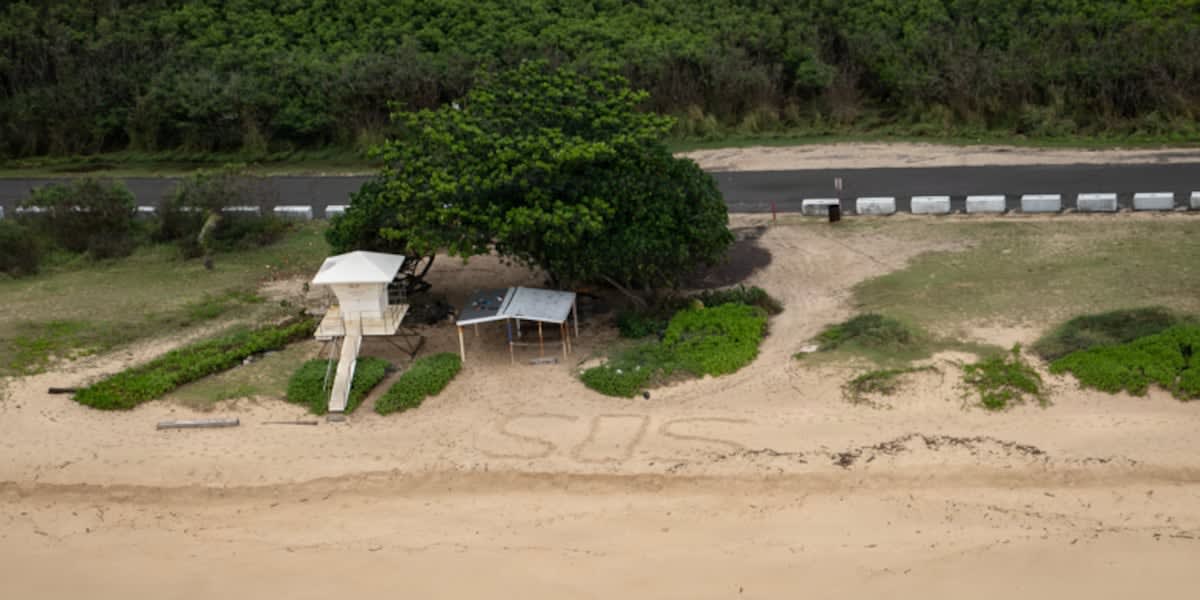
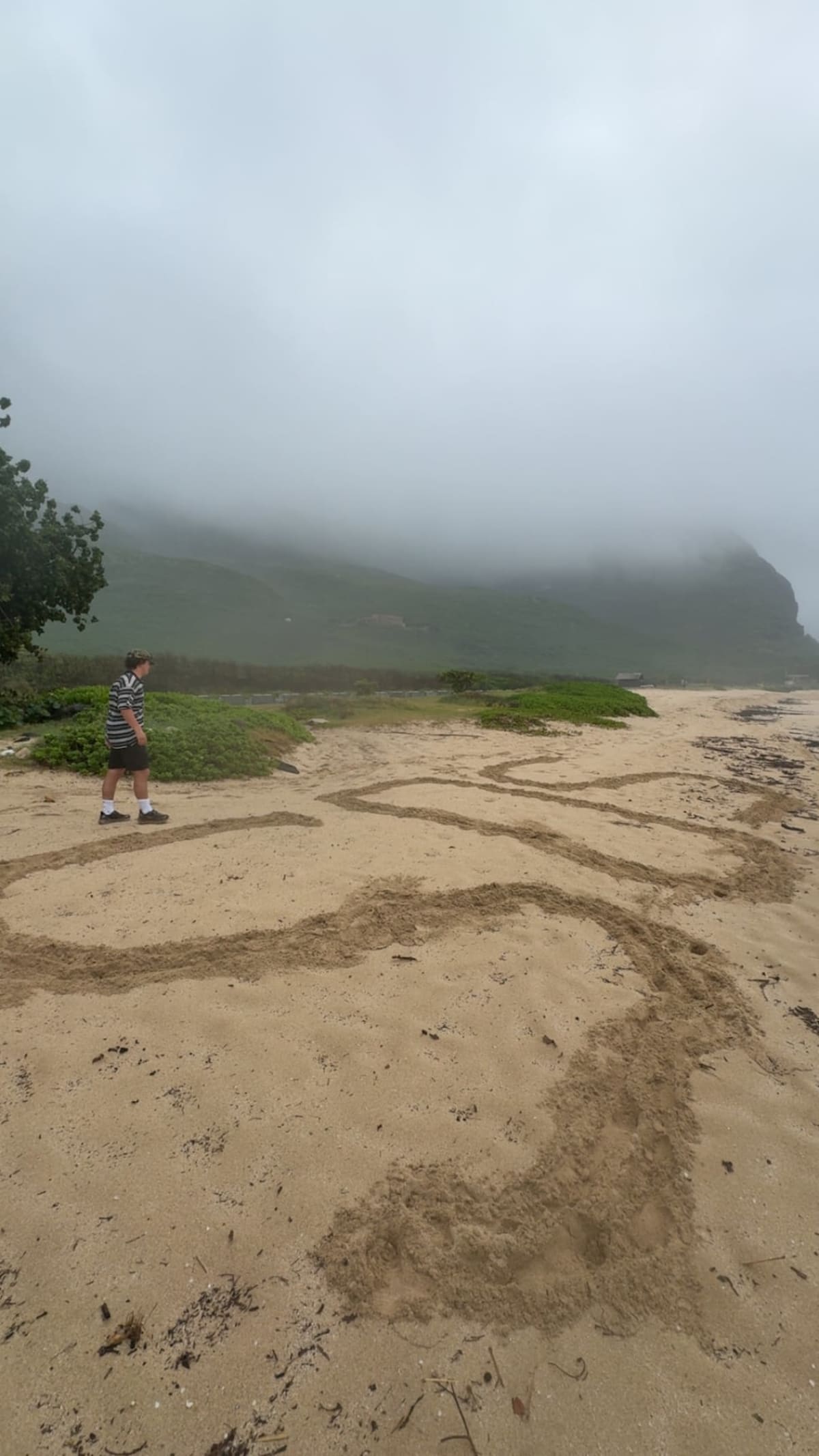
After 24 hours on the beach, Bonn and Stasko wrote a giant SOS message in the sand. Within minutes, a U.S. Coast Guard helicopter returning from a storm assessment mission spotted the signal from the air.
"One of the guys in the back said, 'mark, mark, mark the position, there's an SOS written,'" recalled Coast Guard Lt. Alex Mead. The crew immediately landed to help.
"It was kind of crazy. It felt like a miracle," Stasko said. "We saw them circle around, and it was like a breath of fresh air."
Rescue swimmer Sam Hoffman checked on the couple before they were flown to Barbers Point. The Coast Guard team provided food, water, and arranged for a medical evaluation. After being cleared, the couple took Skyline back into town.
Why This Inspires
This rescue shows the power of staying calm and remembering basic survival knowledge. The couple's decision to create a visible distress signal turned their situation around in moments.
Lt. Mead praised their quick thinking. "Any sort of sign that an aircrew can pick up from the sky is almost always a guaranteed way to get us to notice and then we can effect the rescue," he said.
The Coast Guard emphasizes that visual distress signals like large SOS markings, bright materials, or unusual shapes help crews quickly identify people in need, especially when roads become impassable during severe weather.
Despite their ordeal, Stasko and Bonn kept perspective, noting their situation was minor compared to communities severely damaged by the storm. And they learned an important lesson Bonn shared with a laugh: "Don't lose the car keys."
More Images
Based on reporting by Google: rescue saves
This story was written by BrightWire based on verified news reports.
Spread the positivity!
Share this good news with someone who needs it