Colorado County Maps $24M Path to Cut Emissions 50% by 2030
Eagle County, Colorado has a detailed roadmap to slash its carbon emissions in half by 2030 and reach zero by 2050. The plan shows exactly how $23.9 million in strategic investments can transform county buildings and vehicles into a carbon-neutral operation.
A Colorado county just proved that climate goals don't have to be vague promises. Eagle County has a step-by-step plan showing exactly how to cut its carbon footprint in half within four years.
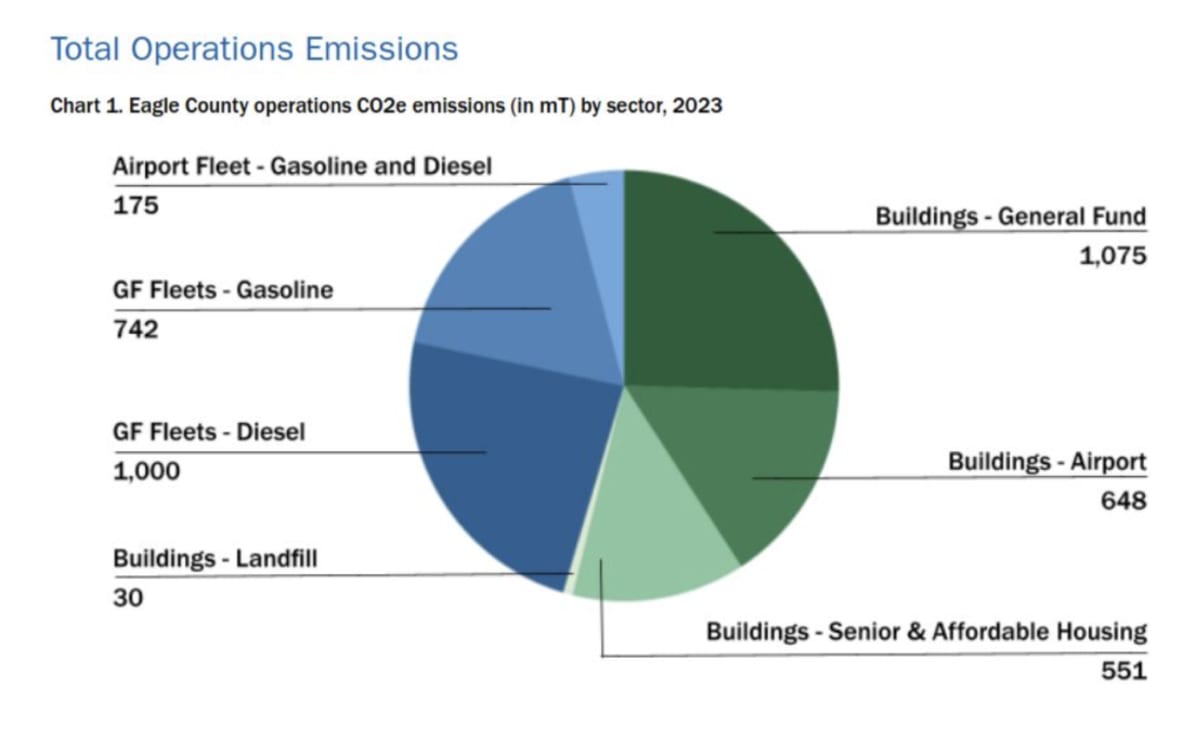
The county currently emits about 4,200 metric tons of carbon dioxide each year from its buildings and vehicles. Now officials know precisely what it takes to fix that: $23.9 million and a smart strategy focused on where the money makes the biggest difference.
The good news is that buildings are surprisingly straightforward to decarbonize. Eagle County gets zero-emissions electricity through Holy Cross Energy, which means anything electric is already carbon neutral.
The building plan involves three simple steps: reduce heating needs, capture heat already being produced, and switch to electric heat pumps for the rest. Heat pumps are three to five times more efficient than natural gas.
The county divided its building projects into tiers based on cost effectiveness. Tier one projects will eliminate over 900 tons of carbon emissions for $11.5 million. The biggest wins include converting the Justice Center to heat pumps for $4.2 million and installing a geothermal system at the maintenance center for $3.2 million.
Tier two projects cost more per ton saved but still get the county to its 2030 goal. Together, the first two tiers will knock out 46% of the county's total emissions.
Vehicles present a tougher challenge. The county owns 304 vehicles, but just 49 of them produce nearly 60% of fleet emissions. These include snowplows, excavators, and emergency vehicles that don't have electric alternatives yet.
Instead of chasing impossible replacements, the county will focus on electrifying 29 strategic vehicles by 2030 for $2.2 million. That saves 126 metric tons while giving new technologies time to catch up for harder cases like snowplows.
The Ripple Effect
Eagle County's approach offers something rare in climate planning: total transparency. Other counties and cities can now see exactly what decarbonization costs, which projects deliver the most impact, and how to sequence investments for maximum effect.
The plan turns abstract climate commitments into concrete action items with price tags and timelines. Commissioner Matt Scherr captured the breakthrough: "We've always known where we need to go. We just never knew how to get there."
Now they do, and they're showing everyone else the way.
More Images


Based on reporting by Google News - Emissions Reduction
This story was written by BrightWire based on verified news reports.
Spread the positivity!
Share this good news with someone who needs it