Colorado Wildlife Bridge Cuts Animal Collisions by 91%
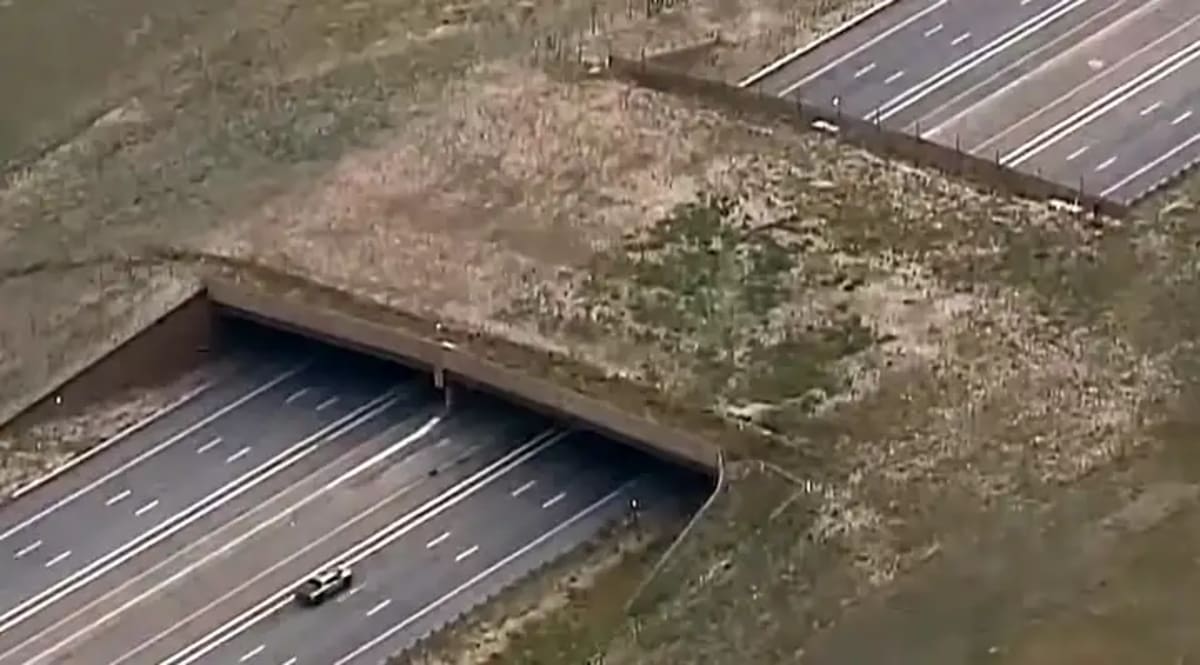
North America's largest wildlife overpass is saving lives on both sides of Interstate 25. Just months after opening, the massive bridge has nearly eliminated dangerous animal-vehicle crashes.
📺 Watch the full story above
For decades, Interstate 25 in Colorado was a deadly barrier that separated wildlife from their natural migration routes, with about one deer being hit every single day during peak seasons.
Today, a massive wildlife bridge is changing everything. Since opening last December near the Greenland exit between Larkspur and Monument, the 209-by-200-foot overpass has reduced animal collisions by an astounding 91%.
The results have exceeded everyone's expectations. "Based on the video feed that we're collecting, huge success," said Chuck Attardo, an environmental manager with the Colorado Department of Transportation.
Elk herds now cross the bridge regularly. Pronghorn have returned to the west side of I-25 for the first time in decades. Bears, deer, coyotes, and countless smaller animals are using the crossing to reach habitat they couldn't safely access before.
But this isn't just a highway for the big animals. Biologists placed logs along the bridge to create shelter for smaller creatures like the federally threatened Preble's meadow jumping mouse, northern leopard frogs, and other reptiles and amphibians that need protection from predators during their journey.
"It's not just the big game species, but also the smaller," explained Brandon Marette, a wildlife biologist with Colorado Parks and Wildlife.
The project included the enormous overpass, five wildlife underpasses, and strategic fencing to guide animals toward safe crossings. Officials are still adding vegetation to make the bridge even more inviting for wildlife.
The Ripple Effect
The benefits extend far beyond protecting animals. Fewer collisions mean safer roads for drivers, reduced injuries and deaths, less vehicle damage, lower emergency response costs, and fewer traffic delays for commuters.
For Marette, one image captured why six years of planning and collaboration were worth every moment. "One of the most heartwarming moments for me was when CDOT sent me a picture of an elk mama taking her calf under I-25," he said. "That elk with her calf was just standing there in safety, getting to the other side."
That photo showed what conservation really means: creating a world where wildlife and humans can coexist safely.
Colorado officials are now planning similar wildlife crossings across the state. As Laura Sanford, executive director of the Douglas Land Conservancy, explained: "It's something that is one of the most altruistic things you can do because it's not just for you; it is for everyone."
Based on reporting by Sunny Skyz
This story was written by BrightWire based on verified news reports.
Spread the positivity!
Share this good news with someone who needs it