Comet Reverses Its Spin for First Time Ever Observed
Scientists discovered a comet that slowed down, stopped, and then started spinning the opposite direction after jets of gas pushed it like a cosmic merry-go-round. The discovery happened by digging through old NASA data, proving that space observations made decades ago still hold new secrets.
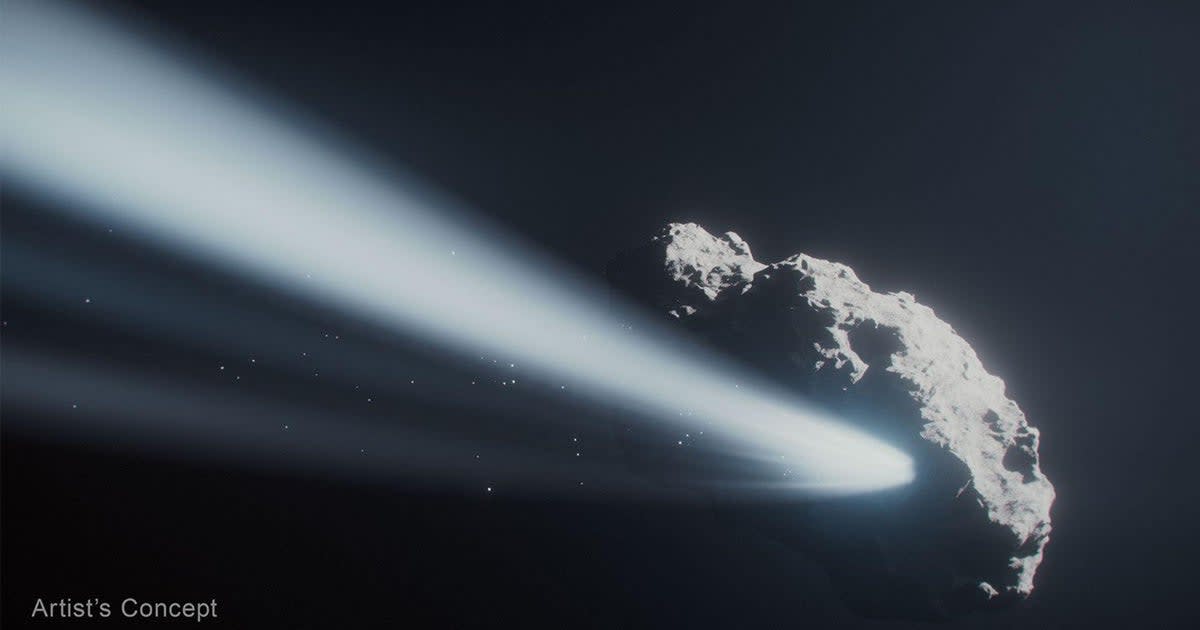
For the first time ever, astronomers watched a comet completely reverse its rotation, spinning backward after jets of gas acted like tiny thrusters against its original motion.
The comet, named 41P/Tuttle-Giacobini-Kresák, visits our inner solar system every 5.4 years. During its 2017 trip around the sun, something extraordinary happened.
In March 2017, the comet was spinning at a steady pace. By May, it had slowed to one-third of that speed. Scientists initially thought that was the end of the story.
But when researchers recently took another look at December 2017 images, they discovered the comet was spinning faster again. The only explanation? It had slowed all the way down to nearly zero, then reversed direction entirely.
The secret lies in how comets interact with sunlight. As 41P approached the sun, heat melted frozen ice on its surface, creating jets of gas that shot material into space. Those jets acted like small thrusters pushing against the comet's original spin.
"It's like pushing a merry-go-round," explained David Jewitt, an astronomer at UCLA who published the findings. "If it's turning in one direction, and then you push against that, you can slow it and reverse it."
The comet's small nucleus made it especially easy to rotate. Combined with the powerful gas jets, the conditions were perfect for this rare reversal.
The Bright Side
This discovery showcases something wonderful about scientific research: old data never gets old. NASA's publicly accessible archives contained observations from 2001 and 2017 that no one had fully analyzed until now.
Scientists can revisit observations made years or even decades ago to answer brand new questions. The space agency's commitment to sharing data means discoveries can happen long after telescopes first captured the images.
The comet itself may not last much longer, as its rapid changes suggest it could eventually fragment or disintegrate. But comparing its very active 2001 passage to its calmer 2017 visit shows how much it has already evolved.
While most comets change slowly over centuries, this one is transforming in just years because of its rotational gymnastics. Scientists are watching closely to see what happens next.
This spinning reversal proves the universe still has surprises waiting in data we've already collected, reminding us that exploration never truly ends.
More Images
Based on reporting by Google News - Science
This story was written by BrightWire based on verified news reports.
Spread the positivity!
Share this good news with someone who needs it