Common Antibiotic Boosts Immune Cells in Surprise Discovery
Scientists at Lancaster University found that fluoroquinolone antibiotics don't just kill bacteria—they supercharge our immune cells to fight harder. The discovery could help doctors choose the best antibiotics for each patient's unique needs.
A common class of antibiotics might be doing double duty in our bodies, and scientists are excited about what this means for future treatments.
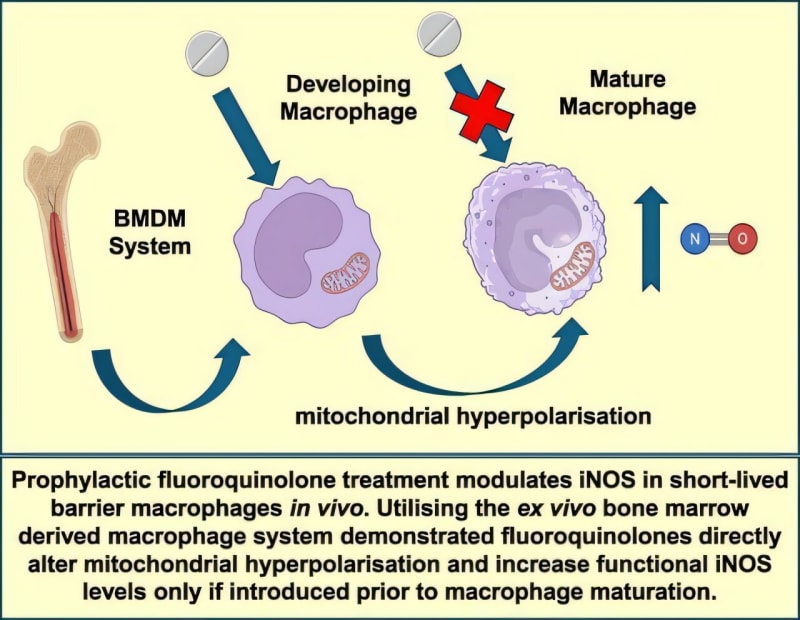
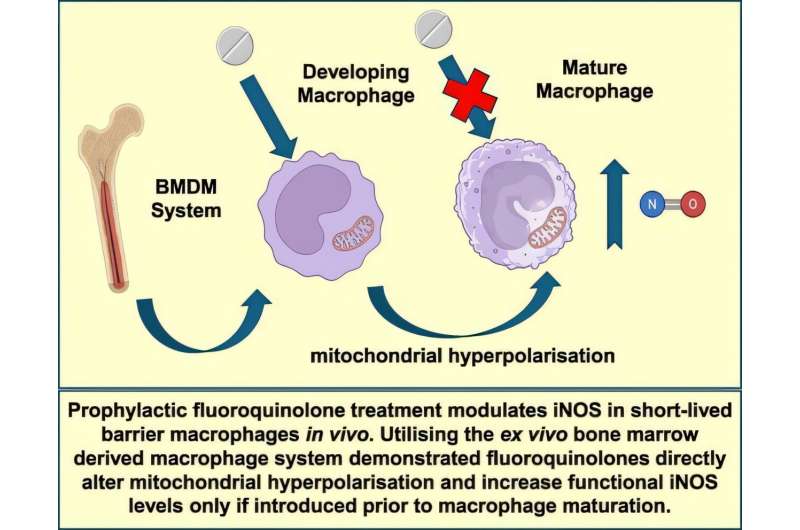
Researchers at Lancaster University discovered that fluoroquinolone antibiotics—commonly prescribed for lung and other bacterial infections—directly boost the bacteria-fighting power of immune cells called macrophages. These cells act like the body's cleanup crew, patrolling vulnerable areas like our lungs and gut to destroy invaders.
The team noticed something unusual when studying healthy animals treated with these antibiotics. Certain young macrophages showed higher levels of an enzyme that produces nitric oxide, a powerful bacteria-killing molecule. The cells also got better at swallowing up bacteria, a process called phagocytosis.
"Many previous observations have examined antibiotic use during bacterial infections where direct immune alterations could be missed," said lead researcher Dr. John Worthington. By studying uninfected tissue, his team spotted the immune boost that might otherwise have been invisible.
The secret lies in the mitochondria, the tiny powerhouses inside our cells. Our mitochondria actually evolved from ancient bacteria millions of years ago, which means some antibiotics can still affect them. The fluoroquinolones stress these mitochondria just enough to switch the macrophages into a heightened defense mode without damaging them.
Why This Inspires
This discovery opens a new way of thinking about antibiotic treatment. Instead of viewing these medications as simple bacteria killers, doctors might soon choose specific antibiotics based on how they interact with a patient's immune system.
The research adds an unexpected tool to medicine's arsenal at a time when fighting infections is becoming more challenging. Understanding that antibiotics can train our own cells to fight harder means treatments could become more personalized and effective.
Dr. Megan Dooley, co-author of the study, pointed out that while fluoroquinolones can have side effects like microbiome disruption, "this study adds to the literature that antibiotics do have immunomodulatory properties that may have beneficial and detrimental effects that most people don't think about."
The researchers caution that boosting immune activity isn't always better. Too much inflammation can damage healthy tissue, so doctors will need to carefully weigh the benefits for each patient.
The findings offer hope for smarter, more targeted antibiotic therapy that works with our bodies instead of just against bacteria.
More Images

Based on reporting by Medical Xpress
This story was written by BrightWire based on verified news reports.
Spread the positivity!
Share this good news with someone who needs it