Communities Win Voice in Climate Planning
A new study reveals how 32 projects succeeded in flipping climate planning from top-down mandates to real partnerships. The secret: five key roles that give communities power at the table.
When communities get asked to help plan for climate change, they're often frustrated by agencies that don't listen. A groundbreaking study from Columbia University's Resilient Coastal Communities Project just showed what happens when planners actually get it right.
Researchers interviewed 22 leaders across government, nonprofits, and community groups to find planning projects that truly partnered with local residents. They discovered 32 success stories where communities didn't just attend meetings but actually led the way.
The winning approach centers on building long-term trust instead of checking boxes. In coastal South Carolina and Georgia, the Gullah/Geechee Nation helped bridge communication gaps between their community and scientists. The result was resilience plans that actually reflected what locals needed, not just what agencies wanted to do.
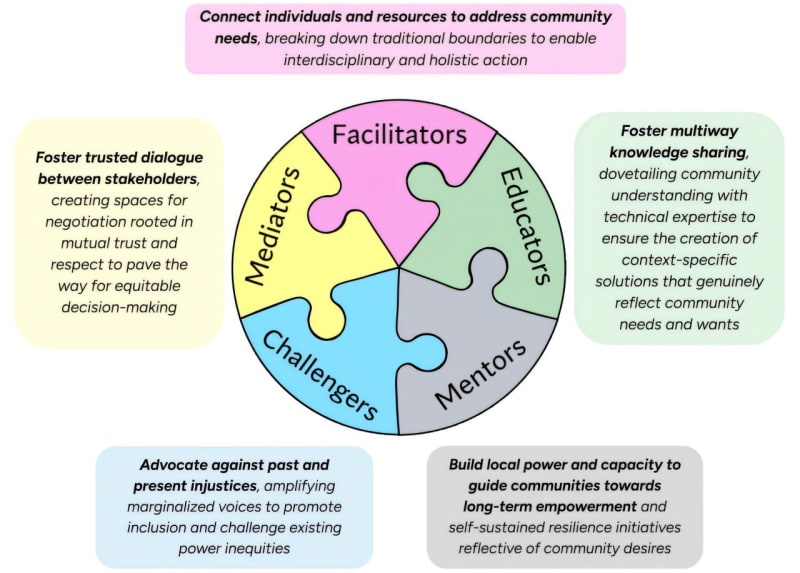
The study identified five critical roles that make fair planning work: facilitators who create welcoming spaces, educators who share knowledge both ways, challengers who push back on outdated approaches, mediators who bridge divides, and mentors who support community leaders. When these roles show up, planning transforms from lecture to conversation.
Traditional top-down planning fails because it treats community input as a formality. The new relational approach treats people as partners with expertise worth building entire plans around. Government agencies, researchers, and consultants who embraced this shift pushed beyond their usual limits to deliver resources communities actually needed.
The Ripple Effect
When planning centers community voices, the benefits spread far beyond single projects. Communities gain confidence to lead future efforts. Government agencies learn to work differently on all their projects. Other regions see what's possible and demand the same respect.
The study's authors want planning agencies to fund these five roles properly. They're asking universities to recognize faculty who build community relationships. Nonprofits should celebrate this work as essential, not extra. Consultants hold power to structure projects that respect both client priorities and community needs.
Despite 32 success stories, these examples remain rare exceptions. Most community organizations lack the resources or committed partners needed to share leadership meaningfully. Changing that requires everyone from funders to researchers to step up.
The path forward is clear: recognize the facilitators, educators, challengers, mediators and mentors already doing this work, then support them properly. Fair planning isn't impossible, it just needs communities in charge.
More Images



Based on reporting by Phys.org - Earth
This story was written by BrightWire based on verified news reports.
Spread the positivity!
Share this good news with someone who needs it
%2Ffile%2Fdailymaverick%2Fwp-content%2Fuploads%2F2022%2F06%2FOpinion-Simelane-SolarTW.jpg)