Community Land Rights at Crossroads: Kenya's Nuclear Power Plan Sparks Important Dialogue
Kenya's proposed nuclear power plant has sparked a crucial dialogue about community land rights, revealing complex legal challenges facing rural residents. The project in Uyombo highlights the delicate balance between national development goals and local community interests.
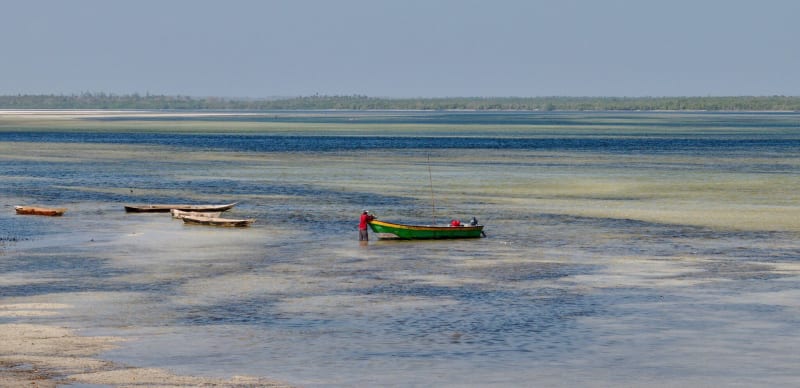
In the serene coastal town of Uyombo, where dolphins playfully dance in the waters off Watamu Marine National Park, an unexpected battle is brewing over land, energy, and community rights. Sanita Kitole, a passionate environmental activist, stands at the center of a complex narrative that reveals deeper challenges facing Kenya's land ownership systems.
The Kenyan government's ambitious plan to construct the country's first nuclear power plant has ignited profound tensions among local residents, particularly those whose livelihoods depend on fishing and marine ecosystems. The National Nuclear Power Regulator (NuPEA) argues that rapidly growing electricity demands necessitate exploring nuclear energy, but community members see the proposal as a direct threat to their traditional way of life.
At the heart of the controversy lies a critical legal complexity: most residents in Uyombo do not possess official land titles. This technical detail means the land is legally considered state property, allowing government entities to allocate or repurpose it without substantial community consultation. Despite generations of families living, farming, and fishing in this region, they remain vulnerable to potential displacement.
Kitole speaks passionately about the community's struggles, noting that previous generations have attempted to navigate bureaucratic processes to secure land ownership, only to be systematically blocked. 'They just came here and told us this is where they will build the power plant. That's all. And then you lose everything,' he explains, highlighting the profound sense of powerlessness residents experience.
The broader context is striking: according to a 2020 report by Rights and Resources, over two-thirds of Kenya's 56.91 million hectares is technically community land. Yet the process of obtaining official titles remains prohibitively complex and expensive, often costing between 3-4 million shillings ($23,300-$31,000) - asum far beyond most rural communities' reach.
Compounding residents' concerns are environmental considerations. The proposed nuclear facility's proximity to Watamu Marine National Park and Arabuko-Sokoke Forest, a UNESCO Biosphere Reserve, raises significant ecological questions. Community members worry about potential impacts on local biodiversity, including the marine ecosystems Kitole has worked diligently to protect through mangrove reforestation and sustainable business development.
While the nuclear power plan technically follows legal procedures, it has exposed critical conversations about community land rights, governmental transparency, and inclusive development strategies. The situation in Uyombo represents a microcosm of broader challenges facing many Kenyan communities navigating complex legal and economic landscapes.
As protests continue and discussions evolve, the nuclear power plan has become more than an energy infrastructure project - it's a pivotal moment for examining how development can truly center community needs, rights, and perspectives.
Based on reporting by Mongabay
This story was written by BrightWire based on verified news reports.
More Good News
 💡 Solutions
US Commits $2 Billion in Humanitarian Aid, Introducing Innovative UN Support Model
 💡 Solutions
Electric Dreams: How Red States Are Powering America's Wireless Charging Revolution
 💡 Solutions
Trust Triumphs: How Creators Are Rebuilding Connections in the AI-Driven Social Media Landscape
Start Your Day With Good News
Join 50,000+ readers who wake up to stories that inspire. Delivered fresh every morning.
No spam, ever. Unsubscribe anytime.