Companies Build Moon Base Infrastructure for Permanent Living
Space companies are shifting from short lunar missions to building permanent moon infrastructure designed for humans to live and work there by 2030. Voyager Technologies and partners are creating habitats, power systems, and life support that can handle the moon's harsh conditions.
The next chapter of space exploration isn't about visiting the moon. It's about staying there.
Space industry leaders are building a new kind of lunar infrastructure connecting Earth orbit to the moon's surface. Instead of temporary missions, companies like Voyager Technologies are creating permanent habitats, power systems, and life support designed to last for generations.
"If we want humans to endure beyond Earth, we have to start building systems that last," said Paul Tilghman, chief technology officer at Voyager. The company brings decades of space station experience to lunar development, including habitat design, airlocks, and electronics that can survive constant radiation and extreme temperatures.
The moon presents unique challenges. Systems must work through temperature swings of hundreds of degrees, protect against radiation, handle abrasive moon dust, and operate autonomously when Earth communication delays decision making. Voyager is designing these systems now, drawing on proven technology from low Earth orbit stations.
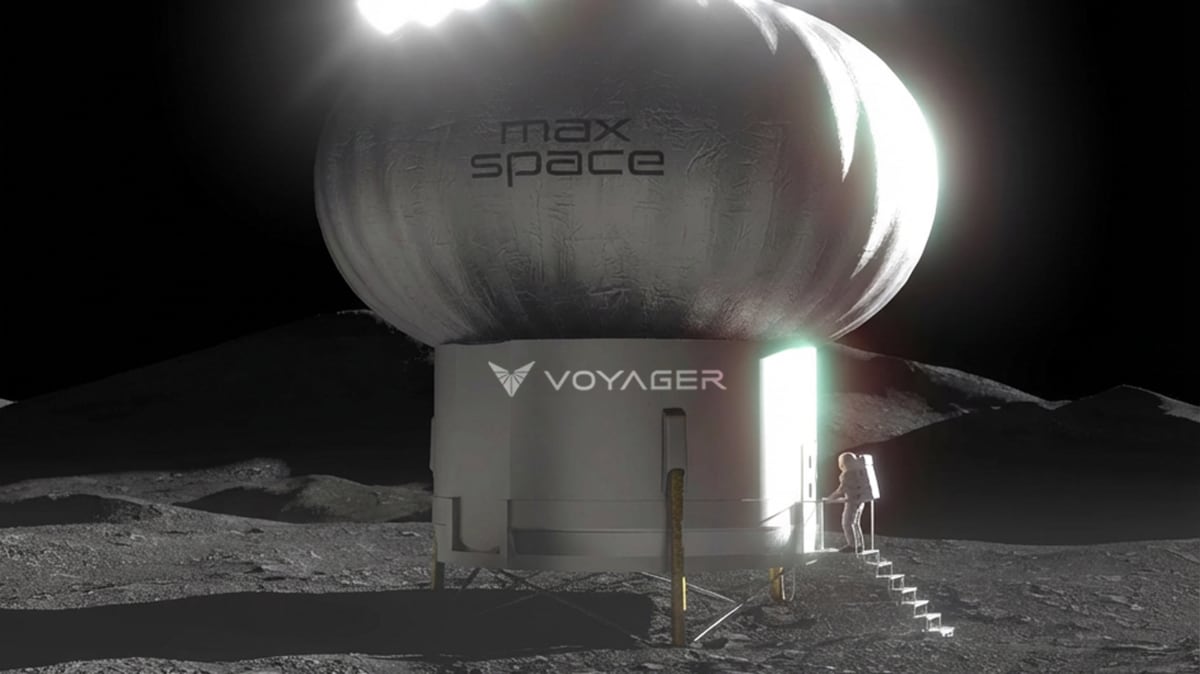
Volume matters when launching to the moon. Voyager recently partnered with Max Space, a startup developing expandable habitat modules that inflate after launch. This approach maximizes living space without exceeding rocket payload limits, combining inflatable structures with proven life support systems.
The timeline is ambitious. The current administration has directed NASA to establish initial elements of a permanent lunar outpost by 2030. Companies are racing to demonstrate their hardware works in space as quickly as possible.
The Ripple Effect
This infrastructure shift creates new possibilities for who can participate in space. A permanent moon base needs scientists, engineers, technicians, and eventually families. The systems being built today will determine which countries and companies can access lunar resources and establish economic footholds off Earth.
The approach also speeds up the path to Mars. By building reusable, scalable systems for the moon first, companies can test technology closer to home before attempting the longer journey to the red planet. Local computing power on the moon will enable faster decisions without waiting for Earth signals.
Tilghman calls it "a new Apollo moment" with palpable acceleration. The difference is this time, the goal isn't planting flags but building economies that eventually support themselves through mining, manufacturing, and research.
Humanity is preparing not just to return to the moon, but to make it home.
More Images

Based on reporting by SpaceNews
This story was written by BrightWire based on verified news reports.
Spread the positivity!
Share this good news with someone who needs it