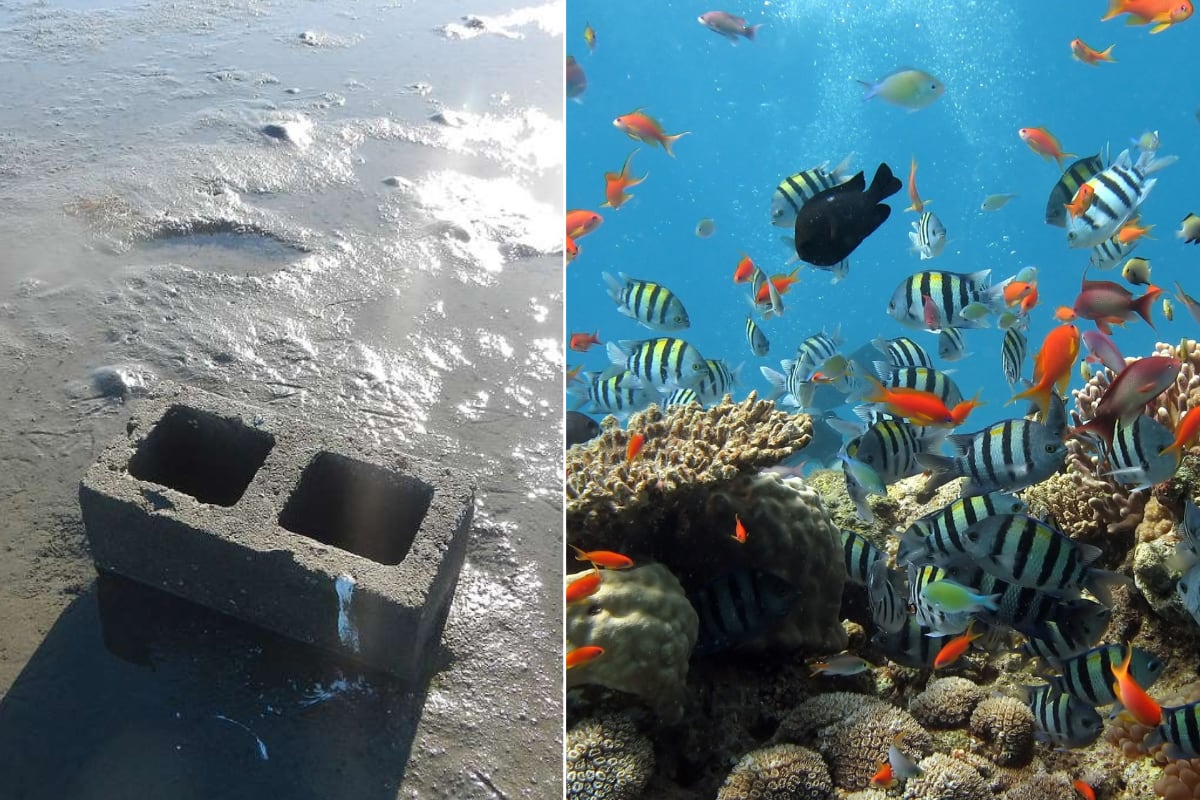
Concrete Blocks Become Thriving Coral Reef in 3 Months
Scientists dropped concrete pyramids into a barren stretch of Caribbean Sea off Grenada in 2013. Within three months, the blocks transformed into bustling marine neighborhoods teeming with fish, coral, and sea life.
When researchers dropped concrete blocks into an empty patch of ocean off Grenada's coast, they hoped for results. What happened next exceeded their wildest expectations.
The Grenada Artificial Reef Project started small in 2013 with just four concrete pyramids placed in a lifeless section of the Caribbean Sea. Scientists wanted to test whether simple concrete structures could help rebuild vanishing coral reefs.
In only three months, the pyramids burst with activity. Algae and colorful sponges covered the surfaces first, followed by feather duster worms, lobsters, crabs, and sea urchins looking for shelter.
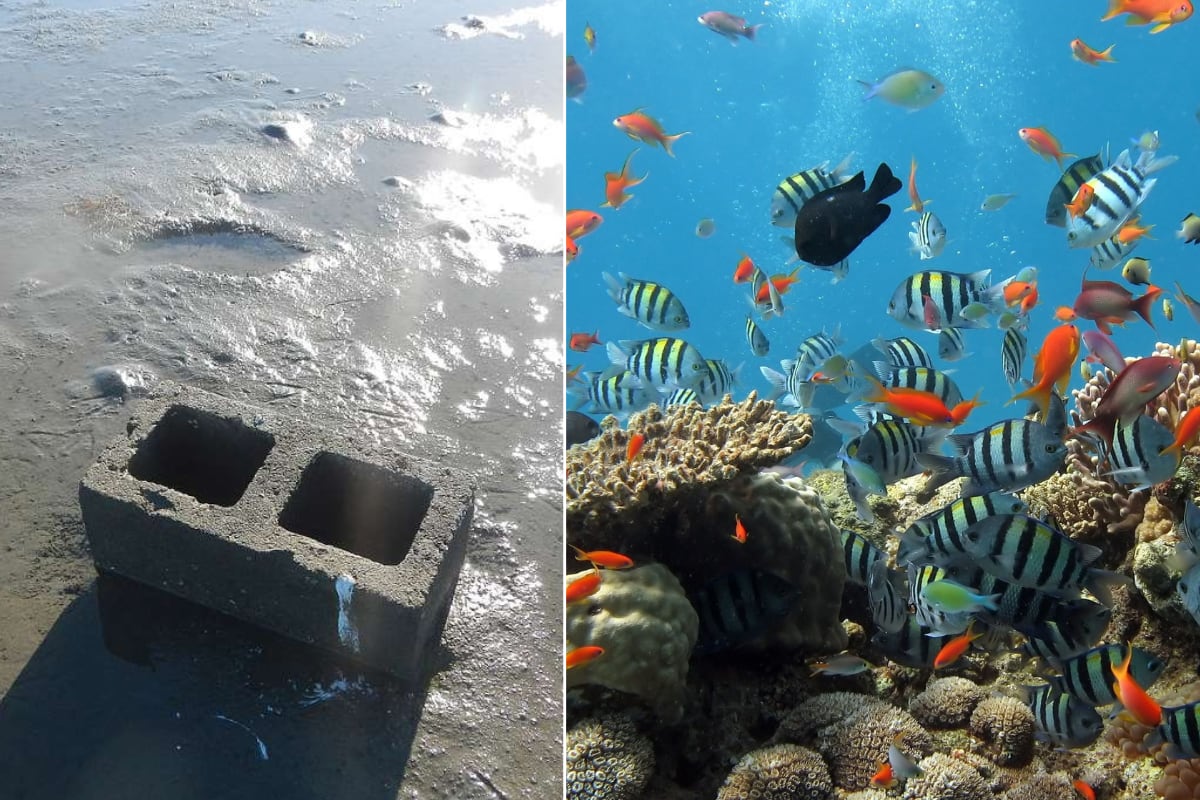
Within a year, entire fish communities moved in. Squirrel fish, goat fish, grunts, and scorpionfish made the concrete their home, transforming the barren seafloor into what researchers called a "buzzing diverse community."
The real breakthrough came at 18 months. Stony and brain corals began growing on the pyramids, the same building blocks that create natural reefs over thousands of years.
Today, more than 100 concrete pyramids dot the location. The artificial reef now hosts over 30 fish species, 14 types of coral, and countless invertebrates you'd find on naturally occurring reefs.
Similar projects are happening worldwide because concrete works remarkably well. It's heavy enough to withstand storms and currents, and it doesn't degrade in salty seawater like other materials.
One failed experiment in Florida during the 1970s used millions of old tires instead. Storms scattered them across the ocean floor, damaging healthy natural reefs and creating an ecological disaster that crews are still cleaning up decades later.
The Ripple Effect
Coral reefs do more than look beautiful underwater. They protect coastlines by dampening waves before they hit land, reducing erosion for millions of coastal residents.
Reefs shelter an incredible variety of marine life and serve as hunting grounds for food. Scientists regularly discover new species and potential medical treatments by studying reef ecosystems.
But natural coral reefs are disappearing fast. Pollution, warming oceans, physical damage, and coral bleaching threaten these ancient ecosystems that took millennia to form.
Artificial reefs can't replace everything we've lost. Natural reefs grow over thousands of years, and no amount of concrete can substitute for protecting what still exists.
Saving our oceans requires fighting pollution and climate change alongside creating new habitats. But watching empty ocean floor transform into thriving communities in just months shows what's possible when we give nature the right foundation to rebuild.
More Images



Based on reporting by Upworthy
This story was written by BrightWire based on verified news reports.
Spread the positivity!
Share this good news with someone who needs it
%2Fhttps%3A%2F%2Ftf-cmsv2-smithsonianmag-media.s3.amazonaws.com%2Ffiler_public%2F23%2F1f%2F231f084b-5f01-4ff1-bd35-e430fcf3c20c%2F22soloman_siren_by_jason_decaires_taylor_sculpture.jpg)