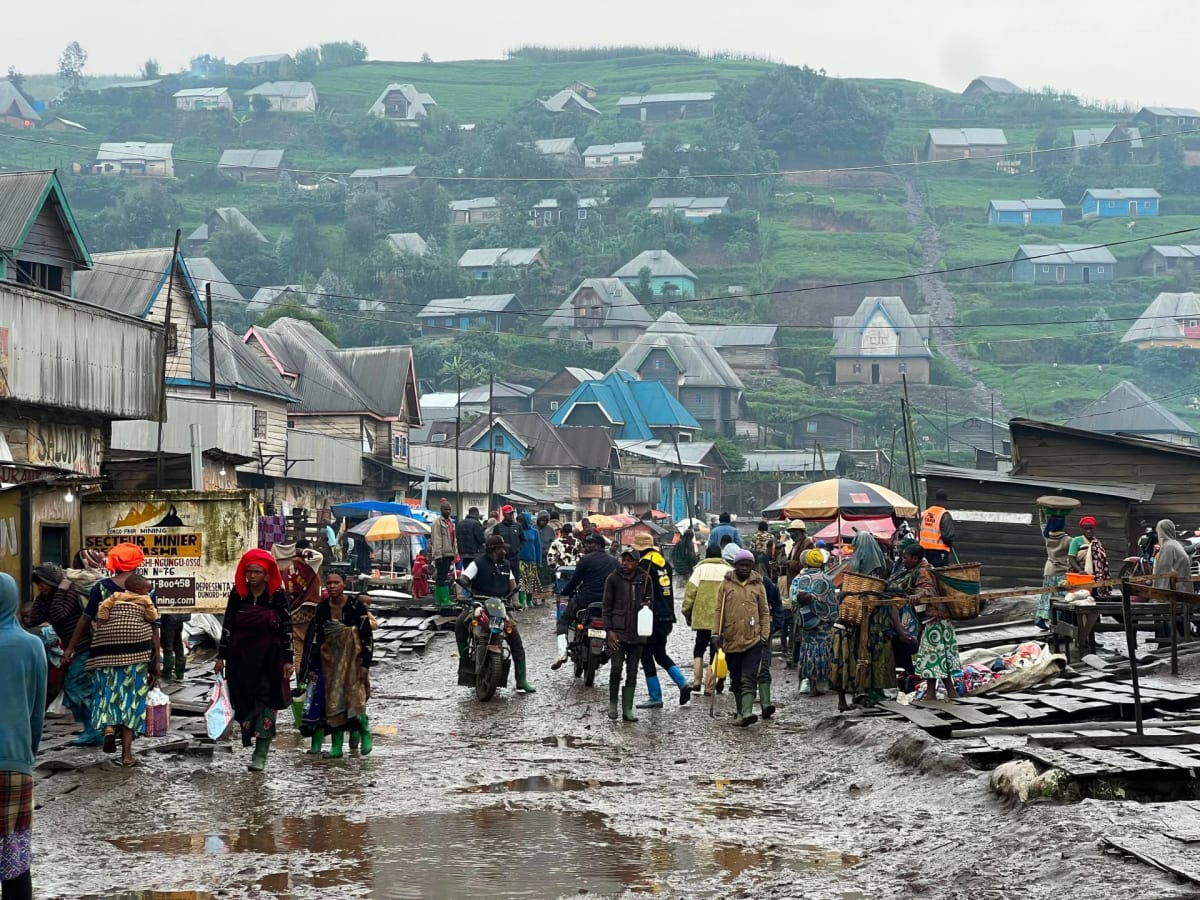
Congo Begins First Census in 42 Years
After more than four decades, the Democratic Republic of Congo is finally counting its population again, giving millions like 28-year-old Heritier Ramazani their first chance to be officially recognized by their own country. The digital census could help 112 million people access identity documents and government services for the first time.
For the first time in his 28 years, Heritier Ramazani will officially exist in the eyes of his government.
Ramazani is one of millions in the Democratic Republic of Congo who've never been counted in a national census or received an official identity card. The last time the country tallied its population was 1984, when it was still called Zaire and had a fraction of today's 112 million residents.
Now, that's finally changing. The DRC launched its first census in 42 years, using smartphones and tablets to reach communities across a country larger than Alaska and Texas combined.
"I've never been registered in a census since I was born," Ramazani told reporters in Bunia, northeastern Congo. "Being registered and having my identity card will make me very happy."
His story isn't unique. More than 65 percent of Congolese are under 25, meaning most of the population has never had the chance to be officially counted.
For decades, many citizens have relied on voter registration cards as their only form of identification. The new census promises to create a stronger system for issuing national identity documents that open doors to banking, education, healthcare, and travel.
Gedeon Katembo, a 36-year-old father of three, sees the census as more than just numbers. "It is essential to know how many Congolese people there are in the country and around the world," he said. "The census can also help strengthen national unity."
The Ripple Effect
The census does more than count people. It creates the foundation for better schools, hospitals, and roads by showing the government exactly where resources are needed most.
Henri Marie Kazadi, who's coordinating the effort, explained that digital tools will make the process faster and more accurate than the paper forms used in 1984. "We are deploying teams of cartographers in the field to identify and geolocate all inhabited places, after which the actual census will follow," he said.
The mapping phase started this year, with field workers fanning out across rainforests, cities, and farmland to prepare for household visits. While reaching remote areas and conflict zones presents challenges, the government has committed to counting every community.
For people like Ramazani and Katembo, the census represents something profound: proof that they matter to their country, documented and official for generations to come.
Based on reporting by Al Jazeera English
This story was written by BrightWire based on verified news reports.
Spread the positivity!
Share this good news with someone who needs it