Cosmic Rose Blooms 5,000 Light-Years From Earth
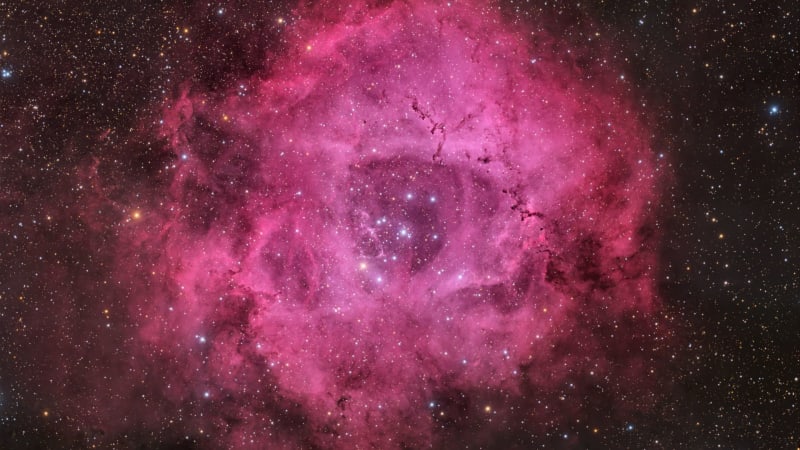
A stunning photograph captures the Rosette Nebula, a 100-light-year-wide flower of stars and gas glowing in deep space. Astrophotographer Ronald Brecher transformed 10 hours of observation into a breathtaking Valentine from the universe.
The universe just sent Earth a cosmic valentine in the form of a glowing rose made of stars, gas, and ancient light.
Astrophotographer Ronald Brecher captured the stunning Rosette Nebula, a massive star-forming region that sits 5,000 light-years away in the constellation Monoceros. The nebula earned its name from its remarkable resemblance to a blooming rose, with petals of glowing hydrogen gas unfurling across 100 light-years of space.
Brecher originally collected the data for this image back in 2021, spending nearly 10 hours observing the distant nebula. But he recently returned to those observations with fresh eyes and new processing techniques, breathing new life into the ancient light.
The result is a cosmic masterpiece. Dark threads of hydrogen gas weave through the scene like delicate stems, while blue-white stars from the cluster NGC 2244 carve out a cavity at the heart of the nebula. Some of these stellar giants pack 50 times the mass of our sun.
The entire structure contains enough material to create 10,000 stars like ours. Radiation from nearby stars has sculpted and shaped the nebula over millions of years, creating the rose-like appearance we see today.
Why This Inspires
Brecher's image reminds us that beauty exists everywhere in the universe, even in places we'll never physically reach. His dedication to revisiting old data with new skills shows how patience and growth can reveal wonders we might have missed the first time around.
The Rosette Nebula appears different when viewed in various wavelengths of light. What looks like swirling dust and gas in visible light reveals hidden stars in infrared and ultraviolet observations.
For those inspired to explore the night sky themselves, amateur astronomers can observe distant nebulas and star clusters with basic telescopes. The post-sunset realm holds countless treasures waiting to be discovered by anyone willing to look up.
Sometimes the most romantic gestures come from the most unexpected places, even from a flower blooming quietly in the darkness 5,000 light-years away.
More Images
Based on reporting by Space.com
This story was written by BrightWire based on verified news reports.
Spread the positivity!
Share this good news with someone who needs it
%2Fhttps%3A%2F%2Ftf-cmsv2-smithsonianmag-media.s3.amazonaws.com%2Ffiler_public%2Ff0%2Ffe%2Ff0fe19e4-e68b-474d-b0a4-19c5beb9d19d%2Fspeedy-star.webp)