Costa Rica Requires Wildlife Bridges on All New Roads
Costa Rica just became the first country to mandate wildlife crossings on roads that threaten animals, protecting species and connecting fragmented forests. The unanimous vote means safer passage for sloths, monkeys, and millions of migrating crabs.
Costa Rican lawmakers just voted unanimously to require wildlife bridges, tunnels, and crossings wherever roads interrupt animal movement or threaten their safety. The groundbreaking measure, approved in August 2024, makes Costa Rica a global leader in protecting biodiversity while building infrastructure.
Once the president signs the law, every new road project must include wildlife crossings from the very first planning stage. Costa Rica's National Environmental Technical Secretariat will review and approve all plans before construction begins.
Even existing roads could get new crossings if scientific data shows animals need them. "Anyone can contribute scientific data to show that a bridge is needed," Rebecca Cliffe, founder of the Sloth Conservation Foundation, told Mongabay.
Cliffe is already planning a citizen science project to gather data from rescue centers and community reports in the South Caribbean region. The goal is to identify exactly where new bridges could save the most lives.
The need is urgent. Those bright yellow wildlife warning signs featuring sloths and tapirs that dot Costa Rican roads? A 2024 study from Brazil found they barely slow drivers down at all.
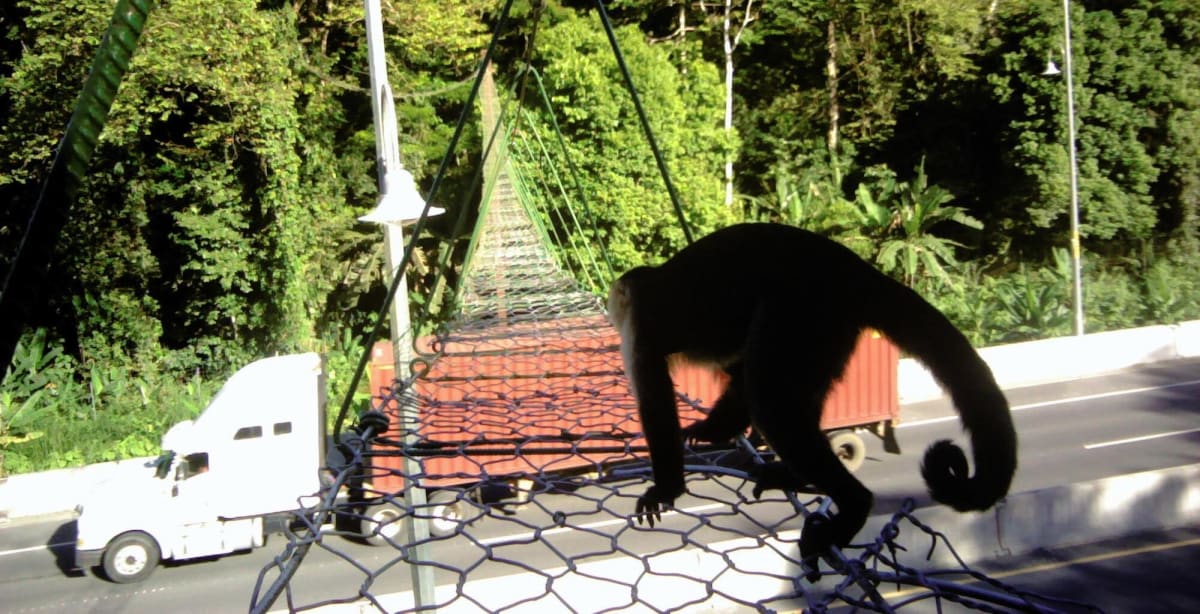
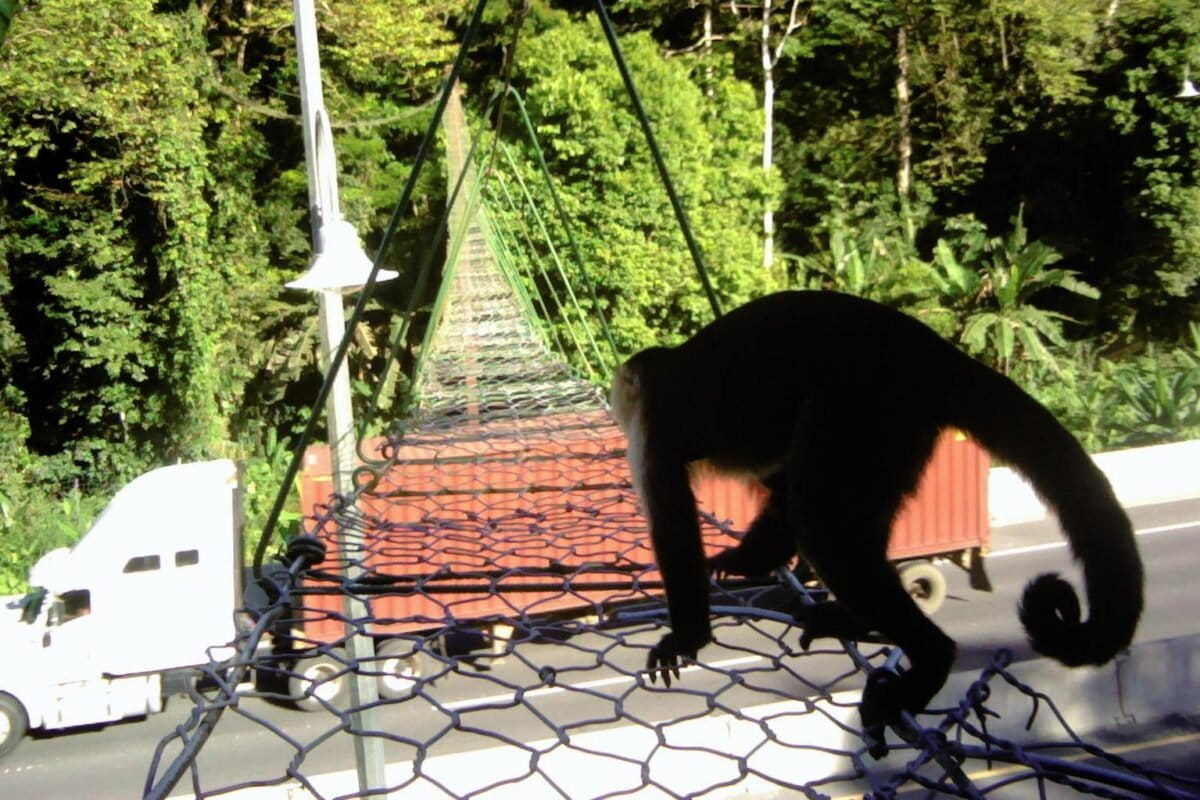
"No one's slowing down when they see those signs," Cliffe said, calling them "greenwashing." But actual wildlife crossings, including bridges, culverts, tunnels, and rope bridges for tree-dwelling species, are proven lifesavers.
At least 59 species already use wildlife bridges in Costa Rica. Monkeys, sloths, kinkajous, and opossums cross most frequently, safely avoiding traffic below.
The crossings do more than prevent collisions. They reconnect fragmented forests, allowing animals to access food, mates, and the space they need to survive.
Different areas need different solutions. In coastal regions, land crabs migrate annually to the ocean to lay eggs, and many die crossing roads.
"When I first came here 17 years ago, there were so many crabs you couldn't drive along the road," Cliffe said. "Now there's none." Tunnels could help restore these migrations where crab populations still exist.
The Ripple Effect
The law addresses a crucial tension in Costa Rica's economy. Millions of ecotourists visit each year specifically to see wildlife, yet the roads they drive on fragment the very habitats those animals need.
"Coexistence is so important for Costa Rica because it relies so heavily on ecotourism," Cliffe explained. "Getting this balance right between development and conservation is essential."
By embedding wildlife protection into infrastructure from day one, Costa Rica is proving that economic development and conservation don't have to compete. Other biodiversity hotspots around the world are watching closely.
The unanimous vote shows something rare: complete political agreement that protecting nature protects everyone.
More Images

Based on reporting by Mongabay
This story was written by BrightWire based on verified news reports.
Spread the positivity!
Share this good news with someone who needs it