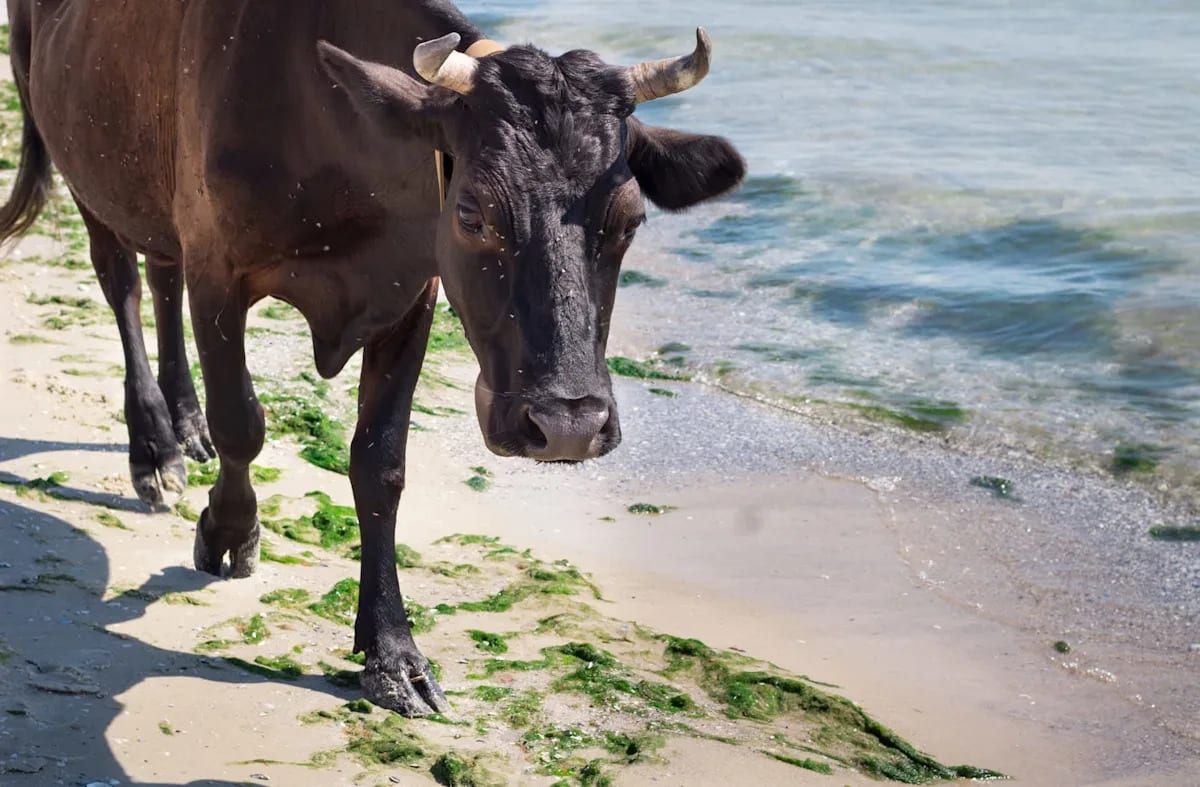
Cows Can Digest Seaweed, Opening New Path for Farmers
Scientists discovered that cows can effectively digest seaweed, offering farmers a climate-resilient feed option as droughts squeeze traditional pastures. The finding could reshape how we feed livestock while reducing pressure on farmland.
When researchers fed seaweed to cattle, they weren't sure the cows could digest it at all. What they discovered could help farmers weather the growing climate pressures threatening traditional feed crops.
A team from Agriculture and Agri-Food Canada and the University of Saskatchewan found that cattle gut systems adapted remarkably well to seaweed. Their microbiomes shifted, with certain bacteria stepping up to break down the marine plant's complex sugars.
"We could finally see exactly how the bacteria crack the code of seaweed digestion," said Wade Abbott, a research scientist who led the study. The finding matters because seaweed is structurally different from grass and hay, containing compounds that cows didn't evolve to digest.
For farmers facing drought and rising feed costs, this research opens a practical door. Climate pressures are already reducing pasture quality across many regions, making conventional feed crops more expensive and less reliable.
The Ripple Effect
If seaweed becomes a viable cattle feed at scale, the benefits could reach beyond individual farms. Diversifying livestock nutrition could stabilize feed costs over time, potentially smoothing out climate-driven price swings at grocery stores.
The shift could also ease pressure on agricultural land already stretched thin by rising temperatures. By sourcing some livestock nutrition from marine ecosystems instead of farmland, regions could redirect land use in more sustainable ways.
Right now, the research focuses on understanding the biological mechanisms at work. The study reveals that cattle gut microbes can unlock new metabolic pathways when presented with unfamiliar food sources.
"We're only beginning to understand the genetic mechanisms that allow gut microbes to process these marine sugars," Abbott explained. If researchers can fully map those pathways, the applications could extend far beyond cattle.
The work represents a new framework for sustainable agriculture, one that embraces unconventional feed sources. Rather than fighting against climate change with traditional methods alone, this approach works with the biology already present in cattle digestive systems.
For consumers concerned about food security, a more flexible system means greater resilience against supply disruptions. While changes at the farm level take years to reach store shelves, the foundation is being built now.
The discovery shows that solutions to climate challenges sometimes come from unexpected places, like the ocean instead of the pasture.
More Images
Based on reporting by Google News - Scientists Discover
This story was written by BrightWire based on verified news reports.
Spread the positivity!
Share this good news with someone who needs it