Cows Recognize Human Faces and Voices, Study Finds
French researchers discovered that cows can tell familiar people apart from strangers by their faces and voices, forming detailed mental pictures of the humans they know. This finding challenges our assumptions about farm animals and could transform how we care for them.
Cows know who you are, and they remember your face better than you might think.
A groundbreaking study from France's National Research Institute for Agriculture has revealed that cows can differentiate between familiar and unfamiliar humans using both visual and vocal cues. The discovery suggests these farm animals possess far more sophisticated social intelligence than scientists previously believed.
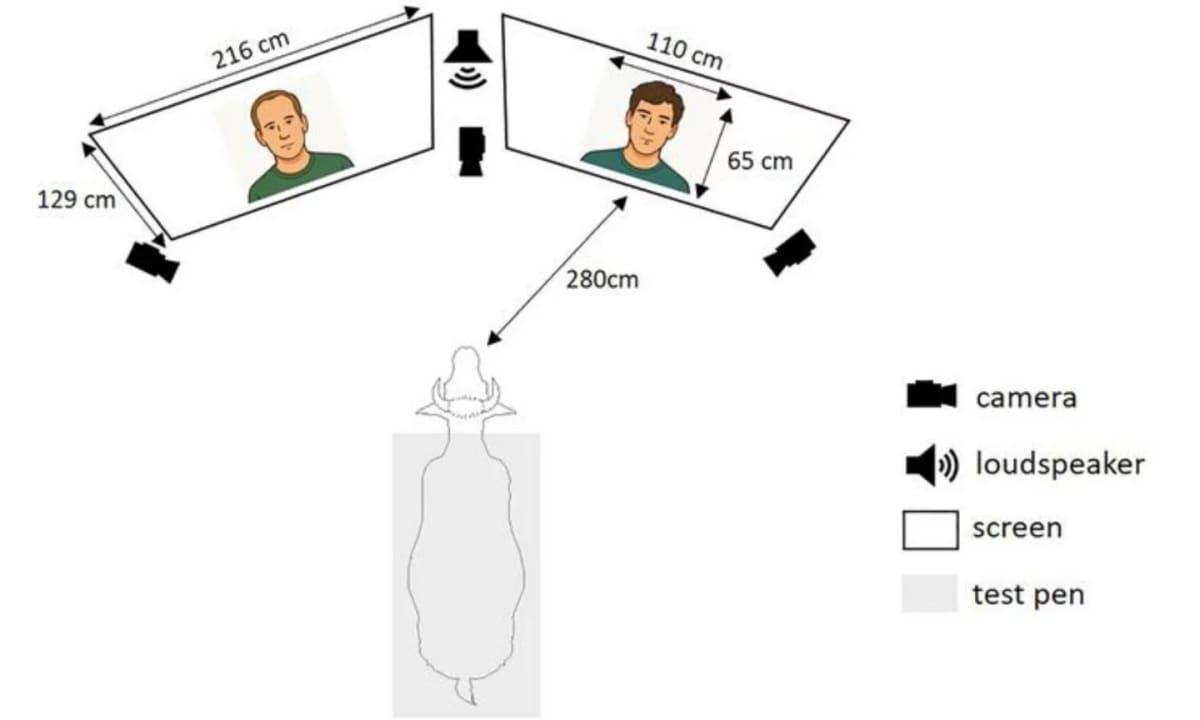
Researchers tested 32 young dairy cows using videos of eight different men, including four familiar caretakers and four strangers. The cows had never participated in experiments like this before.
When shown silent videos of both familiar and unfamiliar faces simultaneously, the cows spent more time looking at strangers. This mirrors how many animals respond to novelty, but the second test revealed something even more impressive.
When researchers added voices to the videos, the cows looked significantly longer at faces that matched the voices they heard. This cross-modal recognition means cows build complete mental representations of people, linking visual and auditory information into one cohesive memory.
Lead researcher Léa Lansade explains that people who work with cattle have wildly different opinions about their intelligence. Some consider them simple animals, while others describe them as highly observant and socially savvy.
The study brings scientific evidence to settle that debate. Cows don't see all humans as one undifferentiated group. They recognize individuals and remember them across different sensory experiences.
Why This Inspires
This research does more than expand our understanding of animal cognition. It opens doors to rethinking how we interact with farm animals entirely.
The ability to integrate multiple sensory cues requires sophisticated cognitive processing. It's the same kind of mental work that helps us recognize a friend by their laugh before we even see their face.
Interestingly, heart rate measurements showed the cows remained calm whether viewing familiar or unfamiliar people. They weren't stressed by the experiment. They were simply paying attention.
Lansade and her team hope these findings inspire further research into how cows acquire knowledge, process information, and develop preferences for specific people. Understanding these capabilities could reshape animal welfare practices on farms worldwide.
The implications stretch beyond scientific curiosity. As Lansade notes, the better we understand an animal, the better we tend to treat it.
For the millions of cows living on farms around the world, being seen as the intelligent, socially aware creatures they truly are could make all the difference in how humans care for them.
More Images

Based on reporting by New Atlas
This story was written by BrightWire based on verified news reports.
Spread the positivity!
Share this good news with someone who needs it