CRISPR Targets Rare Muscle Disease Without Changing DNA
Scientists are using a safer twist on gene editing to treat diseases by flipping genetic switches instead of cutting DNA. The first trial results for a rare muscular disorder just arrived, and they're opening doors for conditions from high cholesterol to inherited diseases.
When Amber Salzman heard the disease name FSHD, everything changed.
Halfway through a job interview she'd only taken as a favor, the pharmaceutical veteran suddenly saw a chance to help her husband's family. His cousins and grandmother all suffered from facioscapulohumeral muscular dystrophy, a condition that steals muscle strength starting in the face and shoulders, sometimes leaving people wheelchair-bound.
The startup Epicrispr wasn't planning to cure FSHD the traditional way. Instead of editing genes directly, they wanted to flip the switches that turn genes on and off.
Think of your DNA as hardware and epigenetic markers as the software running on top. These chemical tags tell your cells which genes to activate and which to silence. Scientists have figured out how to precisely add or remove these markers without ever touching the genetic code underneath.
"Epigenetic editing is a truly exciting concept because there is no chance of off-target DNA mutations being made, as is the case with gene editing," explains Jessica Tyler, a molecular biologist at Weill Cornell Medicine. Standard CRISPR cuts DNA like scissors, which can sometimes snip in the wrong spot or cause unexpected rearrangements.
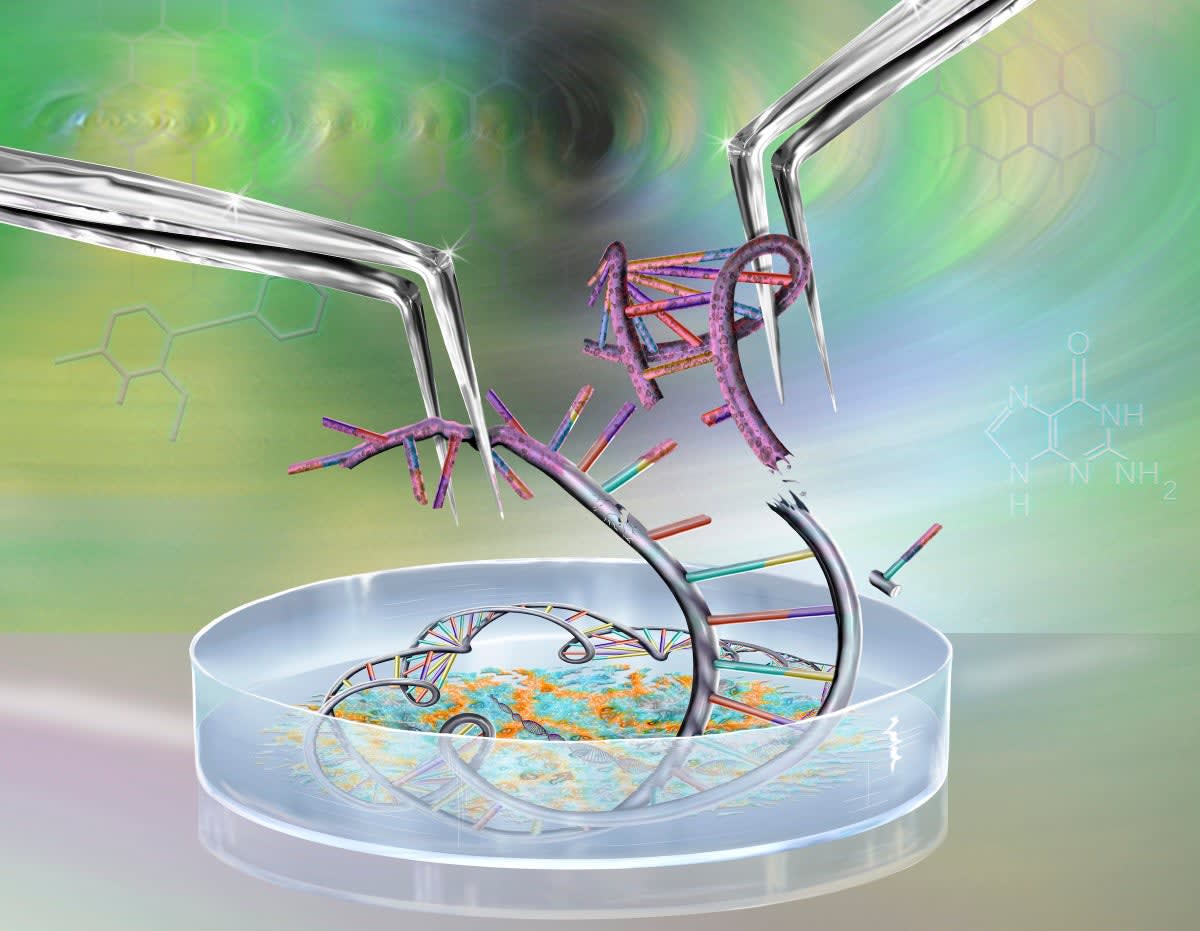
The new approach uses a modified version of CRISPR called "dead" Cas9. The guide still finds the right spot in your genome, but instead of cutting, it just sits there and changes the chemical markers. The modifications appear reversible in early lab tests, adding another safety layer.
Salzman took the CEO job at Epicrispr in 2021. This June in Chicago, the company became one of the first to share data from an actual epigenetic editing trial at the International Research Congress on FSHD.
Several other companies are racing ahead with the technology. Tune Therapeutics in Seattle is exploring treatments for various conditions. The approach could work for high cholesterol, inherited disorders, and diseases where genes are turned on or off at the wrong times.
Biologist Fyodor Urnov, who helped pioneer gene editing and co-founded Tune, compares epigenetic changes to using an audio mixing board. The same piece of music can sound like classical composer Franz Schubert or pop star Taylor Swift, depending on how you adjust the settings.
Why This Inspires
For decades, families affected by rare genetic diseases have watched scientists make breakthrough after breakthrough that never quite reached them. The conditions were too uncommon, too complicated, or the treatments too risky.
Epigenetic editing changes that calculation. Because it doesn't permanently alter DNA, it offers a gentler path forward for diseases that have been stuck in the "too hard" pile. Some existing drugs influence epigenetic markers broadly, but these new tools work with precision, targeting specific genes while leaving others alone.
The technology still needs careful study. Epigenetic regulation controls development and reproduction, so researchers must ensure treatments stay safe without unintended consequences. But the early signs point toward a new category of medicine that works with our biology instead of rewriting it.
Salzman's personal connection to FSHD turned a courtesy interview into a mission, proving that sometimes the best innovations come from people who understand exactly what's at stake.
More Images



Based on reporting by Scientific American
This story was written by BrightWire based on verified news reports.
Spread the positivity!
Share this good news with someone who needs it