CRISPR Turns Cancer's Strength Into Its Fatal Weakness
Scientists have flipped the script on aggressive cancers by using gene editing to turn one of their biggest advantages into a deadly vulnerability. In animal models, this breakthrough approach destroyed hard-to-treat tumors while leaving healthy cells unharmed.
Imagine if cancer's most aggressive weapon could be turned against itself. Scientists at Spain's National Cancer Research Centre just made that happen.
Many solid tumors grow dangerously fast because they carry extra copies of cancer-causing genes called oncogenes. Some cells have tens or even hundreds of these copies. This amplification makes tumors harder to treat and helps them hide from the immune system.
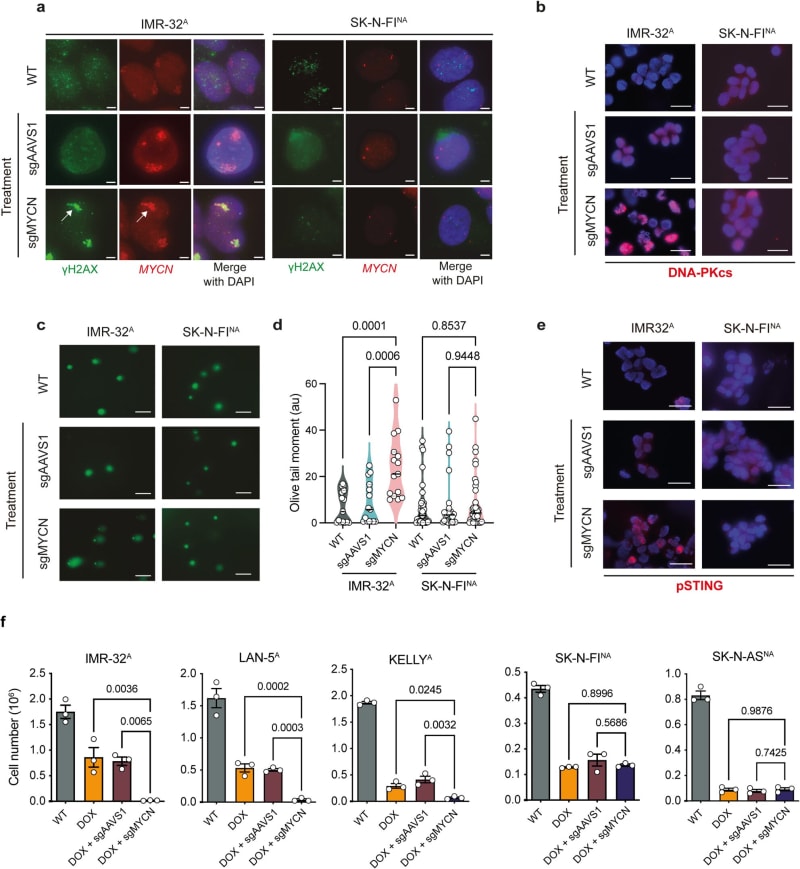
Researchers led by Sandra Rodríguez-Perales found a way to use this amplification as cancer's Achilles' heel. They deployed CRISPR gene editing tools to cut the amplified oncogene inside tumor cells.
Here's the clever part: when a normal cell gets damaged DNA, it repairs itself quickly. But when you cut a gene that exists in hundreds of copies, the damage multiplies beyond what the cell can fix. Overwhelmed, the cancer cell triggers its own death.
Healthy cells survive because they only have two copies of the gene. They repair the cuts easily and move on unharmed.
The team tested this strategy on three notoriously difficult cancers: neuroblastoma (a childhood cancer), small cell lung cancer, and colon cancer. In animal models, tumors shrank, survival increased, and early signs suggested the treatment was waking up the immune system to fight back.
The Ripple Effect
This discovery could reshape how doctors approach some of the toughest cancers to treat. The research team already started combining their gene editing technique with standard chemotherapy. When they paired it with a common neuroblastoma drug, far more cancer cells died than would have from either treatment alone.
First authors Alejandro Nieto and Marta Martínez-Lage call it "a novel strategy that turns oncogene amplification into a vulnerability." The approach tackles one of gene therapy's biggest challenges: hitting cancer cells while sparing healthy tissue.
The team believes this type of targeted cell death could also teach the immune system to recognize and attack tumors. They've already spotted early immune responses in their experiments and plan to explore this further.
While human trials are still ahead, the research published in Molecular Cancer offers genuine hope for patients facing cancers that resist conventional treatment. By making cancer's strength its fatal flaw, scientists have opened a promising new front in precision medicine.
More Images


Based on reporting by Medical Xpress
This story was written by BrightWire based on verified news reports.
Spread the positivity!
Share this good news with someone who needs it