Crop Rotation Boosts Soil Life and Food Security
A new global study reveals that rotating crops doesn't just restore soil health—it supercharges the invisible ecosystem beneath our feet. The finding could help farmers worldwide grow more food while protecting the planet.
Farmers have known for generations that rotating crops helps their fields, but scientists just discovered the underground party that makes it all work.
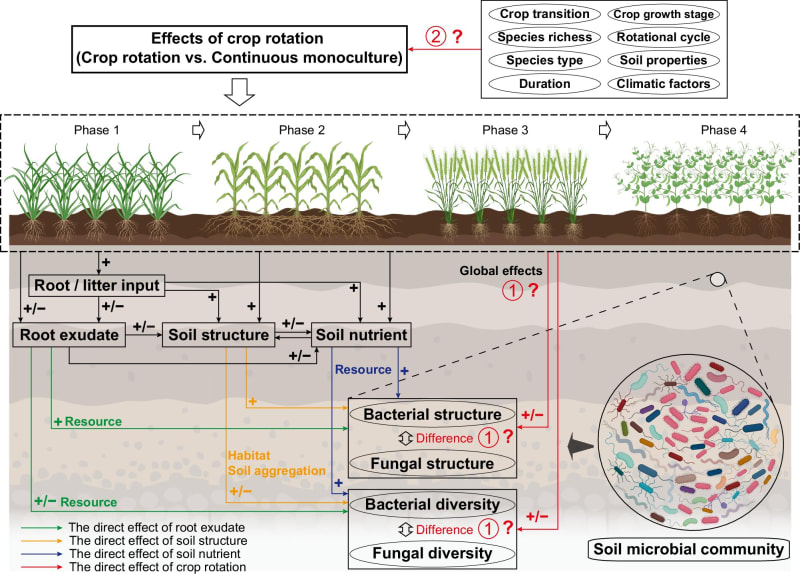
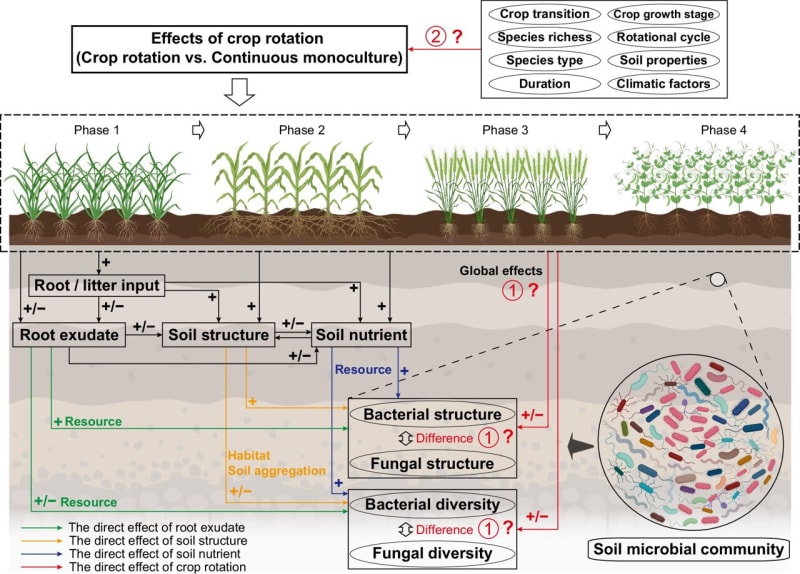
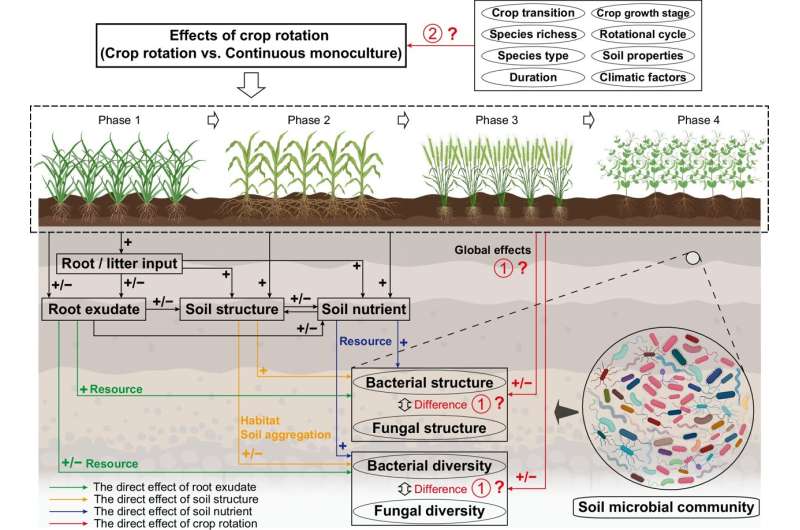
Researchers at the University of Alberta analyzed 148 studies from around the world and found that crop rotation dramatically increases the number and variety of helpful bacteria and fungi living in soil. These tiny organisms are the unsung heroes of healthy farmland, breaking down nutrients and protecting plants from disease.
The research, published in Nature Communications, used modern DNA sequencing to get the most accurate picture yet of what's happening beneath the surface. The results were clear: fields with crop rotation had more diverse bacterial communities and more varied fungal populations from place to place.
That variation matters more than it might sound. When fungal communities differ across a field, it prevents any single harmful pathogen from taking over and wiping out an entire crop. It's nature's insurance policy, built right into the soil.
The study found the biggest benefits came from rotating very different types of plants. Switching between legumes like beans and non-legumes like wheat or corn gave soil microbes the most diverse "menu" to work with.
The Ripple Effect
As microbial diversity increased, so did crop yields. That connection suggests healthier soil doesn't just help individual farms—it could strengthen global food security.
The findings arrive at a crucial time. With climate change threatening agricultural stability and a growing global population to feed, farmers need every advantage they can get. Crop rotation offers a solution that works with nature instead of against it.
"By supporting and protecting the soil's hidden microbial biodiversity, crop rotation helps create conditions that are less prone to nutrient loss and disease pressure," says Chong Li, who co-led the study. Those conditions are more likely to support stable yields over time.
The best part? Farmers don't need expensive technology or chemical inputs to make this work. Crop rotation is a practice as old as agriculture itself, now validated by cutting-edge science. It's a reminder that sometimes the most powerful solutions have been under our feet all along.
This research gives farmers around the world another reason to embrace rotation, knowing they're not just growing crops but cultivating an entire underground ecosystem that will pay dividends for years to come.
More Images
Based on reporting by Phys.org
This story was written by BrightWire based on verified news reports.
Spread the positivity!
Share this good news with someone who needs it