Crushed Rock Boosts New Forests' Carbon Storage by 27%
Scientists discovered that sprinkling crushed basalt rock on newly planted forests helps young trees grow faster and store significantly more carbon. The simple technique could transform how we restore forests worldwide.
A simple sprinkle of crushed rock is helping baby forests grow stronger and fight climate change more effectively.
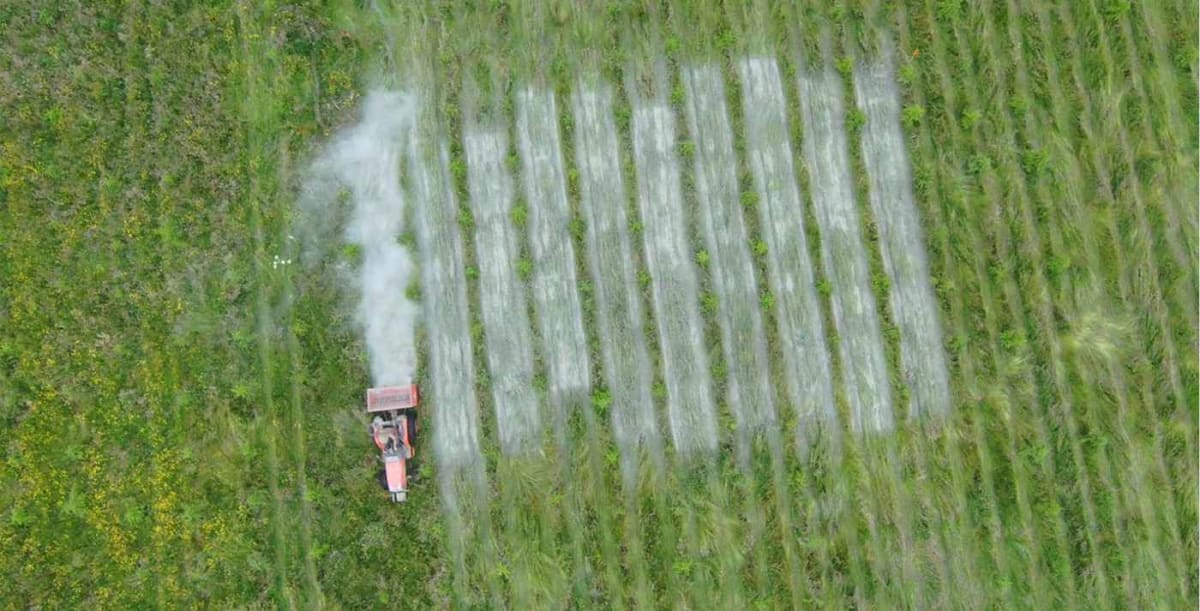
Scientists from Imperial College London just wrapped up the largest study ever conducted on "enhanced weathering" in new forests. Their finding? Spreading crushed basalt rock across newly planted woodlands boosts their carbon storage potential by 27%.
The Glandwr Forest Carbon Study in Wales tracked 26,000 trees across 72 test plots spanning 25 acres. Researchers from Imperial College London, Royal Botanic Gardens Kew, the Carbon Community, and the University of Sheffield worked together to test different reforestation techniques.
Billions of trees are being planted worldwide to absorb carbon emissions and restore wildlife habitats. But young forests face a critical challenge: many newly planted trees die before they can make a real difference in fighting climate change.
That's where the crushed basalt comes in. As the rock fragments weather into dust, they release essential minerals and adjust soil pH levels. This process enhances how trees absorb nitrogen and phosphorus, two nutrients crucial for growth.
The research team also tested whether adding soil microbes from mature forests would help young tree roots develop faster. Some species like oak and spruce showed improvement, but results varied too much to be statistically significant across all plots.
The Ripple Effect
This breakthrough matters because it's remarkably simple to implement. Forest restoration projects don't need expensive technology or complicated processes to see real results.
Dr. Bonnie Waring, the study's senior author, emphasized the importance of getting new woodlands off to a healthy start. "Our findings show that relatively simple, nature-based interventions can improve tree establishment and increase the carbon uptake of new woodlands during their earliest years," she said.
The technique could be especially valuable as countries race to meet climate goals through massive reforestation efforts. A 27% boost in carbon storage during a forest's vulnerable early years means more trees surviving to maturity and more carbon pulled from the atmosphere.
The researchers plan to continue monitoring the Welsh forest to see if the microbe technique shows benefits as trees mature. Sometimes nature just needs a little time.
Simple solutions like crushed rock are proving that helping forests thrive doesn't have to be complicated.
More Images


Based on reporting by Good News Network
This story was written by BrightWire based on verified news reports.
Spread the positivity!
Share this good news with someone who needs it