Cyborg Cockroaches Could Deliver Life-Saving First Aid
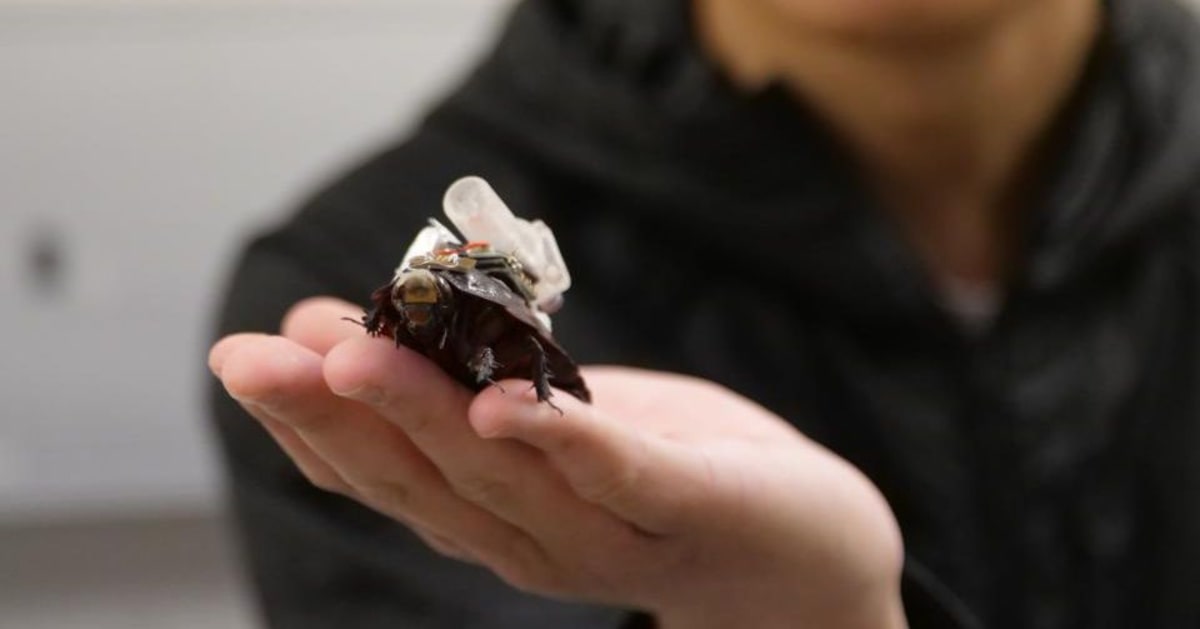
Scientists in Australia have created remote-controlled cockroaches that can navigate disaster zones and inject life-saving medicine into trapped victims. These "Paraborgs" could reach survivors in collapsed buildings long before human rescuers arrive.
When disaster strikes and buildings collapse, every minute counts for trapped survivors. Now, researchers in Australia have found an unlikely hero: the humble cockroach.
A team from the University of Queensland and the University of New South Wales developed the "Paraborg," a cyborg cockroach equipped to do more than just search for victims. These bugs can actually deliver first aid, buying precious time before human rescuers arrive.
The team chose the giant burrowing cockroach from northern Queensland for its impressive size and strength. At 3.5 inches long and weighing 1.4 ounces, these armored insects can carry up to 1.5 times their own body weight.
Scientists created two versions: one with a camera to assess victim conditions, and another with an automatic injection system to deliver medication. The cockroaches live normal lives except when deployed for missions, and the equipment can be safely removed.
Using tiny electrodes attached to the cockroach's antennae and rear sensors, researchers remotely control where the bug goes and how fast it moves. Stimulating each antenna independently steers the roach left or right, while stimulating both rear sensors controls speed.
The injection system works through a clever chemical reaction. When triggered, citric acid and baking soda mix together, creating carbon dioxide that pushes a syringe plunger to deliver medicine.
In tests, the cyborg cockroaches successfully navigated through checkpoints and delivered injections with a 95 percent success rate at close range. The complete mission sequence, from start to finish, succeeded 72 percent of the time.
The researchers even demonstrated teamwork, with one camera-equipped cockroach locating a target while another delivered the injection. Their earlier work with cyborg beetles proved these insects can climb vertical walls, but larger cockroaches work better for carrying specialized rescue equipment.
The Bright Side
While the idea of receiving medical care from a cockroach might sound unsettling, these tiny first responders solve a critical problem. They can squeeze through gaps in rubble that are too narrow for robots or drones, reaching places where traditional rescue equipment simply cannot go.
Lead researcher Tan Vo Doan sees enormous potential in harnessing different insects for different missions. Rather than building one complex robot to do everything, teams of specialized cyborg insects could work together at disaster sites.
The experiments haven't yet replicated the messy reality of actual disasters, with their shifting debris and unstable terrain. But Vo Doan hopes that with proper funding and field testing, rescue teams of cyborg insects could deploy to real disaster sites within five to ten years.
Nature has spent millions of years perfecting these resilient creatures, and now science is giving them the tools to save lives.
More Images


Based on reporting by Wired
This story was written by BrightWire based on verified news reports.
Spread the positivity!
Share this good news with someone who needs it