Dakar's New Goethe-Institut Built from Ancient Red Clay
A stunning new cultural center in Senegal proves that ancient building materials can solve modern climate challenges. Designed by Pritzker Prize winner Francis Kéré, the complex stays naturally cool using clay bricks and passive ventilation.
In one of Africa's fastest-growing cities, a new building is showing the world how to construct a cooler future without air conditioning.
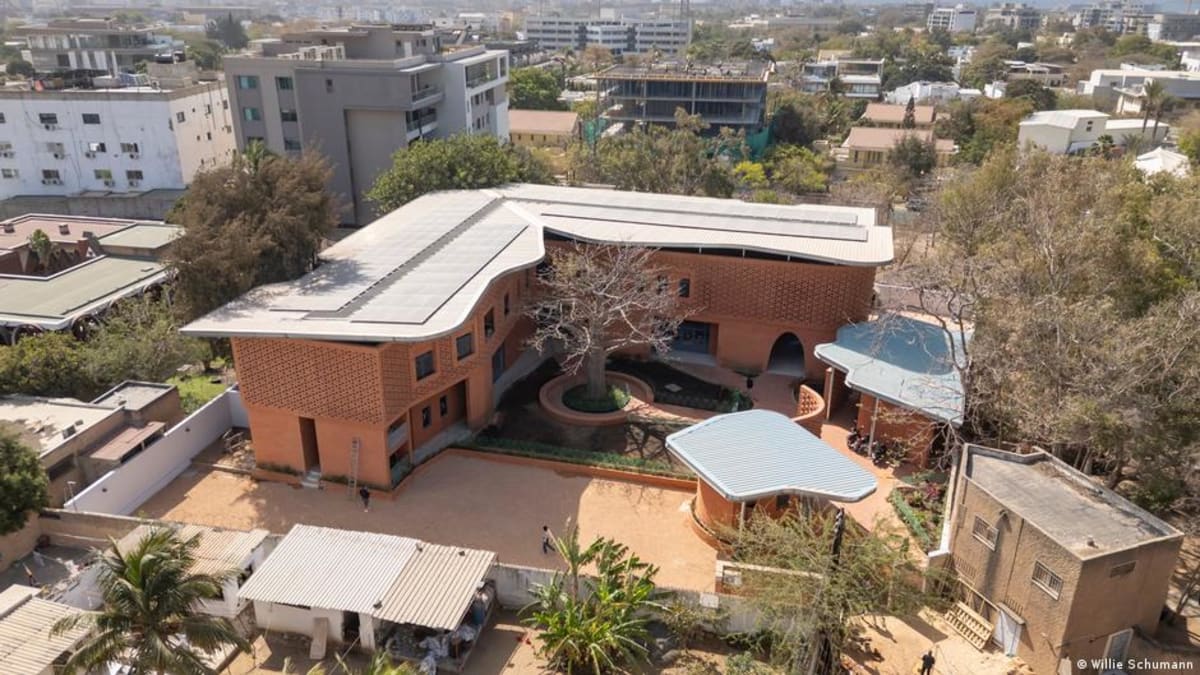
The Goethe-Institut's new home in Dakar, Senegal, wraps around a centuries-old baobab tree and stays naturally cool even as temperatures soar outside. The secret isn't expensive technology but something far simpler: red clay pressed into bricks, just as builders have done for thousands of years across the Sahel region.
Francis Kéré, the first Black architect to win the prestigious Pritzker Prize, designed the complex to honor both African building traditions and urgent climate needs. Seven years ago, he stood on an empty sandy plot and sketched a vision that would blend modern design with ancient wisdom.
The building uses Senegal's own red soil mixed with minimal cement, creating thick earthen walls that absorb heat during the day and release coolness as temperatures rise. Courtyards channel ocean breezes through connected spaces, while shadowed façades protect interiors from direct sun.
"People really feel honored and taken seriously," Kéré told reporters about choosing clay over conventional materials. He modified traditional clay properties to create uniform bricks with a contemporary look that locals immediately recognize and respect.
Dakar-based firm Worofila managed construction, specializing in bioclimatic architecture that relies on cross ventilation and local materials rather than energy-hungry cooling systems. "Building with earth reconnects the body with the material," says architect Nzinga Mboup. "You have to experience it for yourself."
The choice carries weight beyond one building's walls. Dakar faces the same pressures as cities across rapidly urbanizing Africa: housing shortages, rising temperatures, and carbon emissions from concrete buildings cooled by power-intensive air conditioning.
The Ripple Effect
Ghanaian architectural scholar Lesley Lokko sees the project as a urgently needed proof of concept. "Our continent is urbanizing faster than any other," she explains. "We don't have a hundred years. We need to think and act now."
A new generation of African architects is already taking notice, reconsidering earth as a building material that's both cutting-edge and deeply rooted in place. The Goethe-Institut's backing by the United Nations adds institutional credibility to techniques that work but have been overlooked in favor of Western construction methods.
The complex opens April 18, 2026, serving not just Senegal but also The Gambia, Cape Verde, and Guinea-Bissau. Beyond hosting cultural programs and language classes, it will stand as living proof that sustainable large-scale construction is possible right now, using resources already beneath our feet.
The world's urban future might not require reinventing the wheel but rather remembering what worked before we forgot.
More Images

Based on reporting by DW News
This story was written by BrightWire based on verified news reports.
Spread the positivity!
Share this good news with someone who needs it