Deep Rover: The 1984 Sub That Changed Ocean Exploration
A transparent bubble submarine designed in a California garage let scientists explore the deep ocean in comfort while seeing panoramic underwater views. Deep Rover transformed how we study the seas and set multiple dive records along the way.
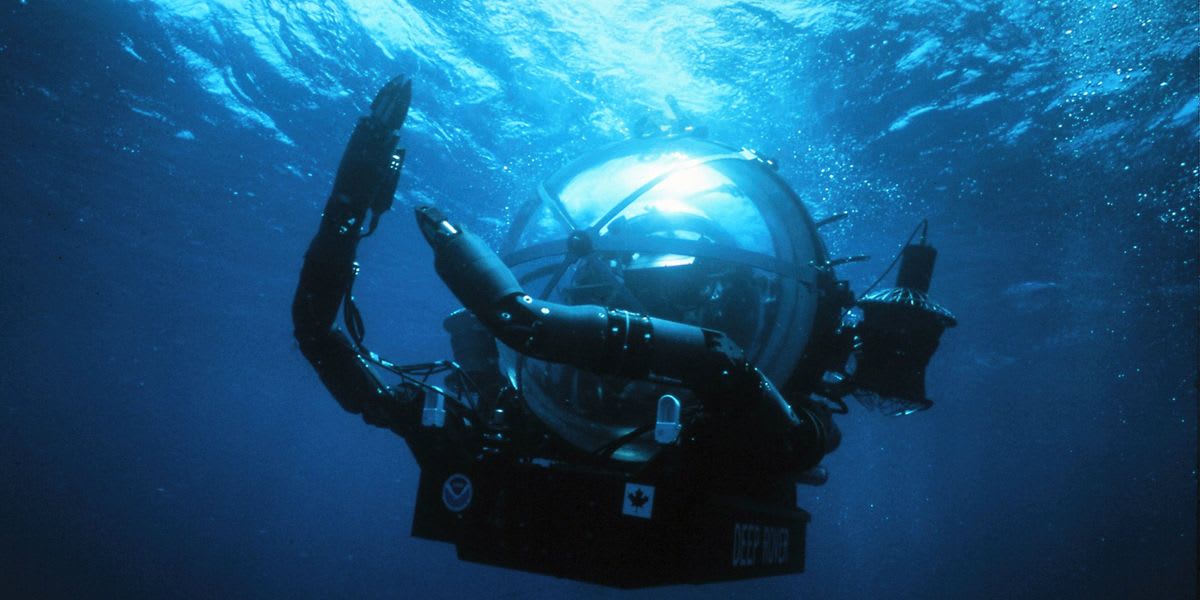
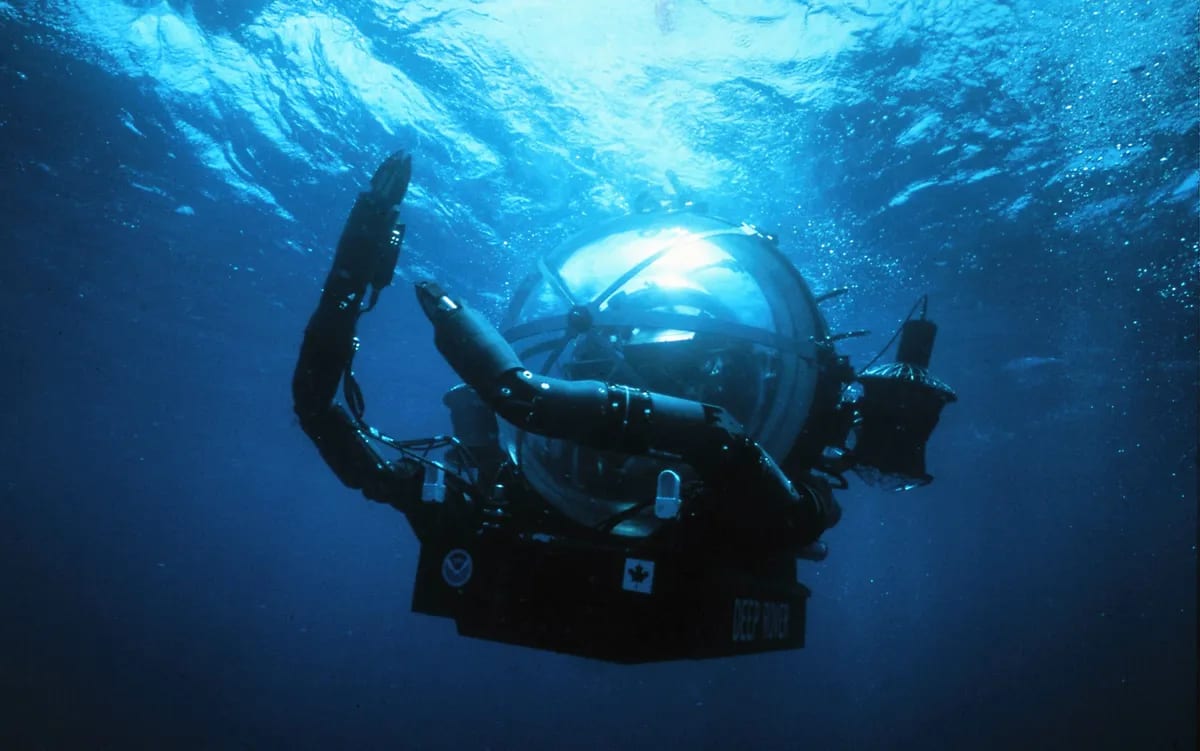
Imagine sitting inside a clear bubble 1,000 meters below the ocean surface, watching sea creatures peer in at you through walls of thick acrylic.
That's exactly what Deep Rover made possible when it launched in 1985. The revolutionary submersible flipped the script on underwater exploration, replacing cramped tubes with tiny portholes with a transparent sphere that gave pilots panoramic views of the deep sea.
Marine biologist Sylvia Earle and submarine designer Graham Hawkes built the first prototype in Earle's Oakland garage in 1981. They pooled their own money after failing to find investors willing to fund their vision of a comfortable, maneuverable research submarine.
Their collaboration started with a complaint. Earle had griped to Hawkes about the clunky arms on an earlier diving suit, not realizing he'd helped design it. Instead of getting defensive, Hawkes listened and came back months later with manipulator arms so precise they could hold a pencil and write.
Deep Rover's design was radically different from traditional subs. Pilots sat upright inside a 13-centimeter-thick acrylic bubble, steering with microswitches built into the armrests. The sub could dive for up to six hours, moving freely or tethered to a support ship at speeds up to 1.5 knots.
Canadian inventor Phil Nuytten engineered the final design in 1983. A lifelong ocean lover who'd opened Vancouver's first dive shop as a teenager, Nuytten understood exactly what researchers needed underwater.
The Ripple Effect
Deep Rover's impact rippled far beyond its technical specs. From 1987 to 1989, it explored Oregon's Crater Lake, helping scientists study the deepest lake in the United States. It dove into Monterey Bay's underwater canyons and even navigated the power tunnels beneath Niagara Falls.
The submersible became so trusted it appeared on television. When producers of the 1980s show Danger Bay needed an underwater rescue vehicle, they featured the real Deep Rover instead of building a prop.
Most importantly, Deep Rover proved that ocean exploration didn't require cramped conditions and limited visibility. Its success inspired a new generation of research submarines designed around human comfort and scientific capability.
The transparent bubble concept showed researchers what they'd been missing. Being able to see the ocean environment panoramically, rather than through narrow portholes, led to discoveries that wouldn't have been possible with traditional equipment.
Deep Rover demonstrated that sometimes the best innovations start with someone willing to listen to complaints and a garage full of determination.
More Images
Based on reporting by IEEE Spectrum
This story was written by BrightWire based on verified news reports.
Spread the positivity!
Share this good news with someone who needs it