Delhi Launches AI Language Labs for 60,000 Students
Delhi is bringing AI-powered language labs to nearly 60,000 students across 100 government schools, helping them master listening, speaking, reading, and writing in both Indian and foreign languages. The city's latest education budget also includes major reforms in early childhood learning and a shift from rote memorization to critical thinking.
Imagine learning French, Hindi, and English through a system that adapts to how you learn best. That's exactly what 60,000 Delhi students are getting through new AI-powered language labs launching this year.
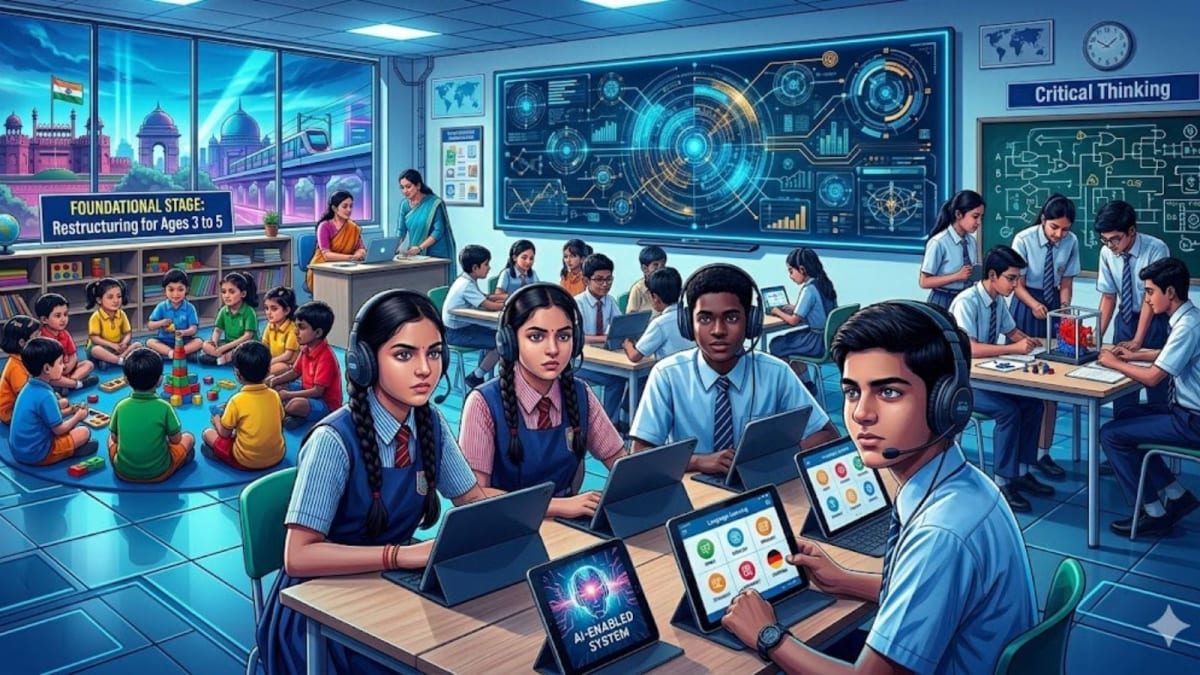
The Dr. A. P. J. Abdul Kalam Language Labs program rolled out across 100 government schools in 2025-26, reaching students in Classes 6, 9, and 11. The labs offer structured learning in English, Hindi, Sanskrit, French, German, and Spanish, blending local languages with global skills.
Chief Minister Rekha Gupta announced the expansion as part of Delhi's 2026-27 education budget, which allocates Rs 19,148 crore (about $2.3 billion) to serve 4.5 million students across 5,500 schools. That puts Delhi among India's highest education spenders, devoting 19 percent of its budget to schools compared to the national average of 13.1 percent.
The changes go deeper than language learning. Starting in 2026-27, Delhi will restructure early childhood education to include three full years of pre-primary schooling for children ages 3 to 5. By 2028-29, kids will need to be at least 6 years old before entering Class 1, aligning with national education policy that emphasizes strong early foundations.
Inside classrooms, teachers are moving away from memorization toward teaching students how to think. The new competency-based assessments focus on conceptual clarity, critical thinking, and applying knowledge to real problems.
The Ripple Effect
Delhi's education transformation extends beyond academics. The government approved increased uniform subsidies, ranging from Rs 1,250 annually for younger students to Rs 1,700 for high schoolers. Free bicycles go to Class 9 girls to improve school access, while top-performing Class 10 students receive laptops.
The budget sets aside Rs 475 crore for infrastructure, with Rs 200 crore building new schools and Rs 275 crore expanding existing ones. Seventy-five new CM SHRI Schools launched in 2025-26 serve as models for equitable, future-focused education.
Ambitious projects like an integrated education city in Narela, plus proposed universities for law and sports, show Delhi thinking beyond traditional schooling. When cities invest in accessible, quality education with modern tools like AI, they create pathways for millions of children to build better futures.
Delhi's bet on AI labs and early learning shows what's possible when education becomes a true priority.
Based on reporting by Indian Express
This story was written by BrightWire based on verified news reports.
Spread the positivity!
Share this good news with someone who needs it