Delhi Students Build Indoor GPS for Disabled Navigation
Students at Delhi University's Maitreyi College have created India's first student-led indoor navigation system to help people with disabilities move through buildings independently. SUGAM uses voice guidance, haptic alerts, and multilingual support to make public spaces accessible to everyone. #
Navigating unfamiliar buildings can be challenging for anyone, but for people with visual, hearing, or mobility impairments, it can feel impossible. Students at Delhi University's Maitreyi College just changed that.
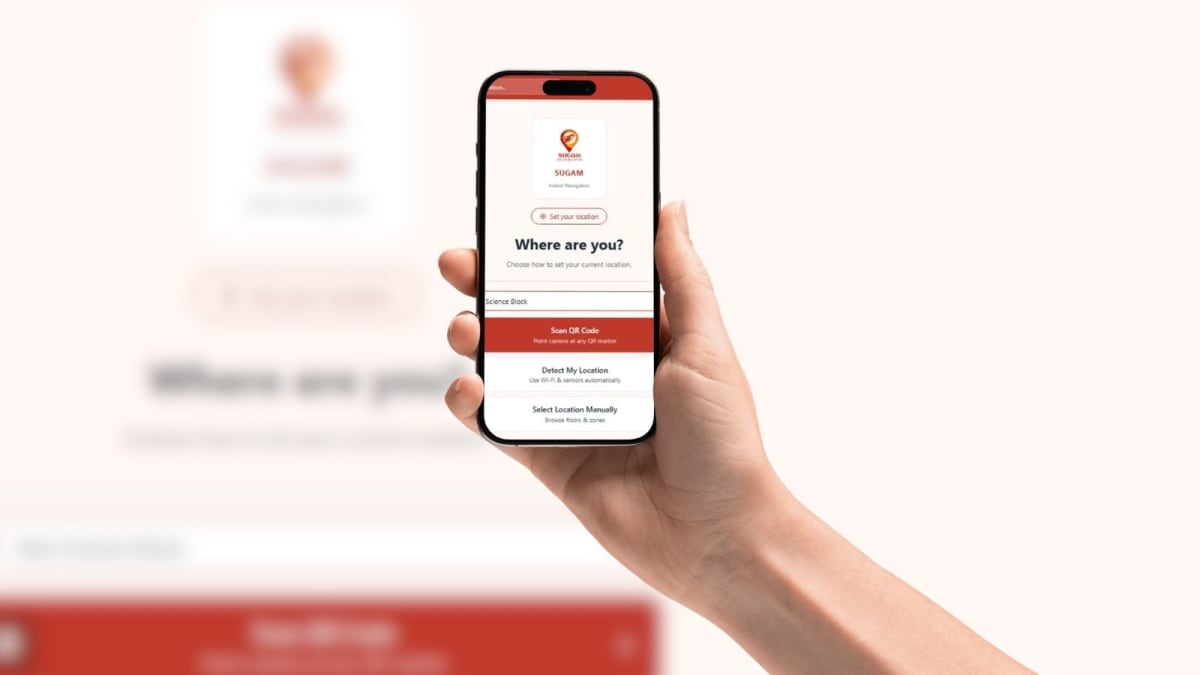
The students launched SUGAM (Smart, Universal, Guided, Accessible Mobility), an indoor navigation system designed to help people with disabilities navigate buildings on their own. It's the first student-led inclusive navigation system of its kind in India.
Think of it as Google Maps for inside buildings, but built specifically for accessibility. The system offers voice-enabled directions for people with visual impairments, step-by-step guidance for wheelchair users navigating accessible routes, and visual plus vibration alerts for those who are deaf or hard of hearing.
The technology doesn't stop there. SUGAM includes multilingual support so language barriers don't create new obstacles. It even has an audio signage feature for people without smartphones or digital literacy, ensuring technology doesn't exclude anyone.
The multidisciplinary team behind SUGAM included students and faculty from computer science, physics, and sociology departments. High school student Ameya Meattle from Singapore and advocacy group CURE India contributed to developing the audio signage component.
At the launch event, former NITI Aayog CEO Amitabh Kant and other dignitaries praised SUGAM as an indigenous innovation ready for scaling. The college envisions deploying it in hospitals, schools, and commercial buildings across India.
The Ripple Effect
SUGAM does more than help people get from point A to point B. It removes barriers that have kept people with disabilities from fully participating in education, events, and daily life.
The system is already helping students with disabilities attend college fairs, campus events, and extracurricular activities they might have avoided before. That kind of independence changes lives.
What makes this story even brighter is that students led the entire project under faculty guidance. Young innovators saw a problem in their own campus and built a solution that could transform accessibility across their entire country.
The platform launched at Maitreyi College but the team designed it to be scalable from day one. Every hospital, university, and public building that adopts SUGAM becomes a space where disability doesn't determine what someone can do or where they can go.
Sometimes the biggest innovations come from simply asking "why not?" and refusing to accept barriers as permanent.
#
Based on reporting by Indian Express
This story was written by BrightWire based on verified news reports.
Spread the positivity!
Share this good news with someone who needs it