Delhi Woman Teaches 78,000 Kids to Grow Their Own Food
A mother's mission to get her son to eat vegetables has blossomed into a movement teaching 78,000 children across India how to grow food at school. Pragati Chaswal turned rooftops and concrete corners into thriving farms where students learn sustainability by getting their hands dirty.
When Pragati Chaswal started growing vegetables at home in 2017, she just wanted her son to eat more greens. What she discovered changed the lives of tens of thousands of children across India.
Her son didn't just start eating vegetables. He began connecting with soil, watching plants grow, noticing weather changes, and understanding that living things need care. These were lessons no textbook could teach.
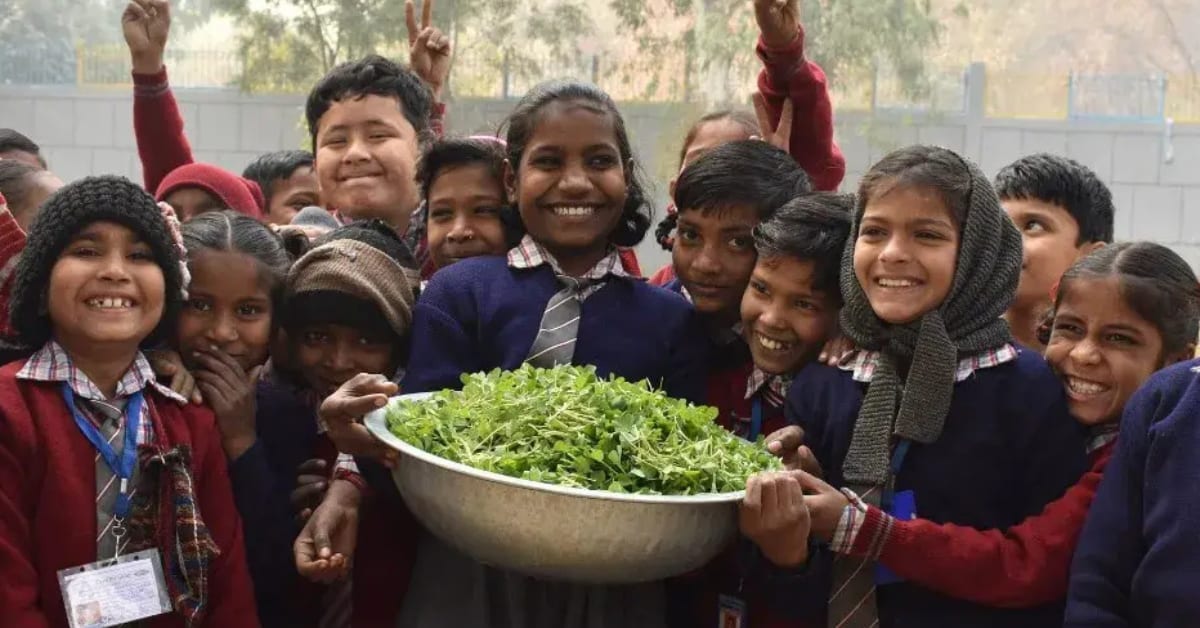
That personal experiment became the SowGood Foundation. By 2018, Pragati had created a three-year curriculum and partnered with government schools to bring urban farming directly into students' timetables. Today, her programme reaches 78,000 children across 28 schools in Delhi, NCR, Uttar Pradesh, Haryana, and Gujarat.
The transformation happens on rooftops, in corridors, even on classroom windowsills. Pragati helps schools turn bamboo planters, recycled bottles, and old tyres into flourishing gardens where concrete once dominated. Every sunny corner becomes a potential classroom.
"There is always a way to find space," she says. "The key is imagination and involving the students from the start."
Children start with easy wins like microgreens, spinach, and fenugreek that grow quickly and show immediate results. When students harvest greens within days or weeks, curiosity sparks. Some take their harvest home to make paratha with parents, then bring it back to share with classmates.
The garden becomes a gateway to every subject. Science comes alive through plant life cycles and soil studies. Math becomes real when students measure plots and calculate yields. Even language skills grow as children write about birds taking seeds or leaves changing color.
The Ripple Effect
What started as a feeding strategy has become a sustainability revolution in Indian schools. Students learn per-square-foot gardening, managing space and tracking growth in small plots. They take ownership of their farms, deciding what to plant each season and learning to manage pests without harming the ecosystem.
During the COVID-19 pandemic, Pragati adapted everything into online modules so children could keep connecting with nature from home. The programme kept growing because it met a need most children didn't even know they had.
"They may be able to tell you what composting is, but if you ask how to do it, there is often no answer," Pragati explains. "I wanted children to experience where their food comes from and understand the actions they could take in their daily lives."
For schools ready to start, she emphasizes finding a committed champion, whether a teacher or volunteer, who will nurture the project and make it part of the school's routine. Creating a garden is easy, but building a learning farm takes dedication.
The founder guides schools through choosing seasonal crops that reward young farmers with real harvests. Summer brings Malabar spinach, amaranth, water spinach, and gourds that grow easily and give children a sense of achievement.
What began with one mother trying to feed her son has grown into 78,000 children learning that sustainability isn't just a word in a textbook but dirt under their fingernails and food on their plates.
More Images
%2Fenglish-betterindia%2Fmedia%2Fmedia_files%2F2026%2F03%2F17%2Fpragati-chaswal-school-farms-2026-03-17-08-44-56.png)
%2Ffilters%3Aformat(webp)%2Fenglish-betterindia%2Fmedia%2Fmedia_files%2F2026%2F03%2F17%2Fpragati-chaswal-school-farms-2026-03-17-08-59-48.png)

%2Ffilters%3Aformat(webp)%2Fenglish-betterindia%2Fmedia%2Fmedia_files%2F2026%2F03%2F17%2Fpragati-chaswal-school-farms-2026-03-17-09-01-43.png)
Based on reporting by The Better India
This story was written by BrightWire based on verified news reports.
Spread the positivity!
Share this good news with someone who needs it