Delhi Women's College Powers Campus with Solar, Composting
Miranda House in Delhi University runs on solar energy, recycles its own waste into compost, and teaches 3,000 students that sustainability isn't a subject—it's a way of life. The campus quietly proves that going green doesn't mean sacrificing comfort.
When students walk through the gates of Miranda House in Delhi, they enter a campus where solar panels power the waste recycling units and kitchen scraps become fertilizer for the lawns they study on.
This women's college at Delhi University doesn't just teach environmental science. It lives it, turning everyday campus operations into a working model of sustainability that shapes how thousands of students think about energy and waste.
A 7 kWp solar plant powers the college's waste management and recycling operations directly. After sunset, 40 solar streetlights illuminate pathways using stored sunlight. In the hostel, seven rooftop solar heaters provide hot water for students and the kitchen, cutting electricity use without anyone giving up their warm showers.
The solar systems blend so seamlessly into daily life that students often don't notice them until someone points them out. That's exactly the point—clean energy becomes normal, not novel.
The waste story might be even more powerful. Kitchen scraps and garden clippings go into an on-campus composting unit, where they transform into nutrient-rich fertilizer. That compost feeds back into the very gardens and lawns that make the campus feel alive.
Students in MH Vatavaran, the college's environmental society, run a paper recycling plant where old notes and discarded documents become handmade envelopes and folders. Many get sold right back to students on campus, closing the loop from waste to product.
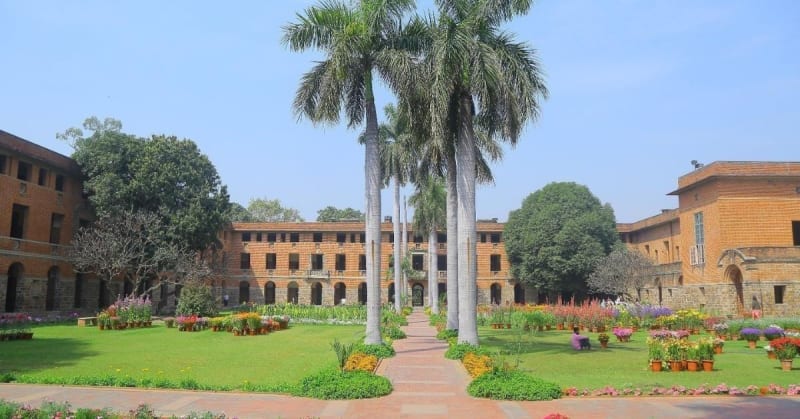
The campus architecture helps too. High ceilings, thick walls, and long verandas flood classrooms with natural light and ventilation. For much of the year, students learn without artificial lighting or cooling, a design choice that works with Delhi's climate instead of fighting it.
The Ripple Effect
What makes Miranda House special isn't just the solar panels or composting bins. It's that 3,000 young women experience sustainable living as their normal, everyday reality for years.
They see waste become compost, watch solar energy power real operations, and learn that environmental action doesn't require sacrifice. When these students graduate and move into careers, homes, and communities across India, they carry that lived experience with them.
The college has already invited proposals for a much larger 1000 kWp solar plant, signaling that this isn't a phase or publicity project. It's a long-term commitment to showing that campuses can run cleaner without losing what makes them work.
In a city where air quality regularly makes headlines for the wrong reasons, Miranda House offers something quieter but potentially more powerful: proof that sustainability can be comfortable, practical, and completely normal.
More Images
%2Fenglish-betterindia%2Fmedia%2Fmedia_files%2F2026%2F02%2F03%2Fmiranda-house-2026-02-03-16-08-02.jpg)
%2Ffilters%3Aformat(webp)%2Fenglish-betterindia%2Fmedia%2Fmedia_files%2F2026%2F02%2F03%2Fmiranda-house-2026-02-03-17-08-59.png)

%2Ffilters%3Aformat(webp)%2Fenglish-betterindia%2Fmedia%2Fmedia_files%2F2026%2F02%2F03%2Fmiranda-house-2026-02-03-16-04-49.jpg)
Based on reporting by The Better India
This story was written by BrightWire based on verified news reports.
Spread the positivity!
Share this good news with someone who needs it