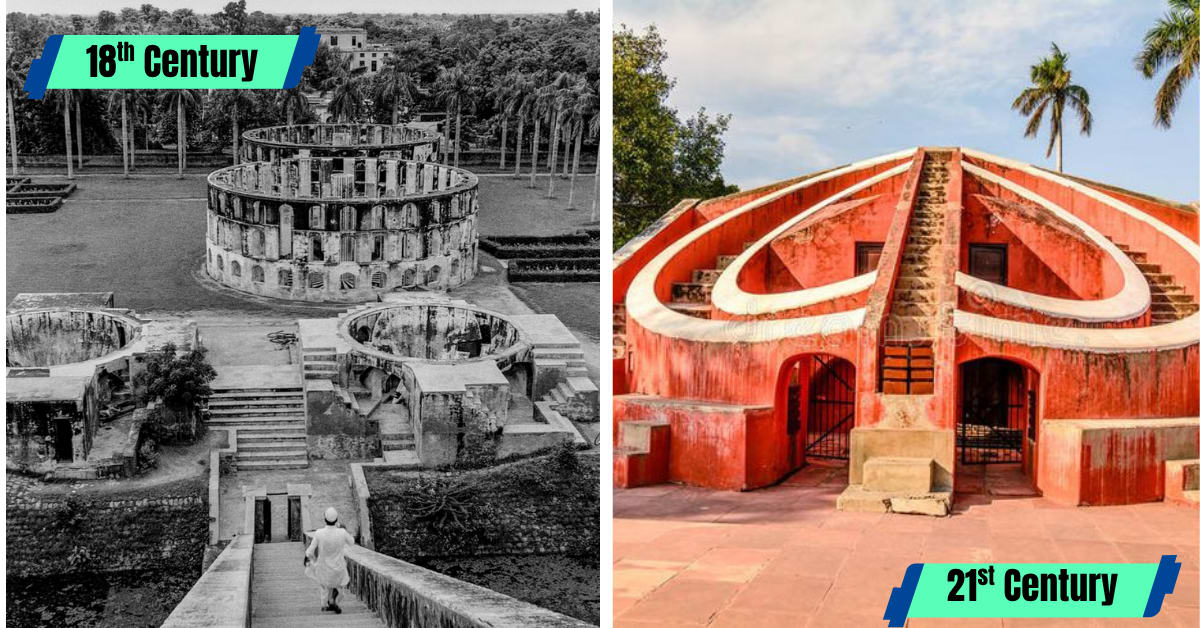
Delhi's 300-Year Observatory Became India's Protest Hub
A stunning astronomical observatory built in 1724 to track stars transformed into India's most recognized space for democratic assembly. The journey from scientific monument to civic landmark shows how spaces can evolve to serve society in unexpected ways.
In 1724, Maharaja Sawai Jai Singh II built something extraordinary in Delhi: massive stone instruments designed to track planets and measure time using the sun. Three centuries later, that same scientific monument became the nation's most famous gathering place for citizens to speak out and be heard.
Jantar Mantar started as pure science. The maharaja was fascinated by astronomy and wanted better accuracy in celestial observations, so he commissioned giant masonry structures instead of relying on smaller instruments. This was the first of five observatories he built across northern India, in cities including Jaipur, Ujjain, Varanasi, and Mathura.
The name comes from the Sanskrit word yantra, meaning instrument. Each stone structure served a specific purpose, from tracking the sun's path to calculating precise time and observing celestial coordinates. These weren't tiny tools but enormous geometric forms built entirely of stone and masonry, created in an era before modern telescopes became widespread in India.
What makes Delhi's Jantar Mantar so unusual is that it's neither a fort nor a palace. It's a scientific monument with striking shapes like ramps, arcs, and circular structures that often puzzle first-time visitors. The site stands as a rare reminder of India's rich tradition of astronomical inquiry and its enduring pursuit of knowledge.
The transformation into a public assembly space happened much later. Until the 1980s, large demonstrations typically took place at the Boat Club lawns near India Gate. After massive protests there, authorities began directing demonstrations to Jantar Mantar Road, and by the early 1990s, it had become the capital's designated protest venue.
Location played a crucial role in this evolution. Situated close to Parliament and key government offices, the site offered visibility without completely disrupting city operations. Over time, it became a recognized platform where citizens and movements could bring their concerns into the public eye.
The Ripple Effect
Few places in India blend science and civic life so seamlessly. The same instruments that once helped astronomers understand planetary movements now stand beside a space where people work to shape their collective future. This dual identity reflects how public spaces can serve society in ways their creators never imagined.
Visitors often arrive expecting to see unusual astronomical instruments but leave with something deeper. They witness how a monument built to observe the heavens became a place where people look toward the future they hope to create. The site continues to remind us that spaces, like societies, can evolve while honoring their history.
Three centuries after its construction, Jantar Mantar remains relevant by serving two purposes: preserving scientific heritage while providing space for democratic expression.
More Images
%2Fenglish-betterindia%2Fmedia%2Fmedia_files%2F2026%2F07%2F21%2Fjantar-mantar-2026-07-21-14-52-51.png)
%2Ffilters%3Aformat(webp)%2Fenglish-betterindia%2Fmedia%2Fmedia_files%2F2026%2F07%2F21%2Fjantar-mantar-2026-07-21-12-52-34.png)

%2Ffilters%3Aformat(webp)%2Fenglish-betterindia%2Fmedia%2Fmedia_files%2F2026%2F07%2F21%2Fjantar-mantar-2026-07-21-12-54-42.png)
Based on reporting by The Better India
This story was written by BrightWire based on verified news reports.
Spread the positivity!
Share this good news with someone who needs it