Denmark Offsets 80% of Mothers' Lost Wages With Benefits
Danish mothers lose an average of $120,000 in earnings over 20 years after having kids, but government support recovers $100,000 of it. A groundbreaking study shows what's possible when countries prioritize financial support for working parents.
Becoming a mom shouldn't mean losing your financial future, but in most countries, it does.
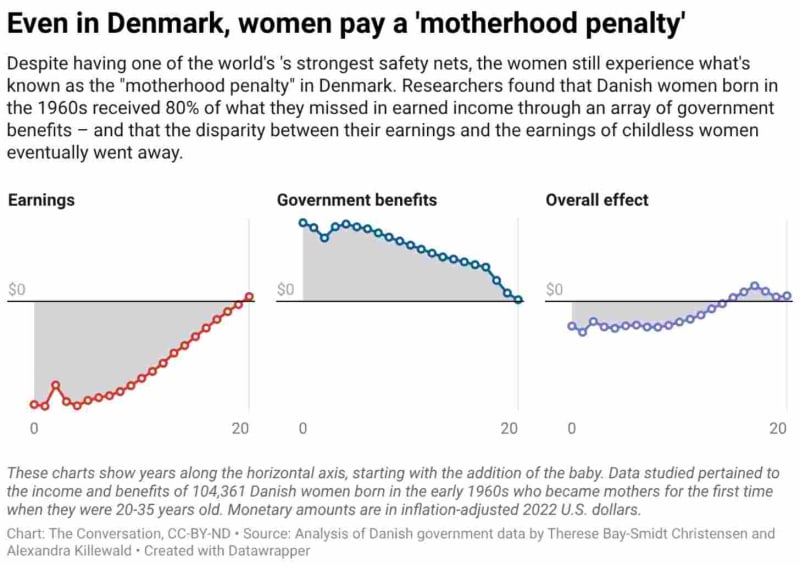
A new study of over 104,000 Danish women reveals something remarkable. While motherhood still costs Danish moms about $120,000 in lost earnings over 20 years, government benefits recover roughly $100,000 of that loss.
Researchers Alexandra Killewald and Therese Christensen tracked women born in the early 1960s who became mothers between ages 20 and 35. They wanted to answer a critical question: Can government support actually offset the motherhood penalty?
The numbers tell a powerful story. In the year Danish women first became mothers, they lost about $9,000 in earnings compared to childless women. The government stepped in with over $7,000 in benefits that same year through paid parental leave and child allowances.
The earnings gap persisted for 19 years, with mothers working fewer hours and earning less than they would have without children. But government support continued throughout, ultimately covering 80% of their total financial losses.
Denmark offers subsidized child care starting at 6 months old, with parents paying no more than 25% of costs. New mothers receive four weeks of paid leave before birth and 24 weeks after, plus housing allowances and child benefits that continue until kids turn 18.
The researchers admit Denmark isn't typical. Most countries provide far less generous parental support, making this Nordic nation a test case for what's possible when governments prioritize parents.
Why This Inspires
This research proves that the motherhood penalty isn't inevitable or unchangeable. While Danish moms still face career setbacks, their government ensures those setbacks don't lead to financial disaster.
The study highlights which policies work best. Benefits for parents with infants, like paid parental leave, make the biggest immediate impact. Child care subsidies help mothers return to work faster and maintain their careers.
But short-term support isn't enough. The motherhood penalty lasts nearly two decades, which means ongoing benefits for parents of older children matter just as much as those early interventions.
For women everywhere facing impossible choices between career and family, Denmark's model offers hope. When societies invest in supporting parents financially, they're not just helping individual families. They're promoting gender equality and making motherhood affordable.
The gap hasn't closed completely, but cutting mothers' long-term losses by 80% represents genuine progress worth celebrating.
More Images


Based on reporting by Good Good Good
This story was written by BrightWire based on verified news reports.
Spread the positivity!
Share this good news with someone who needs it