Designer Helps 354 Blind Students Learn Through Touch
A Coimbatore designer created tactile maps and models that let visually impaired students explore geography and science with their fingertips. His work has reached 354 students across 10 Tamil Nadu schools.
For years, Vignesh heard teachers describe the shape of Tamil Nadu. The day a raised map arrived on his desk, he finally traced its coastline himself.
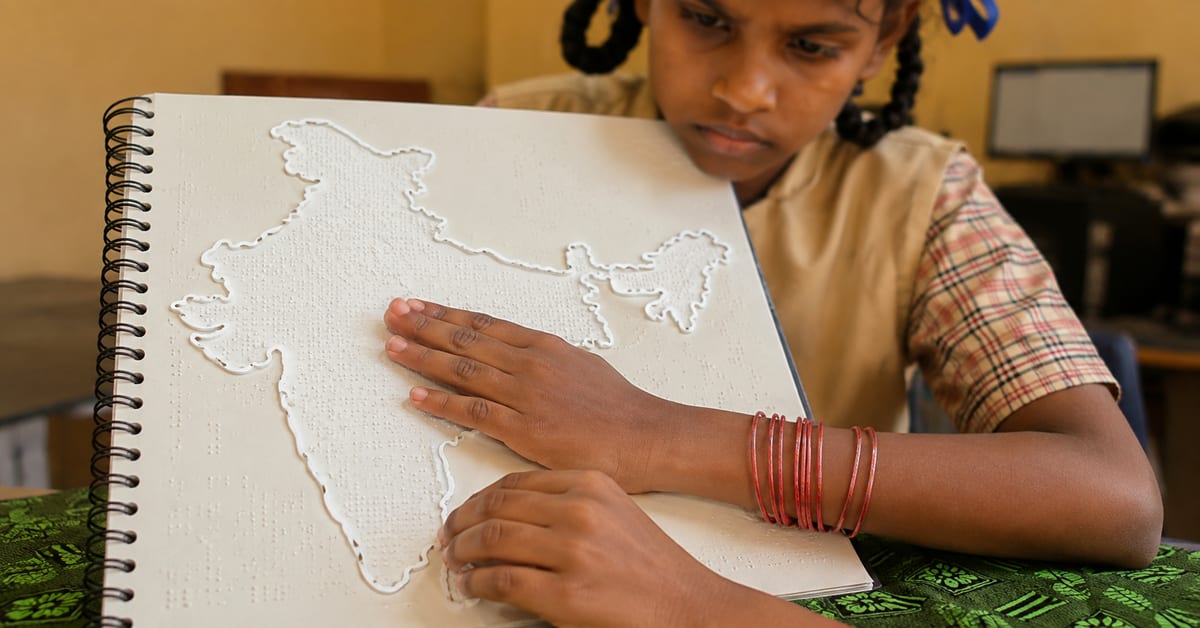
Behind that moment is Prabhu, a Coimbatore designer who found a way to translate visual learning into touch. Through his venture Tactile Braille India, he creates raised maps, fruit models, and science diagrams that help visually impaired students understand concepts their fingers can follow and remember.
Prabhu came from a farming family and worked in digital design before discovering a gap in education for blind students. He realized that while Braille taught words and numbers, visually impaired children had no way to understand shapes, maps, or diagrams. Geography, science, even everyday objects remained abstract concepts built only on memorization.
He started researching tactile education systems in 2011, studying how raised lines could represent visual information and how textures could explain complex ideas. In 2023, he launched Tactile Braille India and partnered with the Tamil Nadu government through an official agreement.
His materials now reach 10 government schools across 10 districts, benefiting around 354 students. Each tactile map lets a child trace state borders with their own hands. Each fruit model gives shape to something they've only heard described. Each science diagram becomes something real beneath their fingertips.
The work comes with challenges. A blank Braille book can cost around Rs 3,000, and the specialized machines for tactile printing are expensive imports. Prabhu didn't want cost to become another barrier for schools with limited resources.
He began importing specialized paper himself and handling printing in-house, absorbing much of the production expense. Through this approach, he supplies tactile learning materials to Tamil Nadu government schools at reduced costs.
The Ripple Effect
What started as one designer's question about accessibility is changing how hundreds of students experience learning. When a visually impaired child can explore a map of India or trace the outline of a mango, abstract concepts become concrete knowledge.
Teachers report that students retain information better when they can physically interact with the material. A curved coastline isn't just a description anymore. It's something students discover through their own exploration.
Prabhu's work reminds us that innovation often comes from asking simple questions about who gets left behind. His answer puts the world at students' fingertips, one raised line at a time.
More Images
%2Fenglish-betterindia%2Fmedia%2Fmedia_files%2F2026%2F08%2F17%2Ftactile-braille-india-2026-08-17-10-40-38.png)
%2Ffilters%3Aformat(webp)%2Fenglish-betterindia%2Fmedia%2Fmedia_files%2F2026%2F08%2F17%2Ftactile-braille-book-04-2026-08-17-10-52-07.jpg)
Based on reporting by The Better India
This story was written by BrightWire based on verified news reports.
Spread the positivity!
Share this good news with someone who needs it