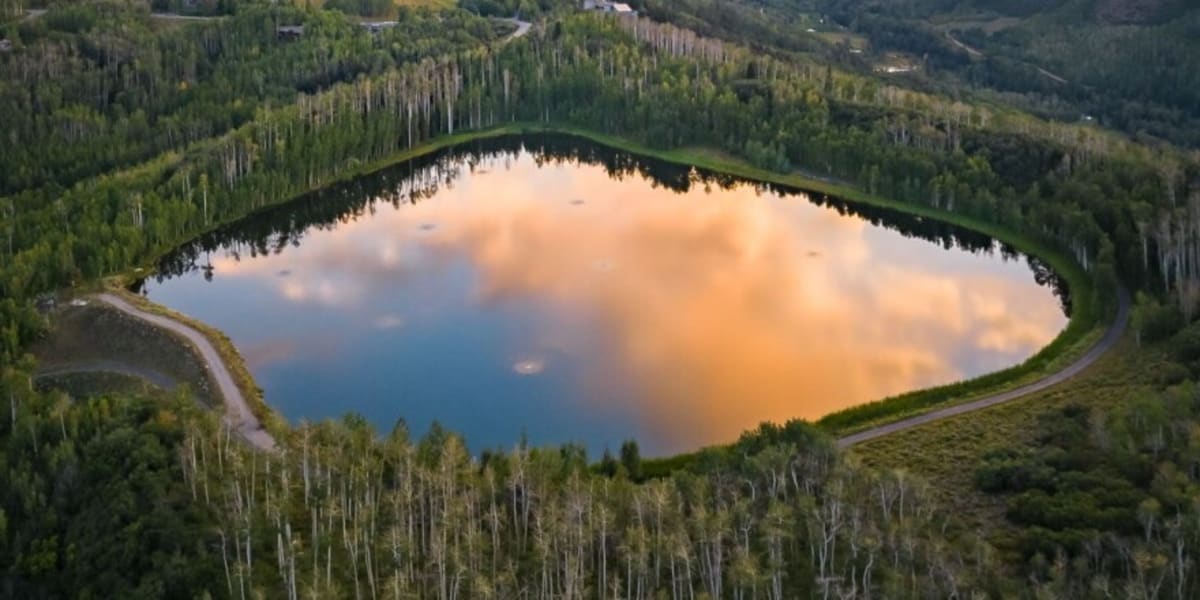
Doctor Creates Plastic-Free Ponds With Soil and Leaves
In Jharkhand, Dr. Ramakantha is helping farmers build water-retaining ponds using only black cotton soil, sal leaves, and wild castor leaves. His natural method costs less than plastic liners and lasts longer.
While most modern farms rely on plastic sheets to keep water from seeping away, one doctor in Jharkhand is proving that nature already knows how to hold water.
Dr. Ramakantha has spent years teaching farmers a simple truth: you don't need synthetic materials to build a pond that works. His method uses only what the land provides.
The process starts with black cotton soil, a clay-rich material that naturally resists water seepage. Farmers pack this dense soil at the pond's base, creating a foundation that slows water loss without any manufactured help.
Then comes the surprising part. Dr. Ramakantha layers sal leaves across the bottom, forming a natural barrier. Sometimes he adds wild castor leaves in multiple sheets to strengthen the seal even more.
These materials aren't imported or expensive. They're already growing in rural areas, free for the taking.
The method comes from observation, not laboratories. Dr. Ramakantha studied how soil behaves, how leaves break down, and how villages managed water long before plastic existed.
For farmers, the benefits are immediate. No need to buy plastic liners that tear after a season or create waste that never decomposes. The natural approach costs less upfront and requires only local knowledge to maintain.
The Ripple Effect
This isn't just about saving money on one pond. When farmers reduce their dependence on manufactured materials, they gain control over their own water security.
In regions where every stored drop matters during dry months, that independence means resilience. It means not waiting for external supplies or worrying about replacement costs.
Dr. Ramakantha's work also reminds us that traditional knowledge hasn't disappeared. It's still there, waiting to solve modern problems in surprisingly effective ways.
His ponds prove that sustainable solutions don't always need to be invented. Sometimes they just need to be remembered, shared, and trusted again.
More Images
.png)
%2Fenglish-betterindia%2Fmedia%2Fmedia_files%2F2026%2F04%2F30%2Ftbi-featured-image-96-2026-04-30-17-05-44.jpg)
%2Ffilters%3Aformat(webp)%2Fenglish-betterindia%2Fmedia%2Fmedia_files%2F2026%2F04%2F30%2Fscreenshot-2026-04-30-154711-2026-04-30-17-04-17.png)

Based on reporting by The Better India
This story was written by BrightWire based on verified news reports.
Spread the positivity!
Share this good news with someone who needs it