Dog Poop Leads Scientist to Revolutionary DNA Discovery
A rejected doctoral student watching a dog inspired a breakthrough that lets scientists recover DNA from dirt, unlocking secrets about ancient humans without needing rare fossils. Twenty years later, his "stupid idea" has transformed how we study human origins.
When Eske Willerslev couldn't access precious fossils for his research, he found inspiration in the most unlikely place: a dog pooping on the ground one autumn morning in 2000.
The frustrated doctoral student realized that if dog DNA remained in soil after rain, maybe ancient animal DNA did too. His professors at the University of Copenhagen called it the stupidest idea they'd ever heard.
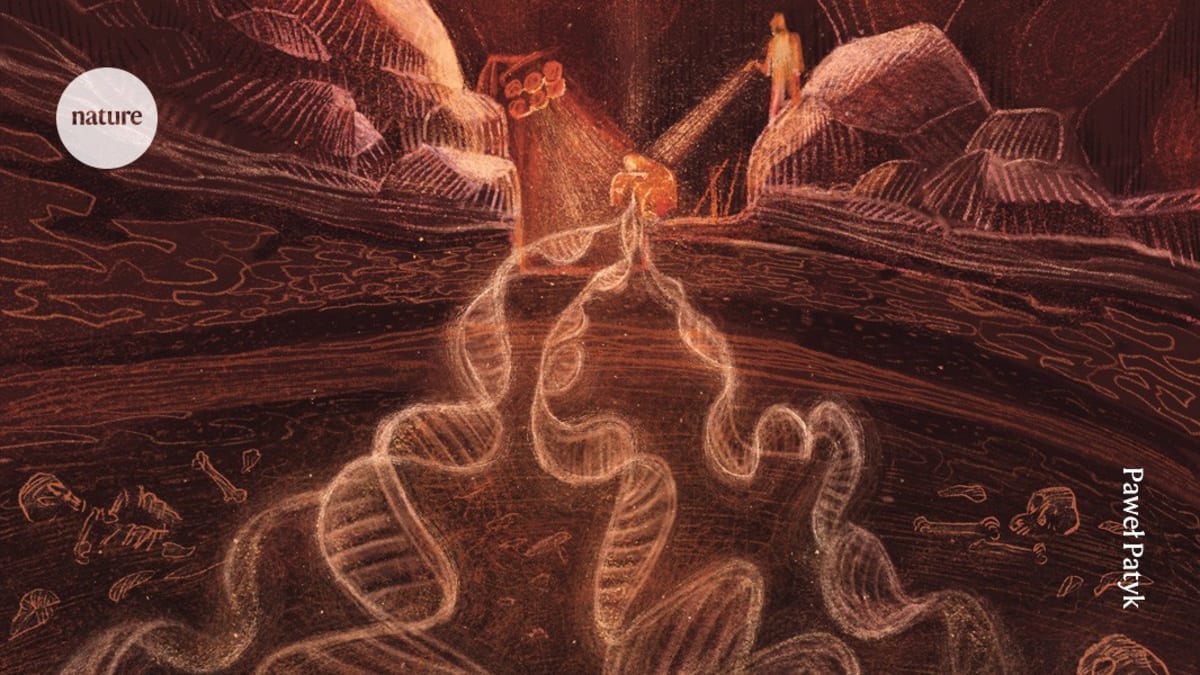
They were spectacularly wrong. By 2003, Willerslev proved that plant and animal DNA could be recovered from Siberian permafrost stretching back 400,000 years. He even found extinct moa bird DNA in 600-year-old New Zealand cave sediments.
Two decades later, that ridiculed idea has exploded into one of archaeology's most powerful tools. Scientists can now study ancient humans, animals, and entire ecosystems without touching a single bone.
The breakthrough came in 2017 when researchers successfully identified ancient human DNA in ice age soils. Suddenly, laboratories that once competed for rare fossils started digging through dirt instead.
The results have been stunning. At Denisova Cave in Siberia, sediment DNA revealed that Neanderthals arrived 30,000 years earlier than fossils suggested. The same dirt placed early modern humans at the site 45,000 years ago, even though no bones have been found.
At Belgium's Trou Al'Wesse cave, soil DNA finally confirmed what stone tools had hinted at for years: Neanderthals lived there. Scientists can now link specific ancient human groups to the tools they made, a connection previously almost impossible to establish.
The technology keeps pushing boundaries. In 2022, Willerslev's team extracted DNA from two-million-year-old Greenland permafrost, the oldest genetic material ever recovered from sediments.
The Ripple Effect
Archaeologists are now re-examining soil collected decades ago, realizing those dusty samples hold untold stories. Sites without any fossil remains can still reveal who lived there, what they ate, and how ecosystems changed over millennia.
"You have humans, you have animals, you have plants, you have the whole bloody ecosystem," says Willerslev. The molecular information preserved in sediments represents what researchers call "a huge new blue ocean" of possibilities.
Matthias Meyer at the Max Planck Institute believes we're just scratching the surface. Ancient dirt is proving more informative than anyone imagined, transforming sites that seemed archaeologically empty into treasure troves of genetic history.
Willerslev now predicts scientists might eventually focus more on soil than bones. "My expectation would be, we can almost drop the bones and just go to the dirt."
That morning dog inspired a revolution in how we understand our ancient relatives, proving that the best scientific breakthroughs sometimes come from watching the world around us with fresh eyes.
More Images

Based on reporting by Nature News
This story was written by BrightWire based on verified news reports.
Spread the positivity!
Share this good news with someone who needs it