Dog Walkers Find 2,000-Year-Old Footprints in Scotland
Two dog walkers stumbled upon ancient human and animal footprints on a Scottish beach after storms shifted the sand. Archaeologists raced against violent weather to preserve the rare 2,000-year-old discovery before the sea destroyed it forever.
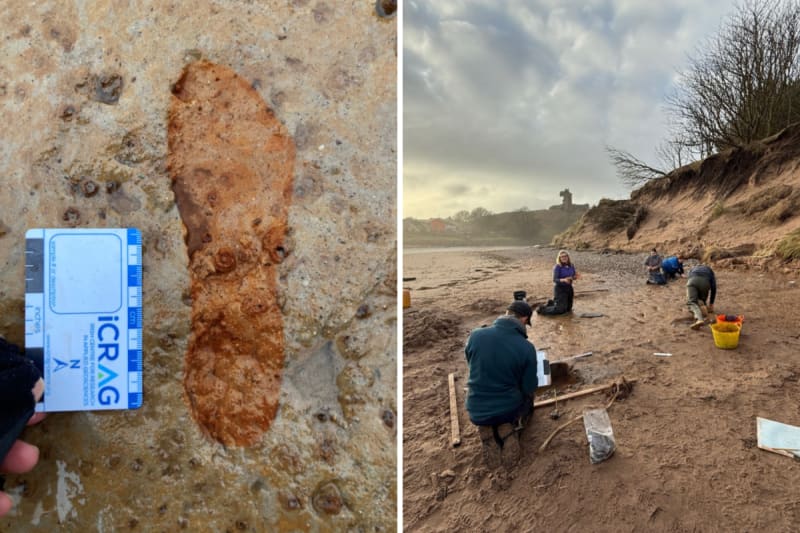
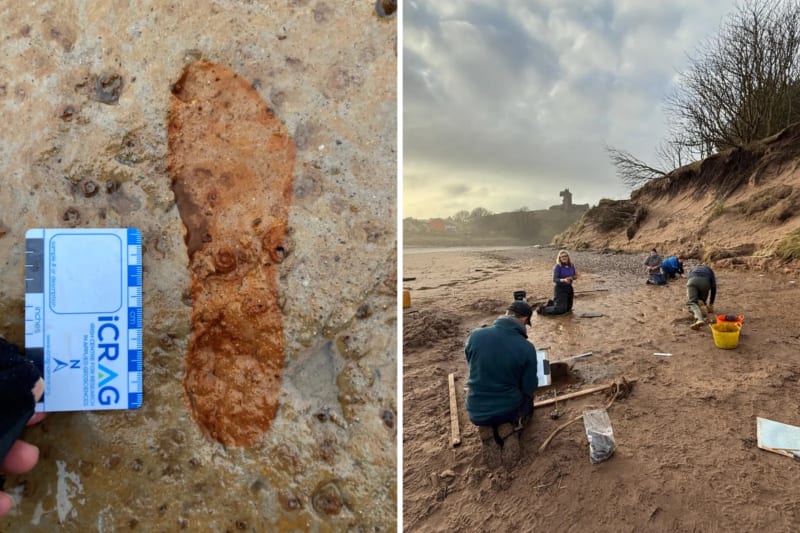
Ivor Campbell and Jenny Snedden were walking their dogs Ziggy and Juno along Lunan Bay beach in Scotland when they spotted something extraordinary in the sand. Strange markings near the dunes turned out to be 2,000-year-old footprints, revealed by violent storms that had battered the coastline.
The couple immediately contacted council archaeologist Bruce Mann, who recognized both the significance and the danger. The footprints, left by humans and animals like red deer around the time of the Roman Empire, were already being swallowed by the incoming tide.
Professor Kate Britton from the University of Aberdeen assembled an emergency team of archaeologists and PhD students. They stopped at a craft store on the way to grab Plaster of Paris and other supplies before racing to the beach.
What followed was one of the most challenging archaeological rescues in recent memory. The team worked in winds exceeding 55 mph, getting sandblasted while trying to delicately document the site. Every high tide ripped away more evidence as they struggled to create 3D models and physical casts of the prints.
"We knew we were dealing with a really rare site and that this discovery offered a unique snapshot in time," Britton said. Within 48 hours, the entire site was destroyed by the sea.
Campbell and Snedden stayed nearby throughout the ordeal, serving tea to the team as they battled the elements. The archaeologists managed to capture detailed records just in time.
The Ripple Effect
Back in the lab, radiocarbon dating of plant remains confirmed the footprints were made around 2,000 years ago during the late Iron Age. This places them around the time of Roman invasions into Scotland, just before the emergence of the Picts.
The discovery marks the first site of its kind ever recorded in Scotland. Similar ancient footprint sites exist in only a handful of English locations like the Severn Estuary and Formby, making this find exceptionally rare.
"This is a real tangible link to the region's past," said professor Gordon Noble. The discovery aligns with rich archaeological evidence already found in the nearby Lunan Valley, painting a clearer picture of who lived in Scotland two millennia ago.
The successful rescue demonstrates what's possible when everyday people stay curious and experts move fast. Dr. William Mills noted that while this particular site vanished, the clays throughout the Montrose basin area could preserve similar treasures, waiting to be revealed by the next big storm.
Sometimes the most important discoveries happen when we're just out walking the dog.
More Images



Based on reporting by Google: archaeological discovery
This story was written by BrightWire based on verified news reports.
Spread the positivity!
Share this good news with someone who needs it