Dog's Cancer Trial Could Lead to Kids' Immunotherapy
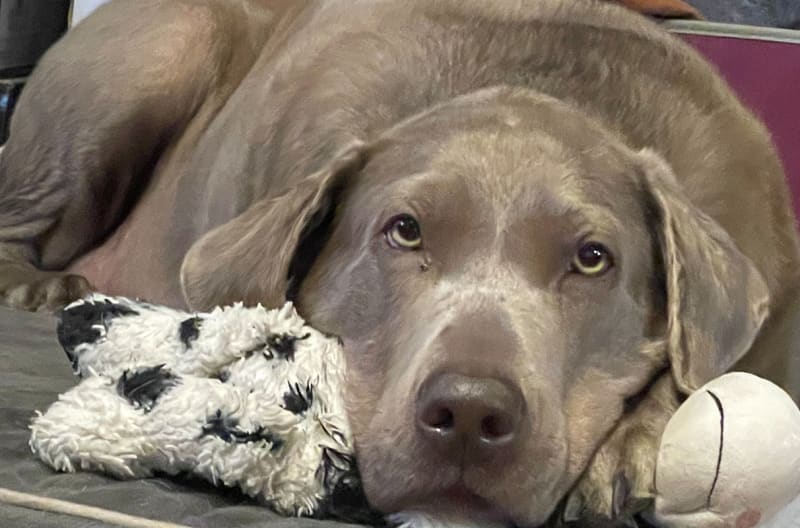
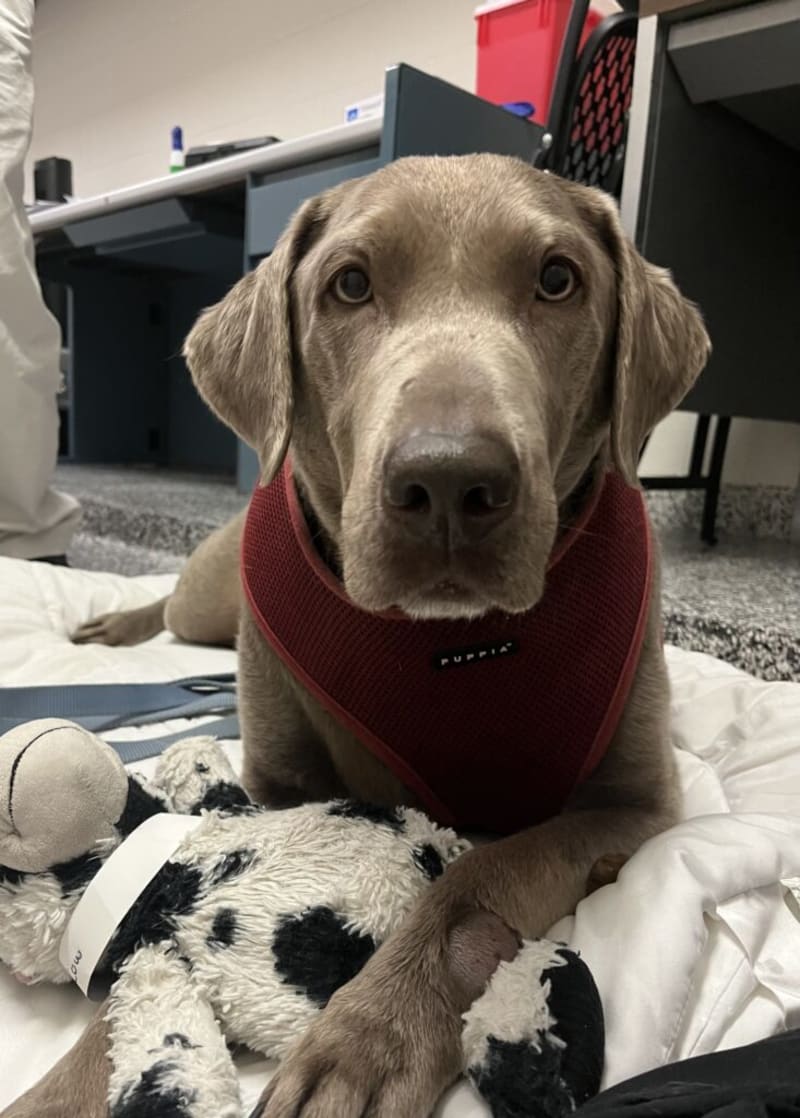
A silver Lab named Clarice beat cancer using an experimental treatment that's now paving the way for new immunotherapy options for children. The trial combined surgery, radiation, and immune-boosting injections to save her leg and her life.
When Clarice the Labrador developed a cancerous tumor near her wrist, amputation seemed inevitable—but her family had already lost too much to cancer.
Just 18 months after losing their sister Darcy to breast cancer, Dayla and Jon Culp faced another heartbreaking diagnosis. Clarice, a 6-year-old silver Lab and precious gift from Darcy, had a malignant tumor in the worst possible spot. Surgery would be risky, and amputation was the standard recommendation.
But the Culps weren't ready to give up. They brought Clarice to Washington State University's Veterinary Teaching Hospital, where she became part of a groundbreaking clinical trial partnering with Seattle Children's Hospital.
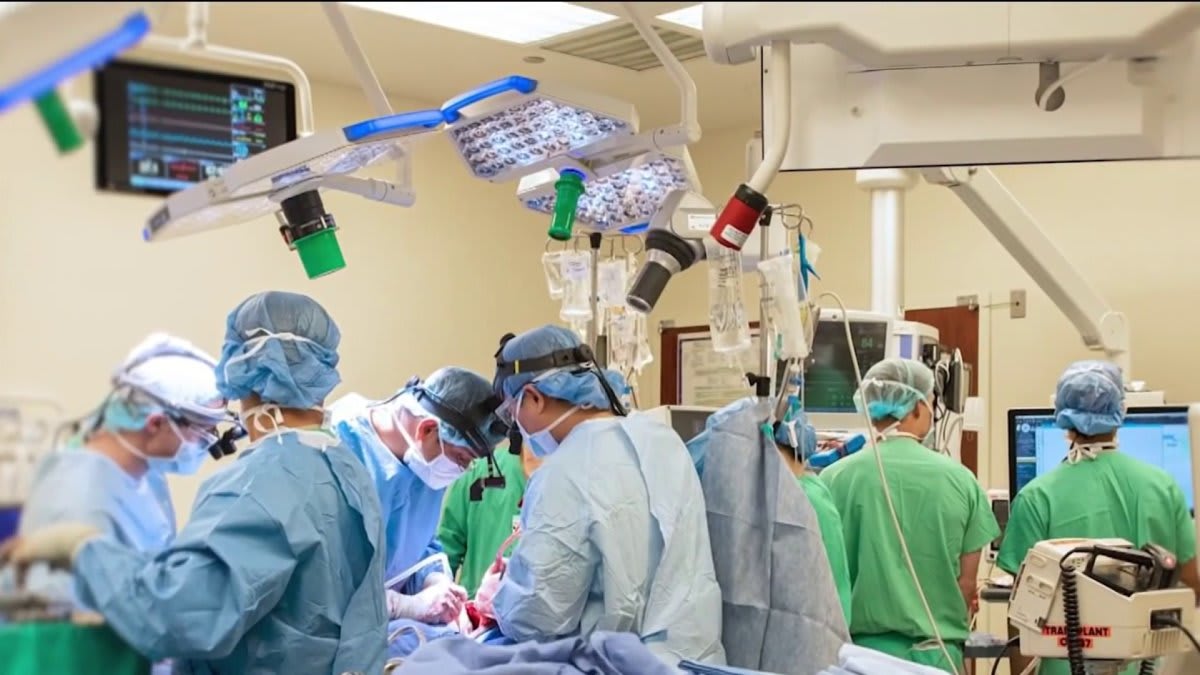
The experimental treatment offered hope not just for Clarice, but for countless others facing similar tumors. Researchers injected an immune-stimulating agent directly into Clarice's tumor to activate her T cells—essentially training her own body to fight the cancer. One week later, surgeons removed the tumor, followed by three rounds of radiation therapy.
"So many people in our families have had cancer," Dayla explained. "If there was a chance this could help somebody else someday—especially a child—that mattered to us."
The decision made even more sense given Clarice's circumstances. Her arthritic right shoulder meant she couldn't comfortably manage life on three legs, making amputation a poor choice.
Soft-tissue sarcomas affect roughly 95,000 dogs in the United States each year, with 20 to 30 percent of cases proving fatal. These tumors often spread microscopically beyond what doctors can see, making them notoriously difficult to remove completely.
The Ripple Effect
What makes Clarice's story remarkable isn't just her recovery—it's what her treatment could mean for others. The immunotherapy approach tested on her could open new doors for treating hard-to-reach tumors in both dogs and children.
Dr. Janean Fidel, the WSU oncologist who oversaw Clarice's care, reported excellent results. When Clarice returned for her first radiation treatment after surgery, there was no tumor left to feel. The surgery had worked better than anyone dared hope.
Today, Clarice is back home in Okanogan, Washington, doing what Labs do best. She greets her family every morning with stuffed toys, reliably announces meal times, and lives cancer-free. She'll continue routine checkups to ensure the tumor stays gone.
"In the end, we wanted to do everything we could for Clarice," Jon said. "But knowing her treatment might help someone else someday made the decision feel even more meaningful."
For a family that knows cancer's devastation firsthand, watching Clarice thrive offers something precious: the hope that their loss might help prevent someone else's.
More Images


Based on reporting by Google News - Cancer Survivor
This story was written by BrightWire based on verified news reports.
Spread the positivity!
Share this good news with someone who needs it
%3Amax_bytes(150000)%3Astrip_icc()%2FTeddi-Mellencamp-6-082726-76699d25fce844b5882507c2b50b4464.jpg)