Donated Livers Get Biologically Younger on Life Support
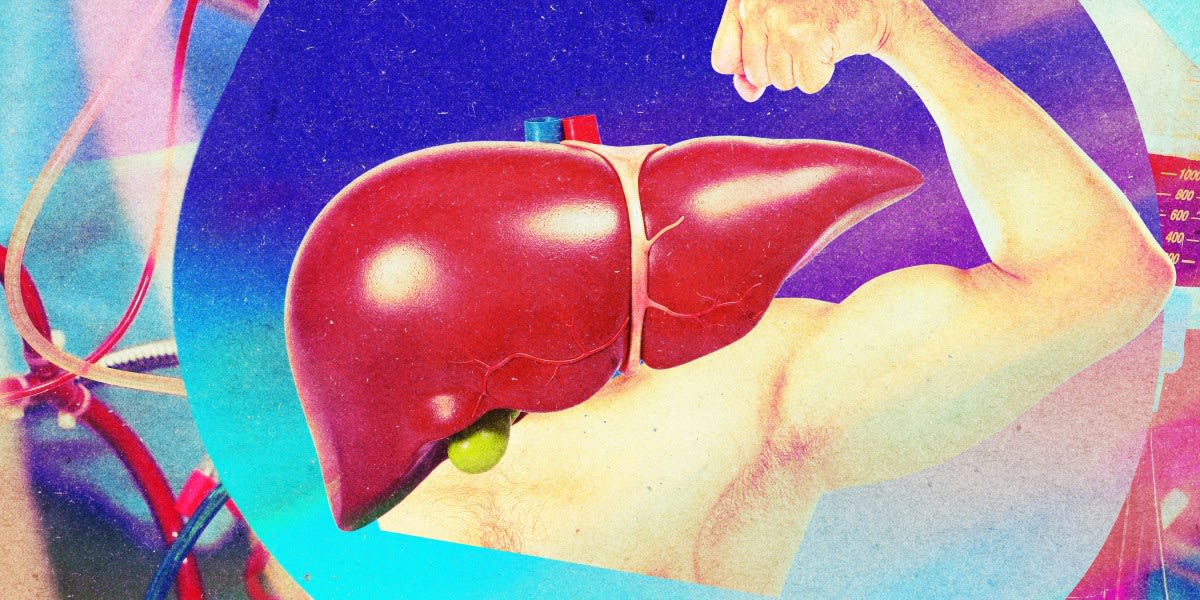
Scientists discovered that livers stored on nutrient-pumping machines become biologically younger at a molecular level, potentially explaining why these organs perform better after transplant. The breakthrough could help save more lives by improving how doctors assess and treat donated organs.
Donated organs are in a race against time, and scientists just found a way to turn back the clock.
Researchers at Mass General Brigham discovered something remarkable when they studied donated livers. Organs placed on machines that pump them with nutrients and oxygen don't just stay fresh longer. They actually become biologically younger at a molecular level.
The team used special "aging clocks" to analyze 103 donated livers. These scientific tools measure biological age by looking at patterns in DNA and gene activity, which tell a more accurate story about an organ's health than simply counting years.
The results surprised everyone. Machine-perfused livers showed biological ages about 30% younger than livers kept on ice, even when they came from older donors. "Pumping them at 34 degrees with oxygen and nutrients actually reversed the biological age," says Dr. Alban Longchamp, one of the transplant surgeons leading the study.
Here's how it works. When surgeons remove a donated organ, they typically flush it with preservative solution and pack it in ice. The organ immediately starts degrading. Hospitals increasingly use perfusion machines instead, which act like a temporary body by pumping nutrients in and waste out for six to 12 hours.
The molecular changes were striking. Perfused livers showed increased activity in pathways that help cells remove and recycle damaged parts. They also had reduced inflammation and improved tissue structure. Even after transplant, when the organs experienced new stresses, they remained biologically younger than their ice-stored counterparts.
Dr. Jesse Poganik, who studies aging at Brigham and Women's Hospital, sees huge potential. "If we can improve the utilization of organs beyond what the current systems can do, then that's a win in my book," he says.
Why This Inspires
More than 100,000 Americans wait for organ transplants, and thousands die each year before receiving one. This research explains why perfused organs have higher success rates and opens doors to new possibilities.
Understanding the molecular mechanisms could lead to drugs that achieve similar rejuvenation effects at a fraction of the cost. Right now, perfusion costs around $80,000 to $100,000 per organ in the US. A drug treatment could make this life-saving technology accessible to far more patients.
The discovery also helps explain why organs from younger donors typically perform better. Armed with this knowledge, doctors can better assess which organs are healthy enough for transplant, potentially saving organs that might otherwise be discarded.
Dr. Nathanael Raschzok, a transplant surgeon in Germany who reviewed the research, calls it impressive. He's particularly interested in whether the same effect applies to organs from donors in their 70s and 80s, which hospitals sometimes use.
The team continues investigating which specific molecular changes matter most for transplant success, hoping to develop quick tests that determine an organ's true health status before surgery.
Every organ saved means another life transformed.
Based on reporting by MIT Technology Review
This story was written by BrightWire based on verified news reports.
Spread the positivity!
Share this good news with someone who needs it