Drones Drop 20,000 Seed Balls to Restore Amazon Rainforest
A former NASA engineer is using precision drones to restore damaged Amazon rainforest by dropping thousands of clay-wrapped seeds per hour. The technology could plant the equivalent of 40 million trees annually while reaching areas humans can't access.
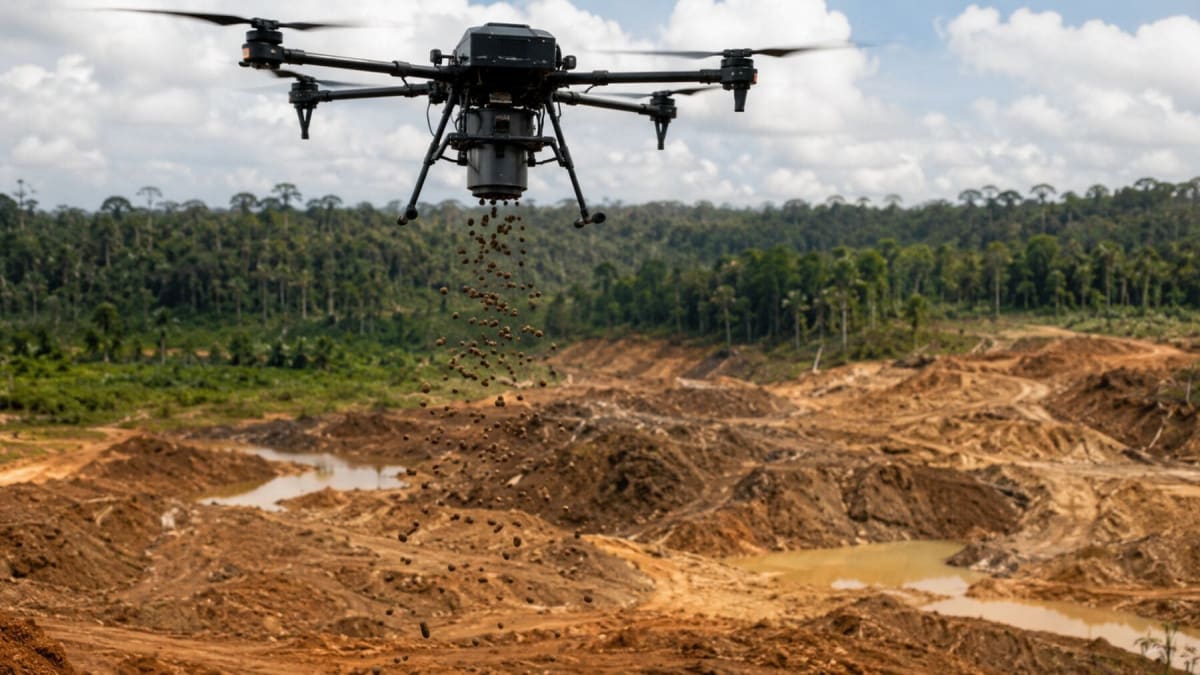
A former NASA engineer has turned drones into flying gardeners, dropping 20,000 seed balls across damaged Amazon rainforest in just 90 minutes.
In December 2024, Lauren Fletcher's drones soared over devastated land near Puerto Maldonado, Peru, releasing clay-encased seeds over 10 hectares scarred by mining operations. The technology he developed reaches half-meter precision while releasing up to 300 seed balls per minute.
Fletcher co-founded Flying Forests in 2020 with Irina Fedorenko-Aula after spending years at NASA studying biology and technology. His mission targets land so damaged or remote that traditional tree-planting teams struggle to reach it.
The secret lies in the clay balls themselves. Each protective sphere shields seeds from hungry animals while providing nutrients for germination, eliminating the need for nursery-grown seedlings before planting.
In Peru, the team started with Crotalaria lisa seeds to stabilize soil devastated by mining before introducing native Amazon species. This staged approach gives the damaged earth a fighting chance to recover its natural ecosystem.
The numbers are staggering. Fletcher estimates four drones could plant enough seeds to grow 40 million trees each year, though he's careful to note that's planting capacity, not guaranteed growth.
The Ripple Effect
Flying Forests represents a breakthrough for restoration projects tackling inaccessible terrain where traditional methods fail. Mountain slopes, fire-scorched valleys, and mining wastelands that would take crews weeks to plant can now receive seeds in hours.
The technology faced real-world challenges during a California project where climate conditions limited seedling survival. Those lessons shaped how Flying Forests now selects species and monitors growth, ensuring each mission maximizes success rates.
The approach complements rather than replaces traditional reforestation. While human planters still excel at careful placement and nurturing individual seedlings, drones can cover vast damaged areas quickly and reach places no person could safely access.
Fletcher and his team continue refining their methods, focusing on proper species selection and long-term monitoring to ensure seeds become thriving forests. Each mission provides data that improves the next, building knowledge about what works in different damaged ecosystems.
The Peruvian Amazon mission proves technology and nature can work together to heal our planet's wounded places.
More Images


Based on reporting by Google News - Reforestation
This story was written by BrightWire based on verified news reports.
Spread the positivity!
Share this good news with someone who needs it